The Emergence of the Climate Discount
In the California real estate market of 2026, disaster preparedness has evolved beyond physical safety into a critical component of wealth management. Recent data from the California Association of Realtors (C.A.R.) indicates a growing 'valuation delta' between homes with high-level mitigation certifications and those without. As of Q1 2026, properties in high-risk wildfire or flood zones that lack documented resilience upgrades are trading at a 12% discount compared to similar homes in lower-risk tiers, a trend economists call 'environmental depreciation.'
Navigating the Insurance Cliff
The California Department of Insurance reports that enrollment in the FAIR Plan—the state’s insurer of last resort—has stabilized but remains at historic highs. For homeowners, being on the FAIR Plan is no longer a temporary hurdle but a long-term financial factor. Current market analysis suggests that homes reliant on the FAIR Plan see an average increase in carrying costs of $3,500 to $7,000 annually. To preserve equity, homeowners must pivot from reactive repairs to proactive 'insurability hardening,' which focuses on making the property attractive to preferred private carriers who are slowly returning to the market with risk-segmented products.
The ROI of Resilience
Data from recent 2025-2026 sales cycles shows that resilience is providing a measurable return on investment. Homeowners who have utilized programs like 'Wildfire Prepared Home' by the IBHS (Insurance Institute for Business & Home Safety) are seeing a recovery of up to 75% of improvement costs through increased resale value and reduced insurance premiums. In the 2026 market, a 'Resilience Audit' is becoming as standard as a home inspection during the escrow process.
Practical Takeaways for Equity Protection
- Conduct a Financial Vulnerability Assessment: Beyond physical checklists, calculate the impact of a 20% insurance premium hike on your debt-to-income ratio and future resale potential.
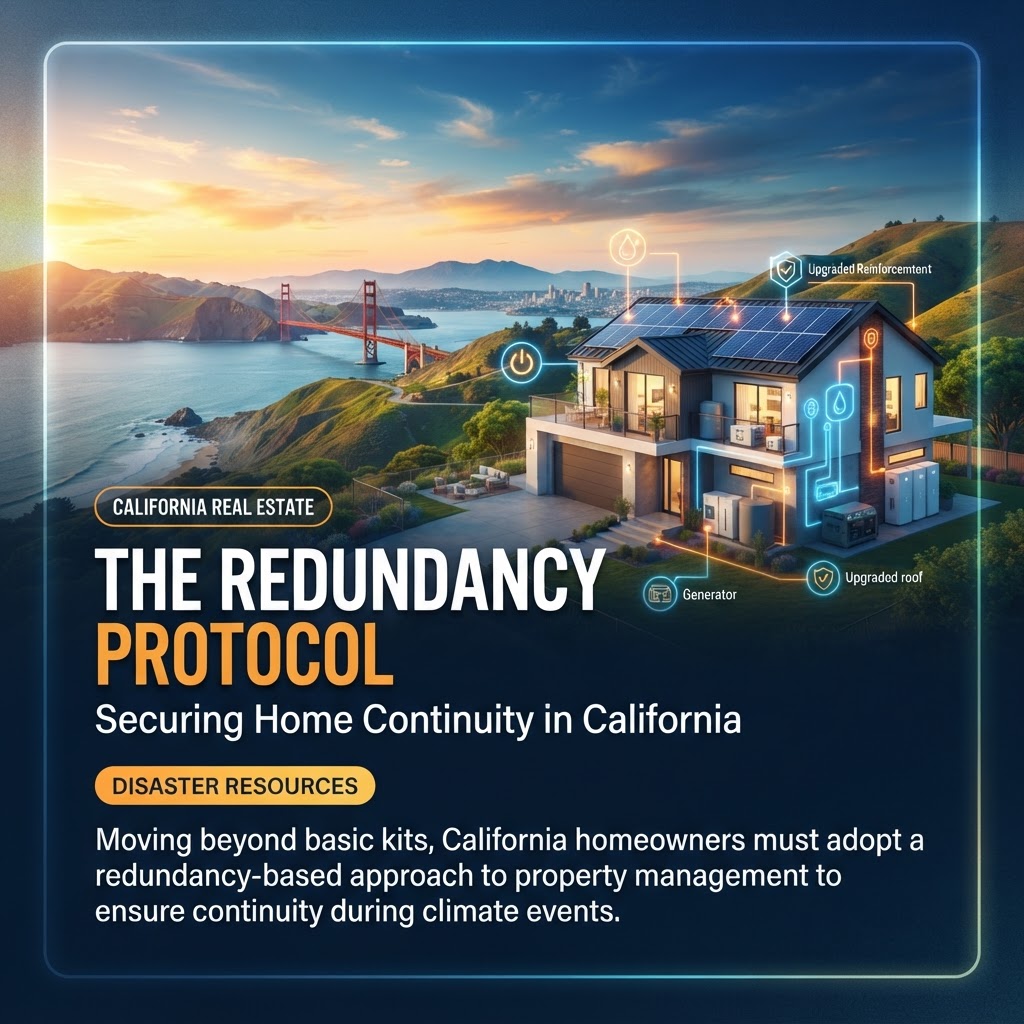
- Leverage the California Home Hardening Grant: Check eligibility for state-funded programs that provide up to $40,000 for retrofitting older homes in high-risk areas.
- Document Everything for the C.A.R. Resilience Disclosure: Maintain a digital vault of receipts, photos, and certifications for all upgrades (e.g., Class A roofing, 1/16th inch mesh vents) to provide to appraisers.
- Monitor the 'Granular Risk Score': Use updated 2026 state dashboards to track if your property’s risk rating has changed due to local infrastructure improvements, which can be used to contest high insurance quotes.
Strategic Resilience as the New Standard
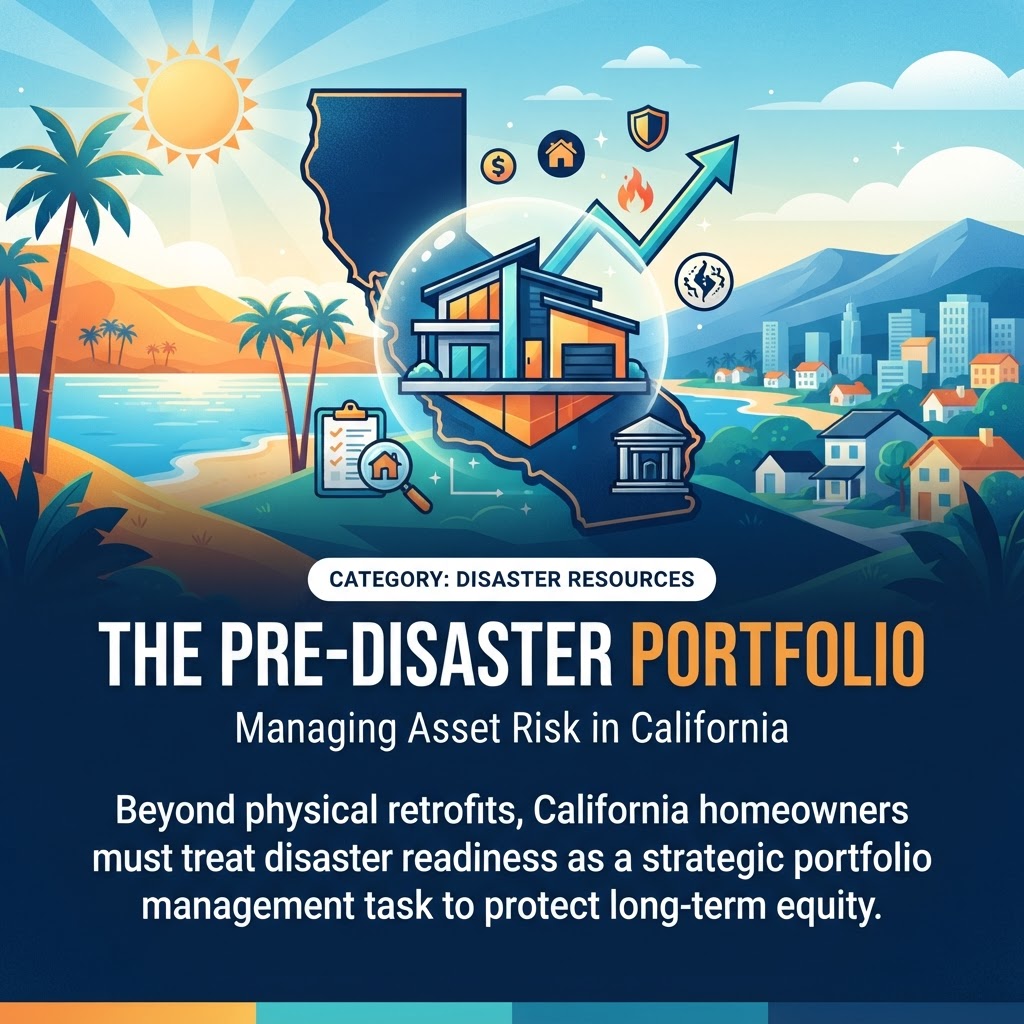
Disaster preparedness in 2026 is an ongoing administrative and financial discipline. By viewing home hardening not as a cost but as a capital improvement that hedges against market volatility, California homeowners can secure their place in a landscape defined by environmental shifts. The goal is no longer just to survive the season, but to ensure that your largest asset remains a viable vehicle for generational wealth.