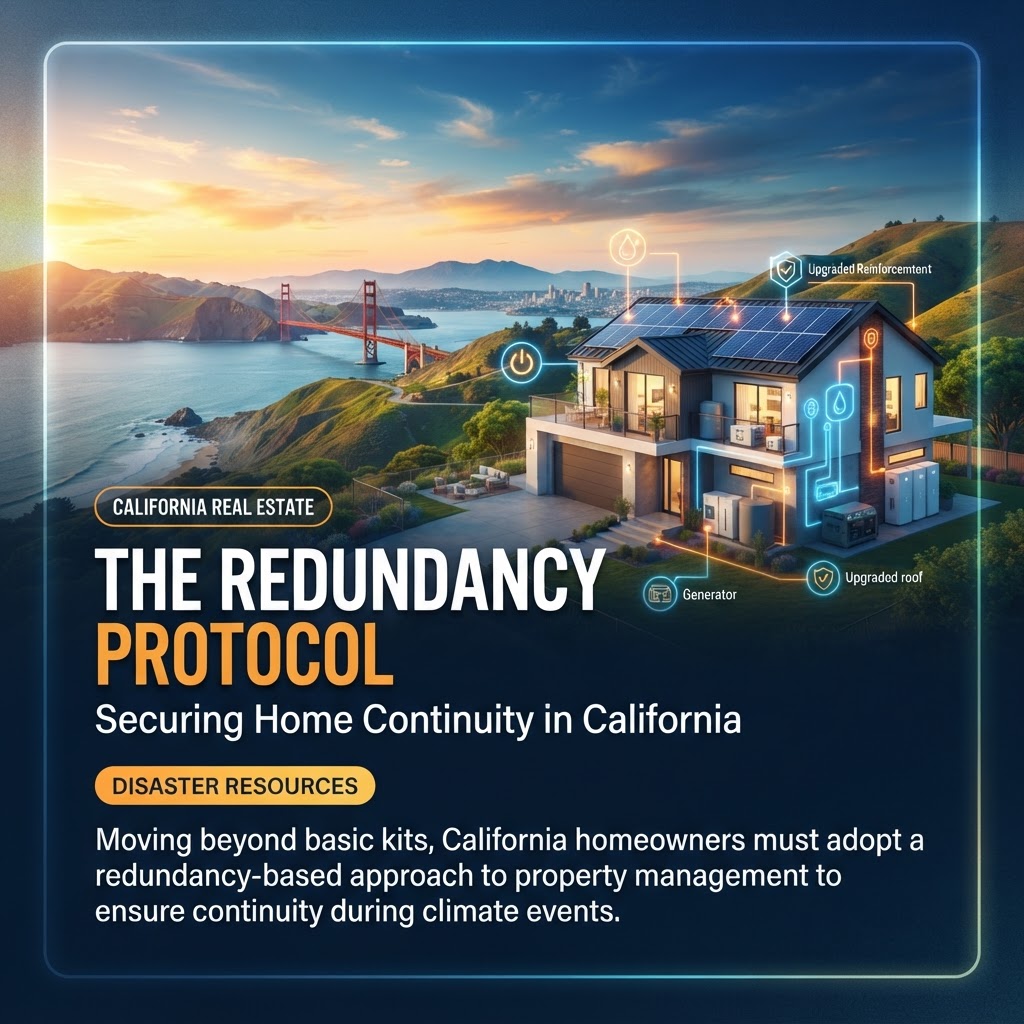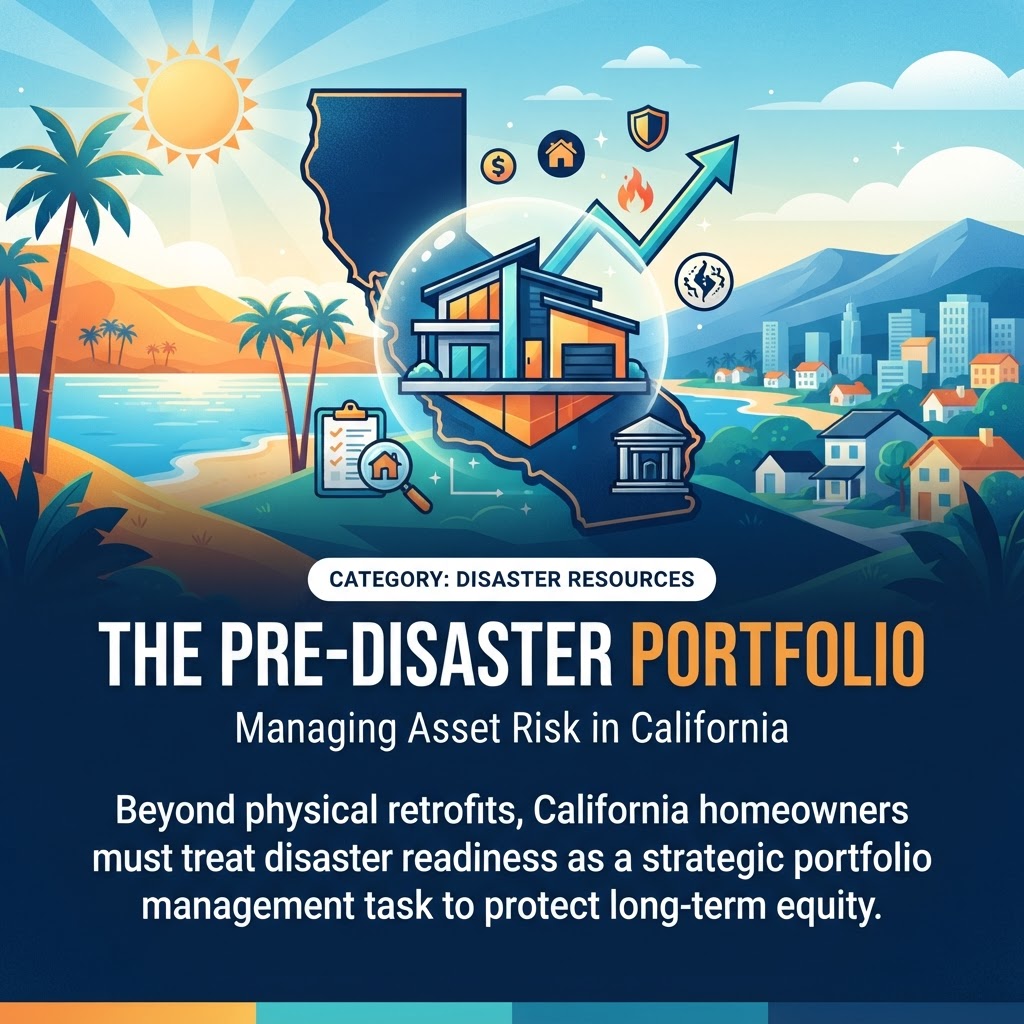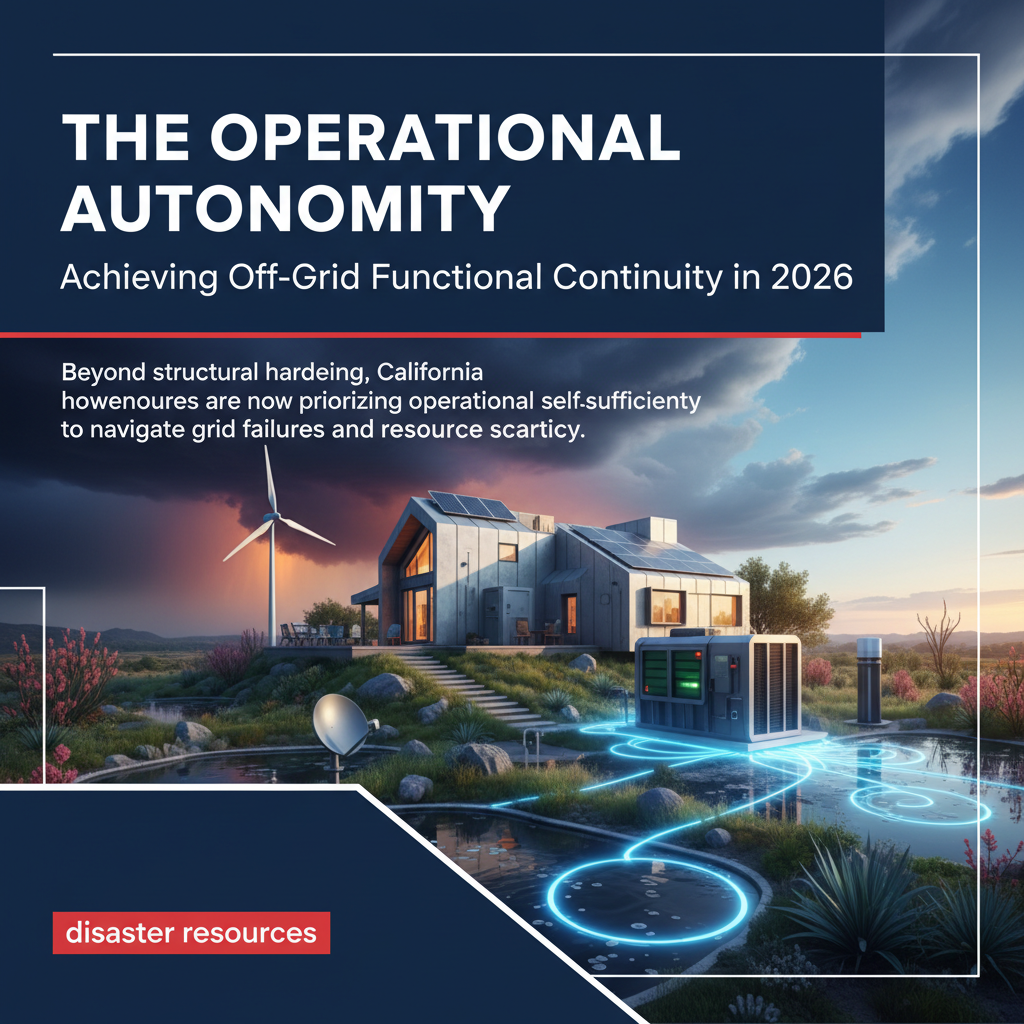
As of May 2026, the California real estate market has undergone a fundamental shift. While previous years focused on 'hardening' structures against fire and flood, the current emphasis for savvy homeowners and investors has moved toward Operational Autonomy. This concept transcends simple survival; it represents the ability of a property to maintain functional continuity when regional infrastructure—power, water, and communications—suffers a catastrophic failure.
The Energy Pivot: From Storage to Integrated Microgrids
The traditional dependence on the centralized grid has become a liability. According to 2025 data from the California Public Utilities Commission (CPUC), Public Safety Power Shutoffs (PSPS) and grid strain events have increased in frequency by 18% year-over-year. In response, the high-end residential market is no longer satisfied with standalone battery backups.
The new standard is the Vehicle-to-Home (V2H) integration. With California’s mandate for zero-emission vehicles accelerating, homeowners are leveraging the 60–100 kWh batteries in their EVs to power homes for up to a week. Data from the National Renewable Energy Laboratory (NREL) suggests that a fully integrated V2H system can increase a home’s 'survivability window' by 400% compared to traditional stationary storage like the Powerwall 2.
Communication Redundancy in the 2026 Landscape
Disaster preparedness in 2026 necessitates a 'tri-link' communication strategy. When cellular towers are congested or incinerated, traditional mobile devices become bricks. Forward-thinking homeowners are now integrating:
- Low Earth Orbit (LEO) Satellite Terminals: Hard-mounted Starlink or Kuiper systems with dedicated battery paths.
- Mesh Networking: Community-based LoRaWAN networks that allow for text-based communication across neighborhoods without internet or cellular service.
- Automated Hazard Sync: Systems that automatically scrape data from the California Department of Forestry and Fire Protection (CAL FIRE) to trigger automated home defenses (e.g., exterior sprinklers or shutter deployments).
Atmospheric and Reclaimed Water Security
While the 'Hydrological Pivot' addressed macro-water risks, individual resilience now focuses on onsite generation. With California’s groundwater regulations (SGMA) tightening, properties equipped with Atmospheric Water Generators (AWG) are seeing a valuation premium. These systems, which extract potable water from humidity, provide a critical hedge against municipal pipe failures or contamination during seismic events. Current market analysis from CBRE indicates that 'water-independent' luxury estates in the Inland Empire and Central Valley are commanding a 5-7% price delta over non-equipped counterparts.
Practical Takeaways for Homeowners
To achieve operational autonomy, homeowners should execute the following strategy:
- Audit the Inverters: Ensure your solar array is equipped with 'islandable' inverters (e.g., Enphase IQ8 or newer) that can provide power during the day even if the grid is down and batteries are depleted.
- Implement Dual-Fuel Redundancy: While the state moves toward electrification, maintaining a secondary, localized fuel source (such as buried propane for cooking and high-efficiency backup heating) remains a critical redundancy for 72-hour continuity.
- Verify 'Dark Start' Capabilities: Test your system’s ability to restart from a total blackout without grid assistance—a common failure point in early-generation smart homes.
Operational autonomy is no longer a niche pursuit for 'preppers'; it is a core component of California property value. As we navigate the risks of 2026, the most resilient asset is the one that functions independently of the failing systems around it.