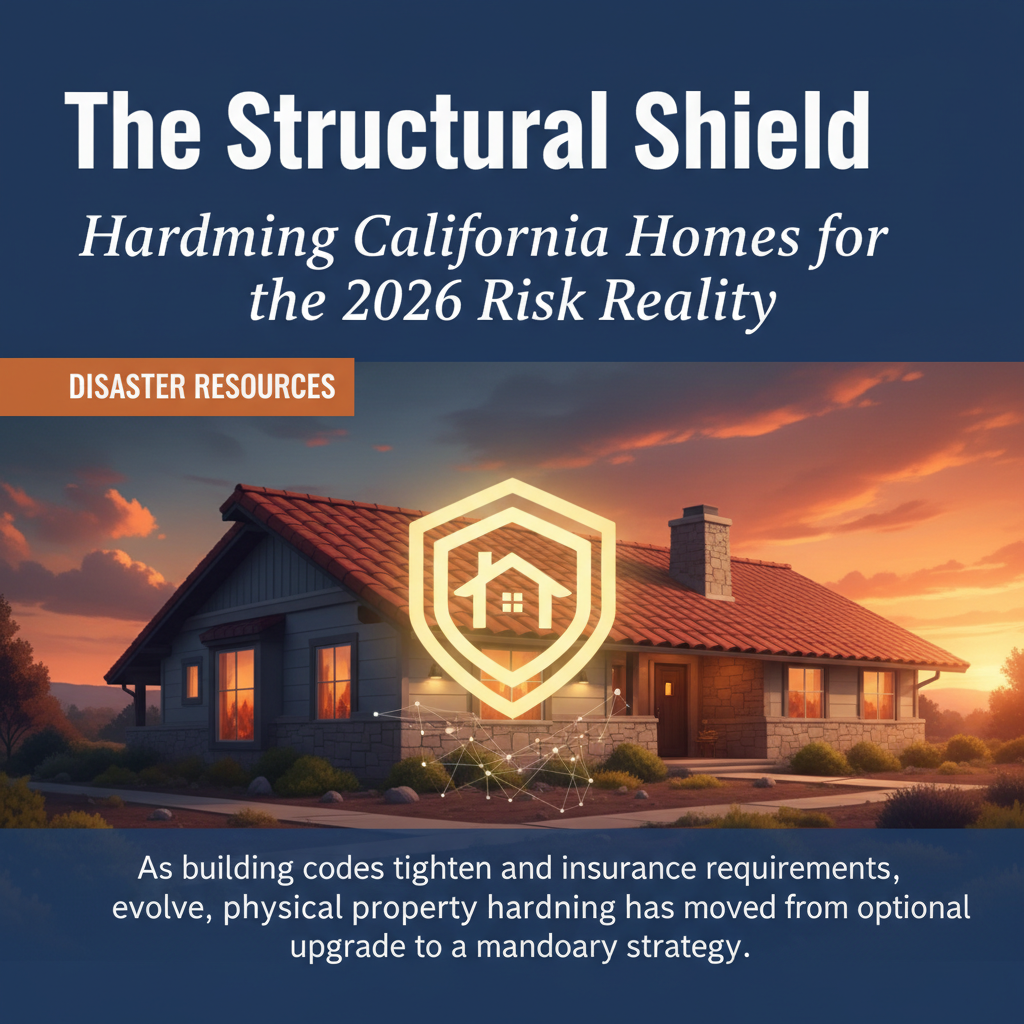
Beyond the Go-Bag: The Physical Reinforcement Mandate
In 2026, California’s real estate market has reached a tipping point where preparedness is no longer defined solely by a 14-day supply kit, but by the structural integrity of the asset itself. With the California Department of Insurance (CDI) now strictly enforcing the 'Safer from Wildfires' regulatory framework, homeowners are finding that physical hardening is the primary lever for maintaining both insurability and long-term market value.
Seismic Retrofitting: The Brace and Bolt Standard
For the approximately 1.2 million older homes in high-risk zones, seismic retrofitting has become a non-negotiable checklist item for sophisticated buyers. According to the California Earthquake Authority (CEA), homes built before 1980—particularly those with raised foundations—often lack the necessary connection between the house and its foundation. A 2025 analysis showed that 'Brace and Bolt' retrofitted homes sustained 45% less damage in moderate seismic events compared to unbolted counterparts. In the 2026 market, these retrofits, which typically cost between $3,000 and $7,000, yield a high return on investment at the point of sale due to reduced deductible options and lower annual premiums for the next owner.
Wildfire Defense: The Zone 0 Evolution
State legislation now mandates that sellers in high fire hazard severity zones provide documentation of compliance with wildfire hardening standards. Homeowners must focus on 'Zone 0,' the immediate five-foot perimeter surrounding the structure. In the current climate, standard defensible space is insufficient without structural hardening. Key upgrades for 2026 include:
- Ember-Resistant Venting: Replacing standard attic vents with 1/16th inch mesh screens specifically designed to prevent ember intrusion, which is responsible for nearly 90% of home losses during wildfires.
- Class A Fire-Rated Roofing: Transitioning from wood shakes or older asphalt to fire-rated materials like metal, clay tile, or specialized composite shingles is now a prerequisite for many private insurers.
- Multipane Tempered Glass: Modern retrofitting now prioritizes thermal protection to prevent window breakage during peak radiant heat, preserving the home's internal pressure and preventing fire entry.
Financial Incentives and Equity Impact
The 2026 fiscal year has seen a surge in 'Resilience Tax Credits.' Homeowners can now claim up to 15% of the cost of structural hardening on their state tax returns, provided the work is performed by a certified contractor and meets CAL FIRE standards. Furthermore, data from the National Association of Realtors (NAR) indicates that 'hardened' homes in California sell 12 days faster and command a 4.2% premium over unmitigated properties in the same micro-market. This 'Resilience Premium' is becoming a standard metric in appraisal adjustments.
Practical Takeaways for Property Owners
- Audit the Foundation: Engage a structural engineer to verify anchor bolts and cripple wall bracing, especially if the property was constructed prior to 1980.
- Obtain Certification: Request a wildfire hardening certificate from the local fire marshal to leverage the 'Safer from Wildfires' insurance discounts, which can reduce premiums by up to 20%.
- Consult the Hazard Disclosure: Review the Natural Hazard Disclosure (NHD) report before any major renovation to prioritize the specific risks (seismic vs. fire) unique to the property's coordinates.


