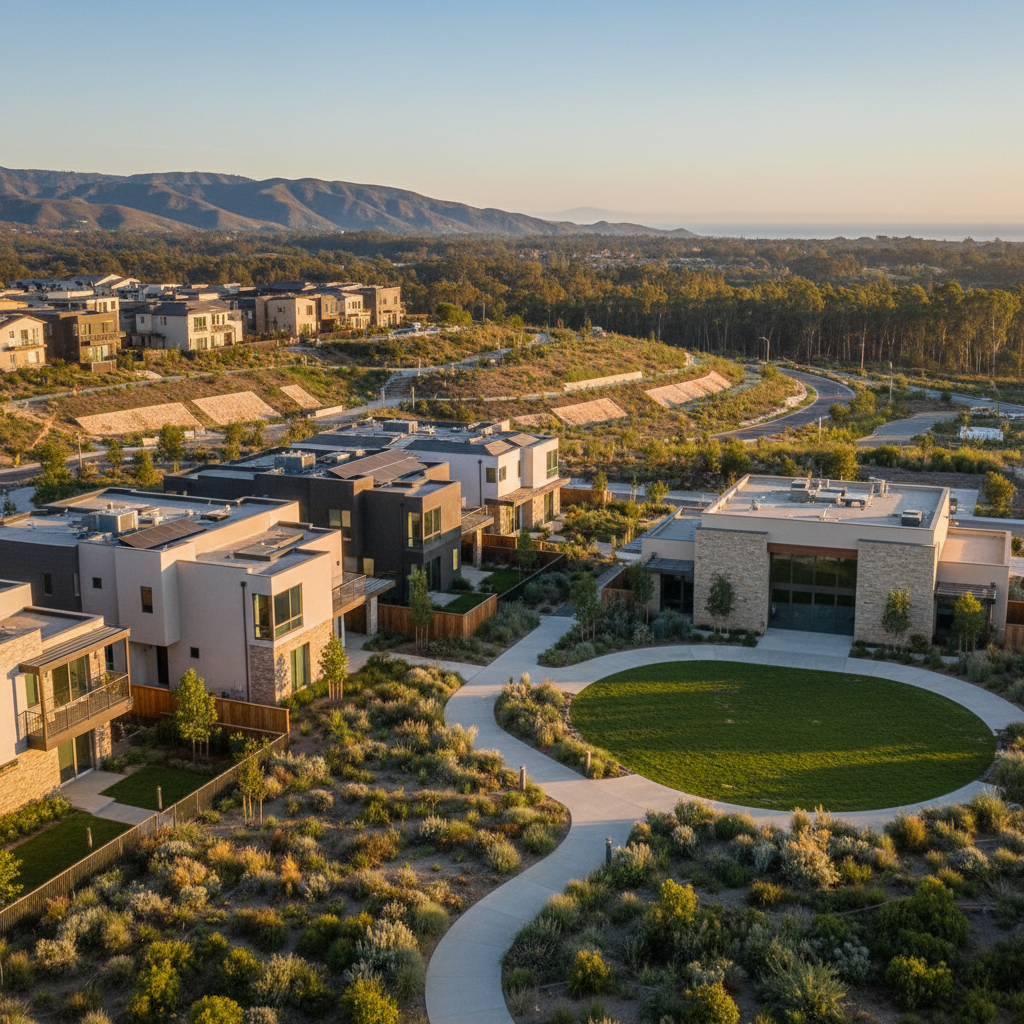
The Shift from Individual Hardening to Collective Resilience
As we navigate the 2026 real estate landscape, California homeowners are discovering that individual home hardening, while mandatory under recent state statutes, is no longer the sole determinant of a property’s risk profile. A new valuation driver has emerged: the 'Resilience Premium.' This metric measures the collective mitigation efforts of a neighborhood, shifting the focus from the isolated property to the surrounding community’s infrastructure. In an era of volatile insurance markets, the ability of a neighborhood to maintain a Firewise USA® designation or a Seismic Safety District status has become a critical factor in maintaining home equity.
The Data Behind Community Risk Reduction
Recent data from the National Association of Realtors (NAR) and specialized 2025 California market reports indicate that homes located within 'Highly Resilient' certified communities retain up to 7.4% more value during market corrections compared to those in uncertified areas. Furthermore, the California Department of Insurance (CDI) has expanded its 'Safer from Wildfires' framework to offer steeper premium discounts—averaging 12-15%—for homeowners who can demonstrate that their entire street meets specific defensible space and fuel-reduction standards. This collective approach addresses the 'checkerboard risk' that previously plagued high-risk zones, where one neglected property could jeopardize an entire block.
Navigating the 2026 Insurance Landscape
With the California FAIR Plan’s exposure reaching record highs in early 2026, homeowners are using community-level mitigation as a lever to return to the voluntary insurance market. Admitted carriers are increasingly utilizing 'Community Risk Scores' rather than just individual parcel data. To capitalize on this, homeowners must look beyond their own property lines. Participation in local Community Emergency Response Teams (CERT) and neighborhood-level fuel reduction programs is no longer just a civic duty; it is a financial strategy to secure preferred provider coverage and avoid the high costs of the insurer of last resort.
Strategic Takeaways for California Homeowners
- Verify Community Designations: Before listing or buying, confirm if the property is within an active Firewise USA site. As of 2026, these designations must be renewed annually to qualify for state-mandated insurance discounts.
- Leverage the 'Resilience Ledger': Maintain a collective record of neighborhood infrastructure upgrades, such as cleared evacuation routes or community-managed water cisterns. This documentation is vital during the appraisal process to justify a lower risk-adjusted discount rate.
- Monitor Local Hazard Mitigation Plans (LHMPs): Investors should review the LHMPs of municipal governments. Communities that have secured FEMA’s Building Resilient Infrastructure and Communities (BRIC) grants often see a corresponding stabilization in long-term property tax assessments and insurance availability.
- Collaborative Retrofitting: In seismic zones, neighborhoods that undergo collective 'soft-story' retrofitting or gas-shutoff valve installations are seeing a 4.2% reduction in earthquake insurance premiums through the CEA’s community-tier pricing.
The Future of California Equity
Resilience in 2026 is an aggregate asset. While individual property maintenance remains the baseline, the future of California real estate value lies in the strength of the community buffer. Homeowners who actively engage in collective mitigation are not only protecting their lives but are actively anchoring their home’s market value against the rising tide of climate-driven financial risk.


