The Price of Proximity: Quantifying Risk in the 2026 Market
In the spring of 2026, California’s real estate landscape is defined by a new metric: the Valuation Delta. While aesthetic upgrades once dictated price premiums, the primary driver of home value is now a property’s resilience profile. According to data from the National Association of Realtors (NAR) and recent 2025 year-end reports, homes in California’s Wildland-Urban Interface (WUI) that lack comprehensive mitigation are trading at a 12% to 18% discount compared to hardened structures in similar zip codes.
As the California FAIR Plan enrollment hit record highs in late 2025, the market has moved beyond acknowledging risk to actively pricing it. For homeowners, understanding this shift is no longer about survival alone—it is about protecting the equity in their largest asset.
The Underwriting Shift: Beyond the Standard Appraisal
Traditionally, appraisals focused on comparable sales and square footage. However, in 2026, major lenders have integrated "Climate Risk Scores" directly into their underwriting algorithms. These scores, often sourced from providers like CoreLogic or First Street, analyze localized data on fire history, soil stability, and seismic vulnerability. If a property falls into a high-risk tier, the resulting increase in escrowed insurance premiums can effectively reduce a buyer's purchasing power by up to $150,000 for a median-priced home.
The California Department of Insurance has noted that the transition to more granular risk modeling means that even homes outside traditional flood zones or fire maps may see adjusted valuations if they lack modern resilience features. This makes the "National Risk Index" provided by FEMA a vital tool for current owners to audit their property's standing before hitting the market.
The Resilience Audit: Bridging the Value Gap
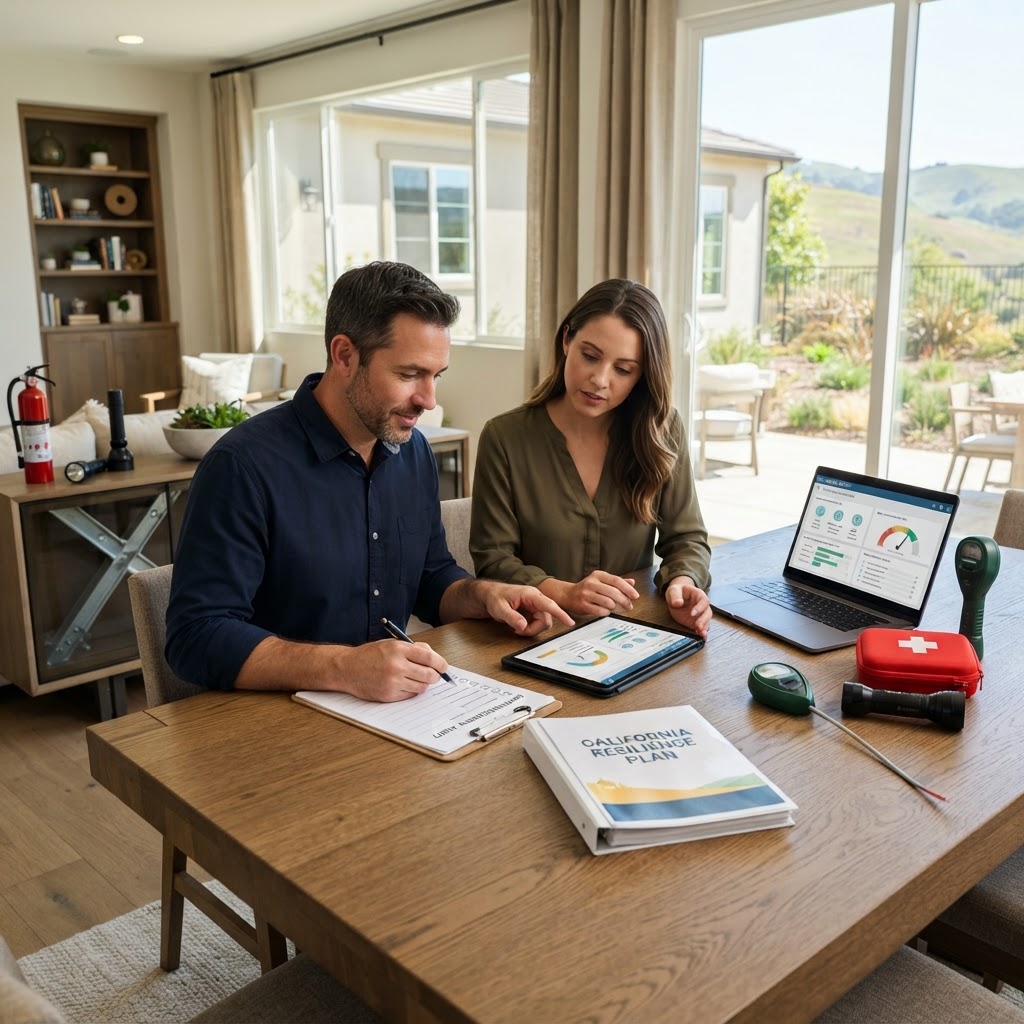
To mitigate the Valuation Delta, homeowners must move from passive awareness to active certification. The 2026 market rewards transparency. Sellers who provide a "Resilience Portfolio" alongside standard disclosures are seeing shorter days-on-market and fewer price concessions during the inspection period.
- Seismic Retrofitting: For homes built before 1980, a braced and bolted foundation remains a top ROI project. California Earthquake Authority (CEA) data suggests that retrofitted homes can see a 5% increase in appraised value in high-seismic zones.
- Vegetation Management: Defensible space is no longer just a legal mandate; it is a visual indicator of risk to buyers. Maintaining a 100-foot buffer of lean, clean, and green landscaping is now considered a standard maintenance item, akin to roof repair.
- Hardening Certification: Obtaining a certificate of compliance with the latest state hardening standards can serve as a powerful tool in appraisal rebuttals, proving the property is less susceptible to ignition than the neighborhood average.
Emergency Resources and Strategic Recovery
Homeowners should leverage state-specific resources to maintain their property's viability. The Cal OES MyHazards tool provides localized risk assessments that should be reviewed annually. Additionally, the California FAIR Plan’s latest 2026 updates offer premium credits for specific home-hardening measures, which can be used to offset the rising cost of carry for high-risk properties.
Practical Takeaways for the 2026 Homeowner
- Audit Before You Sell: Hire a resilience consultant to perform a pre-listing audit. Identifying vulnerabilities early allows you to fix them or price the home accurately, avoiding a collapsed escrow.
- Leverage the 'Resilience Premium': Highlight specific hardening features in marketing materials. In a market wary of insurance costs, a low-risk profile is a significant selling point.
- Verify Coverage Continuity: Ensure your insurance coverage is not just active, but transferable or easily replaceable for a new buyer. A home that is "uninsurable" by traditional carriers will see the steepest valuation drops.
The 2026 California market is not in retreat, but it is in a state of recalibration. By treating disaster preparedness as a financial strategy rather than just a safety measure, homeowners can navigate the complexities of the Valuation Delta and secure their property’s future.