The Evolution of Readiness in a Volatile Landscape
For decades, the standard for California disaster preparedness was the "72-hour kit." However, the cascading climate events of 2024 and 2025—including the record-breaking atmospheric river sequences—have rendered that window dangerously narrow. In 2026, the California Governor’s Office of Emergency Services (Cal OES) and the Department of Insurance have shifted their guidance, advocating for a 14-day self-sufficiency standard. This shift recognizes that in a catastrophic seismic event or a mega-fire, centralized aid may be delayed by infrastructure failures and resource saturation.
The Information Lifeline: Redundant Communications
Data from the 2025 Wildfire Resilience Task Force indicates that 68% of property losses in high-risk zones were exacerbated by communication breakdowns during the first six hours of the event. While digital monitoring tools provide risk data, the homeowner must manage the tactical response. In 2026, the baseline for a resilient home includes satellite-based internet (such as Starlink’s Residential Priority tier) or decentralized mesh networks. These systems ensure that even during a Public Safety Power Shutoff (PSPS), homeowners can access the Cal OES MyHazards 2.0 portal for real-time evacuation routing and threat updates without relying on vulnerable cellular towers.
Logistical Self-Sufficiency: The 14-Day Cache
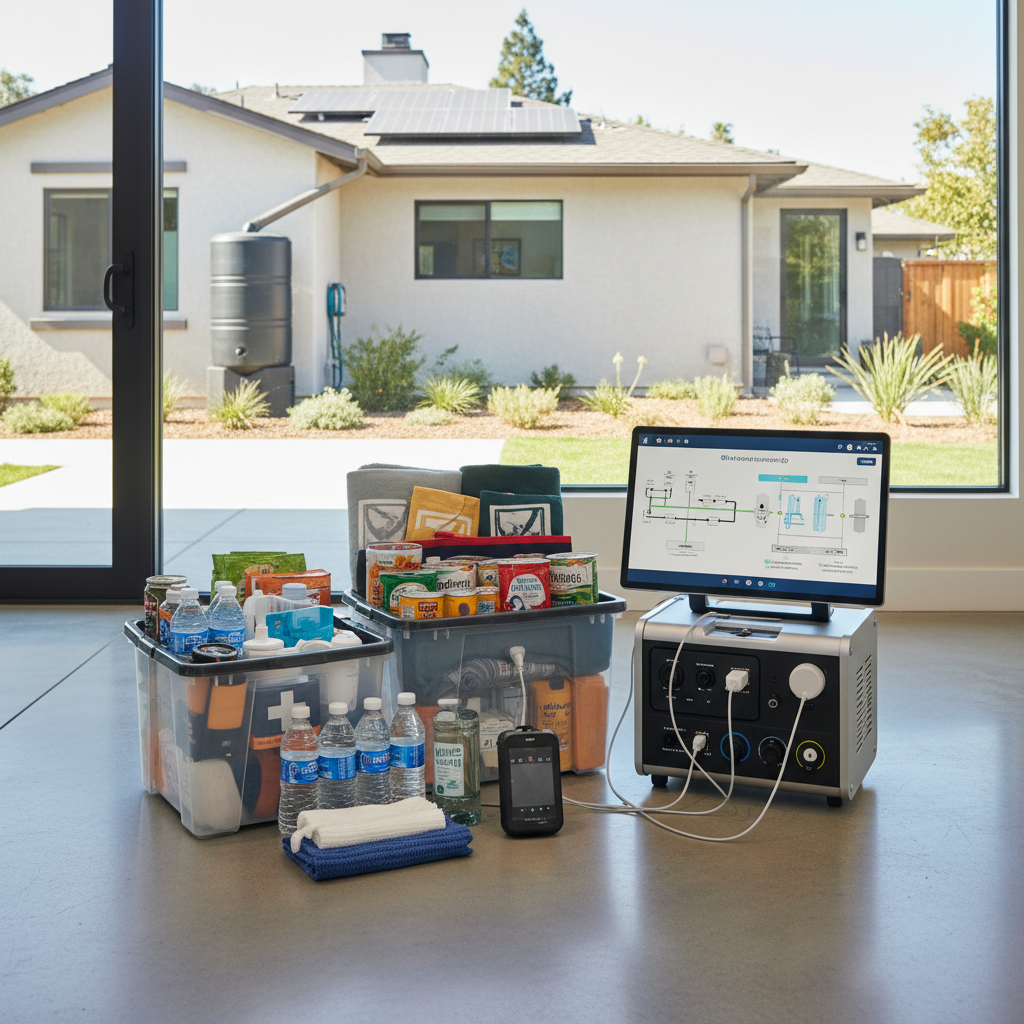
The 14-day standard is not merely about food and water; it is about maintaining a household’s operational capacity during regional isolation. According to 2026 Census Bureau surveys, the cost of emergency preparedness for the average California household has risen 18% due to inflation in specialized survival goods. An effective cache must now include:
- Water Purification: Gravity-fed systems capable of processing two gallons per person per day, bypassing reliance on municipal pressure.
- Energy Portability: While fixed solar arrays provide grid independence, a portable 2kWh power station is now considered the minimum requirement for maintaining medical devices and critical communication uptime.
- Pharmacy Resilience: A 30-day supply of essential medications; supply chain disruptions in late 2025 demonstrated that local pharmacies are often the first businesses to shutter during regional lockdowns.
Asset Mobility and Evacuation Mapping
Preparedness in 2026 also involves "Asset Mobility." This is the pre-planned logistics of moving non-real-property assets—vehicles, heirlooms, and sensitive data—out of the hazard zone before a mandatory order is issued. Real estate investors are increasingly looking for "Double-Access" properties—homes with at least two distinct paved egress routes. Properties with a single point of failure (one road in, one road out) are seeing a "hazard discount" of up to 12% in the current market, according to 2026 MLS data, reflecting the high stakes of physical evacuation logistics.
Practical Takeaways for the 2026 Homeowner
To optimize personal resilience and protect property value, homeowners should take the following actions:
- Adopt the 14-Day Standard: Update all emergency supplies to cover a minimum two-week isolation period, moving away from the outdated 3-day model.
- Establish a Mesh Network: Invest in localized communication hardware that allows for household or neighborhood coordination without cellular service.
- Map Secondary Egress: Physically drive and time alternative evacuation routes during different times of the day to account for potential traffic congestion during regional emergencies.
- Audit the Physical Buffer: Ensure that the "Logistics Zone"—the area immediately surrounding the garage and entry points—is kept clear for rapid asset loading during pre-evacuation warnings.
By shifting from a reactive mindset to a logistics-first approach, California homeowners can navigate the inherent risks of the state’s geography while preserving both their safety and their real estate equity.