The Shift from Drought to Deluge Resilience
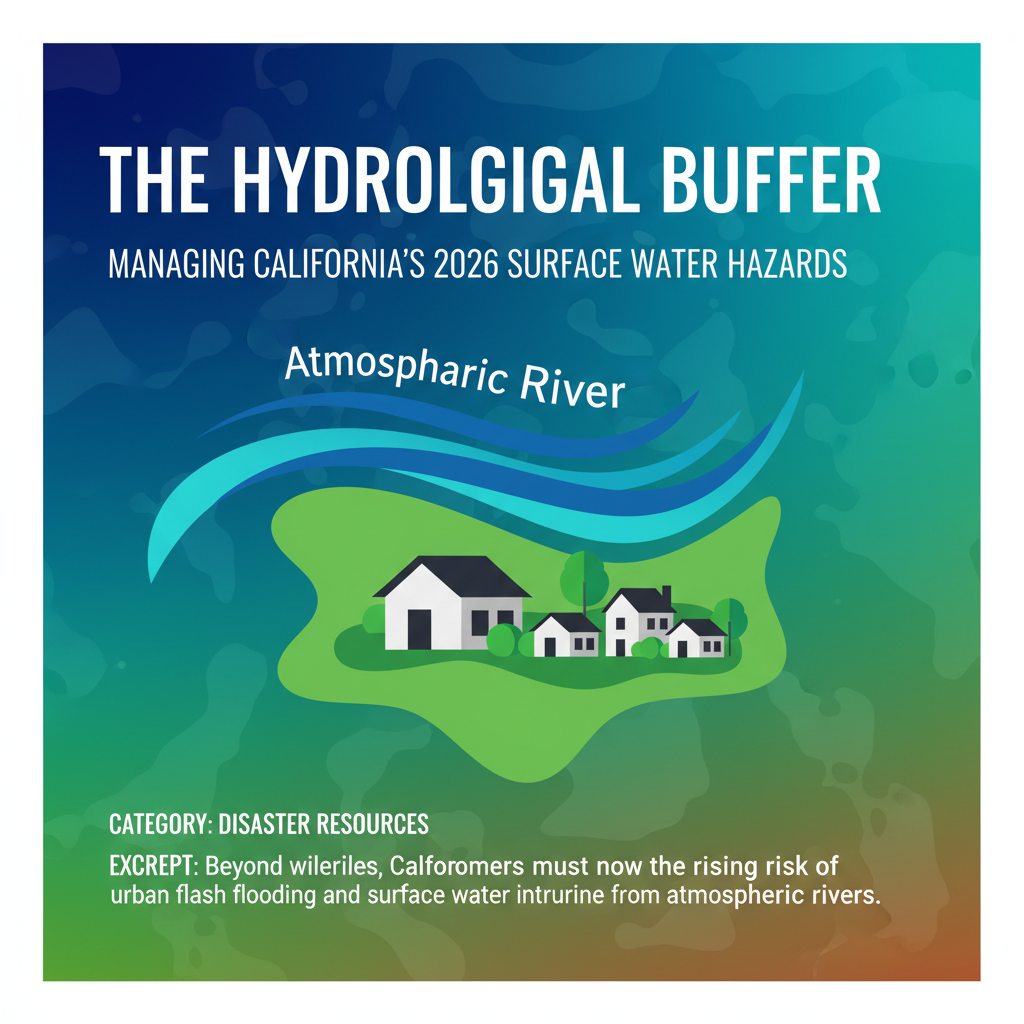
For the past decade, California homeowners have focused almost exclusively on wildfire mitigation. However, the 2025-2026 winter season has solidified a new reality: the state’s primary property threat is becoming increasingly hydrological. As atmospheric rivers (ARs) grow in frequency and intensity, the risk of surface water flooding—even in areas not designated as FEMA High-Risk Flood Zones—has become a critical concern for property valuation and structural integrity.
According to the California Department of Water Resources (DWR), atmospheric rivers provide up to 50% of the state's annual precipitation in just a few concentrated windows. For the 2026 homeowner, resilience now requires a sophisticated understanding of site drainage and the limitations of municipal infrastructure.
The Infrastructure Gap: Why Municipal Drains Fail
Many of California’s residential neighborhoods were engineered for historical precipitation averages that no longer reflect current climate patterns. When an AR-4 or AR-5 event hits, municipal storm drains often reach capacity within hours, leading to "pluvial flooding"—where water accumulates on streets and flows into driveways and garages regardless of proximity to a river or coast.
Recent data from the Legislative Analyst’s Office (LAO) suggests that nearly 1 in 5 Californians now live in areas with a significant risk of flooding. This risk is compounded by the fact that many standard HO-3 insurance policies specifically exclude damage from surface water, defined as water that accumulates on the ground before entering the home.
The Site Drainage Audit: 2026 Best Practices
Homeowners and investors must transition from passive drainage to active site management. This involves more than just cleaning gutters; it requires a holistic look at the property’s topography. Practical takeaways for site resilience include:
- Permeable Hardscaping: Replace traditional concrete driveways with permeable pavers or pervious concrete. This reduces the "runoff coefficient" of the lot, allowing water to infiltrate the soil rather than pooling against the foundation.
- Sub-Surface Redundancy: Install dual-pump sump systems with battery backups. In 2026, many high-end California properties are integrating IoT-enabled sensors that alert owners to rising water levels in crawlspaces via smartphone before damage occurs.
- The Bioswale Strategy: Utilize nature-based solutions by grading the landscape into bioswales—shallow, vegetated trenches that slow down and filter runoff, preventing the "flash" effect of heavy downpours.
The Insurance Nuance: NFIP vs. Private Flood Coverage
A significant blind spot for California homeowners is the belief that a "flood-free" history guarantees future safety. FEMA’s Risk Rating 2.0 has adjusted premiums to better reflect individual property risk, often resulting in higher costs but more accurate coverage. In the current 2026 market, many homeowners are turning to the private excess flood market to fill the gaps left by the National Flood Insurance Program (NFIP), which caps building coverage at $250,000—a figure well below the average California home reconstruction cost.
Preserving Equity Through Hydrological Hardening
Real estate data indicates that homes with documented drainage improvements and flood-resilient features are beginning to command a premium in the 2026 market. As buyers become more risk-aware, providing a "Hydrological Audit" during the due diligence period can facilitate smoother transactions and protect the seller's equity from post-inspection price reductions. In a state defined by extremes, the ability to manage water is becoming as valuable as the land itself.