The Financial Paradox of the 2026 California Homeowner
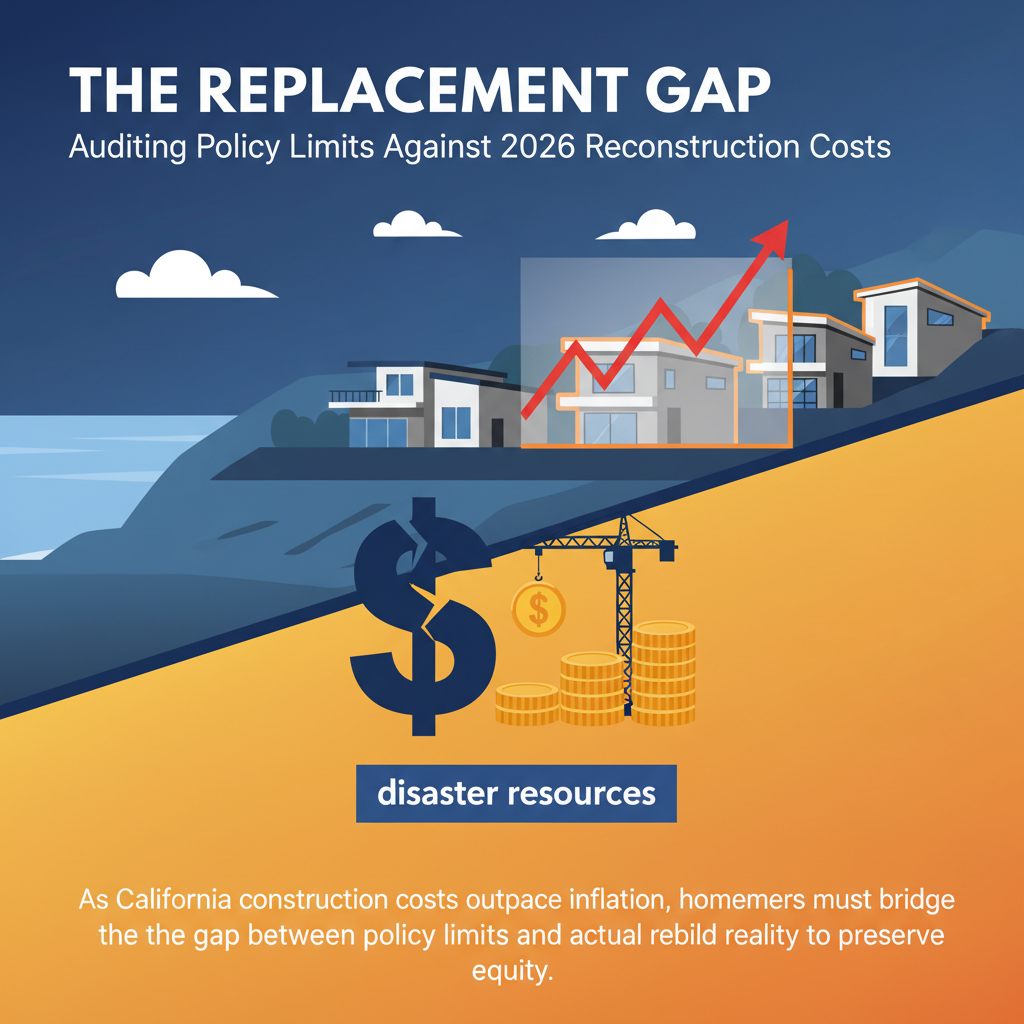
In the spring of 2026, California homeowners have become adept at physical hardening—installing ember-resistant vents and clearing defensible space. However, a silent risk remains: the "Replacement Gap." While the California Department of Insurance has stabilized the market through the 2025 Sustainable Insurance Strategy, many homeowners are discovering that their coverage limits are based on 2022 valuations that do not reflect the current 18% surge in regional construction labor costs.
The Rising Cost of Reconstruction
According to data from the 2026 California Construction Cost Index (CCCI), the price per square foot for custom residential reconstruction in high-demand areas like the Sierra Foothills and the Santa Cruz Mountains has reached record highs. This is driven by three primary factors:
- The Skilled Labor Shortage: Employment data from the California Employment Development Department indicates a 12% deficit in skilled trade workers, leading to premium wage requirements for post-disaster rebuilding.
- Regulatory Compliance: New 2026 building codes require high-performance insulation and integrated greywater systems, adding an estimated $45 per square foot to standard rebuild costs.
- Material Volatility: While global supply chains have stabilized, California-specific environmental mandates on timber and concrete have created a local pricing premium.
Evaluating the 'Ordinance or Law' Provision
One of the most overlooked components of disaster preparedness is "Ordinance or Law" coverage. In California, if a home is more than 50% damaged, it must be rebuilt to current 2026 codes, not its original specifications. Standard policies often cap this coverage at 10% of the dwelling limit. Real estate analysts at CBRE suggest that for homes built prior to 2015, this 10% cushion is no longer sufficient to cover the costs of modern seismic and energy mandates.
The Role of the FAIR Plan in 2026
For those in high-risk WUI (Wildland-Urban Interface) zones, the California FAIR Plan remains the insurer of last resort. However, investors and homeowners must recognize that the FAIR Plan typically provides basic fire coverage. To achieve true resilience, a "Difference in Conditions" (DIC) policy is essential to cover liabilities, theft, and water damage that the FAIR Plan excludes. As of April 2024, data from the National Association of Realtors (NAR) indicates that homes with a comprehensive DIC wrap sell 4% faster than those with fire-only coverage.
Practical Takeaways for Homeowners
To move beyond basic preparedness and ensure financial recovery after a disaster, homeowners should implement the following strategies:
- Annual Replacement Cost Audit: Request a "replacement cost estimator" (RCE) from your agent annually. Ensure it accounts for the 2026 labor rates in your specific zip code, not just national averages.
- Maximize 'Extended Replacement Cost' Riders: Seek policies that offer a 50% or 100% extended replacement cost buffer to protect against the post-disaster surge in material prices (demand surge).
- Digital Asset Vaulting: Beyond physical documents, maintain a cloud-based video inventory of every room. For insurance adjusters in 2026, high-definition video evidence is the gold standard for expediting total loss claims.
- Review Deductible Liquidity: With many insurers raising wind/hail or wildfire deductibles to 2-5% of the dwelling value to maintain solvency, ensure you have an emergency fund or a dedicated line of credit to cover a $20,000 to $50,000 out-of-pocket expense.
Preserving Equity Through Financial Foresight
Disaster resilience is often framed as a hardware problem—roofs, vents, and pumps. But for the California homeowner in 2026, the greatest threat to equity is not just the fire or the quake itself, but the inability to rebuild what was lost. By auditing policy limits against real-world reconstruction data, homeowners can ensure their most significant asset is protected both physically and fiscally.


