The New Currency of California Real Estate: The Risk Score
In the California real estate market of April 2026, the traditional mantra of ‘location, location, location’ has evolved. Today, a property’s value is inextricably linked to its Unified Risk Profile (URP)—a standardized data set that aggregates wildfire, atmospheric river, and seismic probabilities. According to recent 2026 data from the California Association of REALTORS® (C.A.R.), homes with ‘High-Resilience’ ratings are now commanding a 7.4% price premium over non-certified comparable properties in the same zip codes.
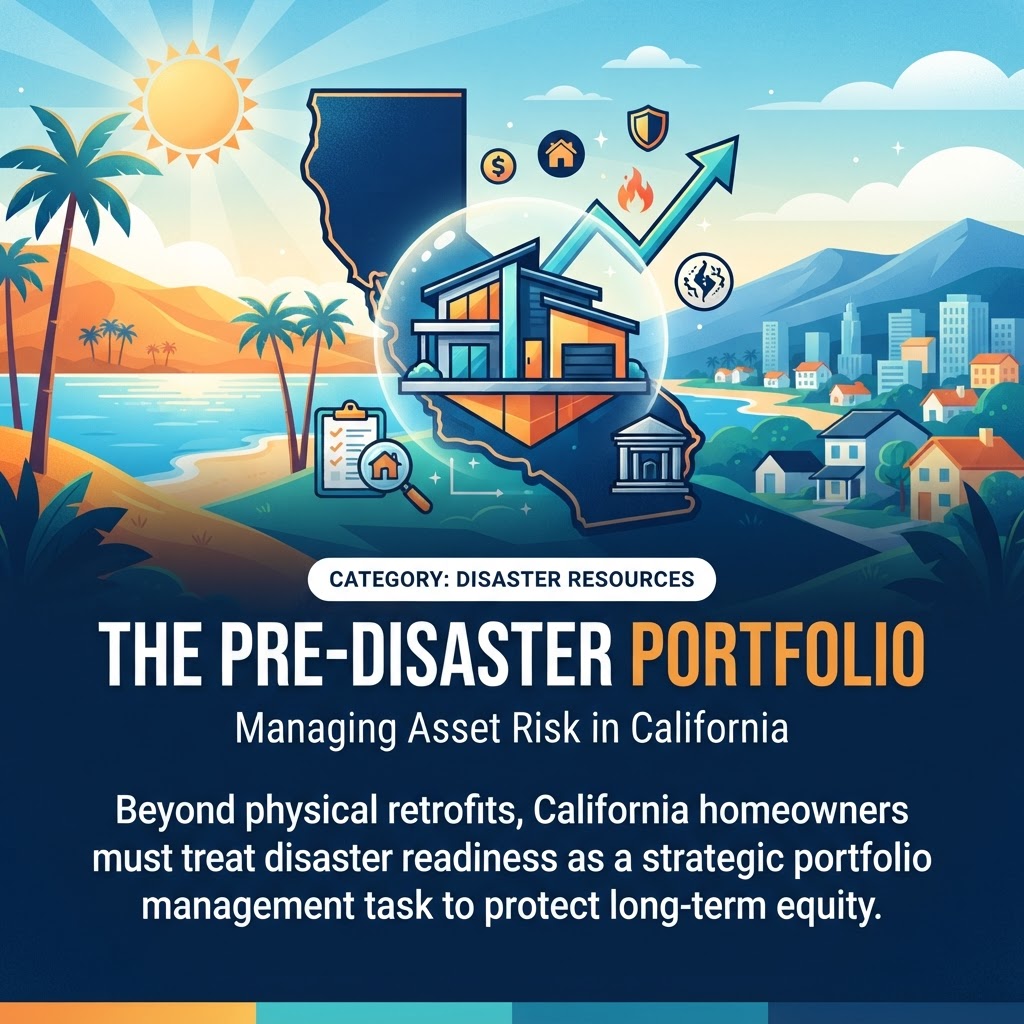
For homeowners, disaster preparedness is no longer just a safety measure; it is a fundamental pillar of asset management. As the California Department of Insurance (CDI) continues to implement the 2025 ‘Safer from Wildfires’ regulatory framework, the ability to document and disclose mitigation efforts has become the primary lever for securing affordable private-market coverage over the FAIR Plan.
The 2026 Insurance Landscape: Beyond the Last Resort
While the California FAIR Plan remains a safety net, its rolls have seen a strategic shift. Homeowners who have implemented the ‘Zone Zero’ (0-5 feet from the structure) ember-resistant upgrades are seeing a 12-15% reduction in private market premiums. The National Association of Insurance Commissioners (NAIC) reports that as of Q1 2026, private insurers are increasingly using satellite-based AI to verify defensible space compliance before renewing policies.
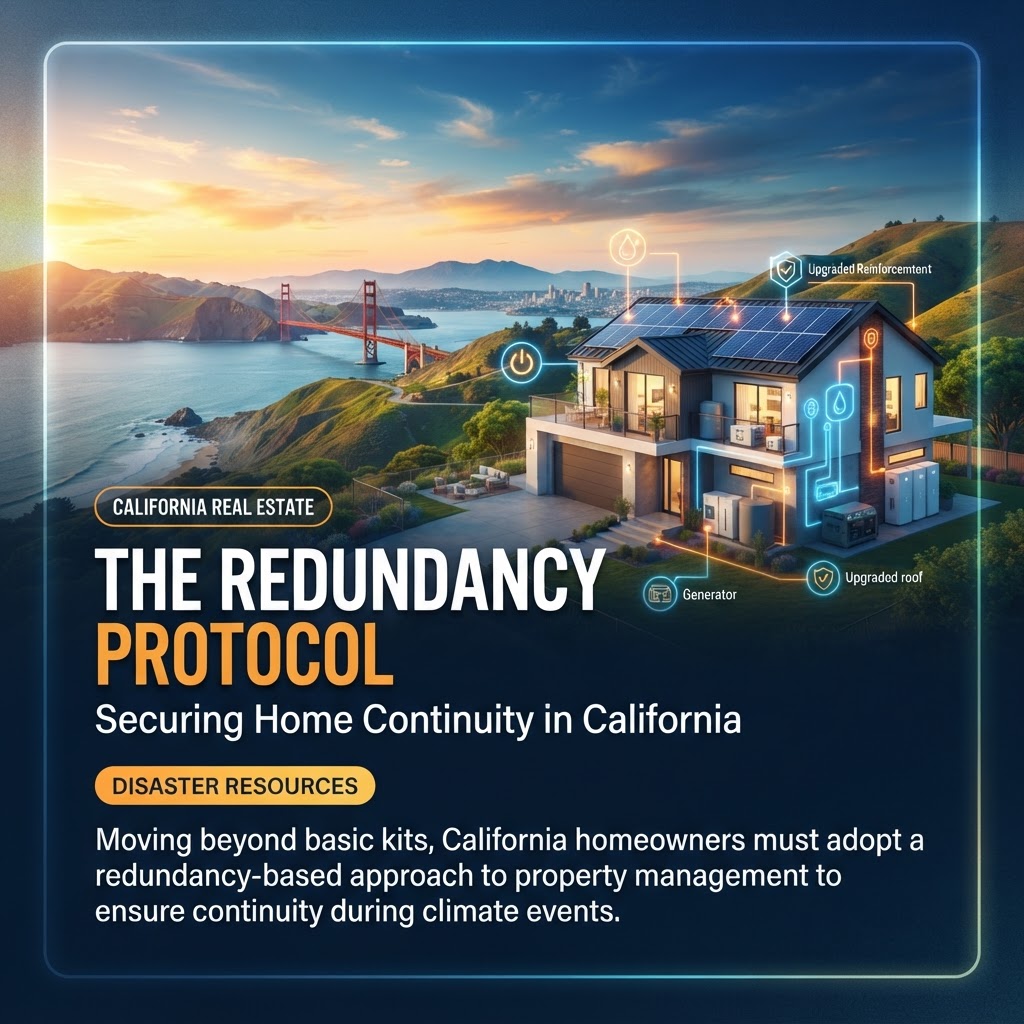
To navigate this, homeowners should focus on the ‘Resilience Portfolio.’ This involves maintaining a digital archive of receipts and date-stamped photos of home hardening efforts, such as 1/16th-inch mesh vent screens and Class A ignition-resistant roofing. This documentation is now a standard requirement for buyers during the due diligence period, often requested alongside the Natural Hazard Disclosure (NHD) report.
Actionable Resilience: From Vegetation to Virtual Resources
Disaster readiness in 2026 requires a multi-pronged approach that balances physical labor with digital connectivity. Key areas for immediate action include:
- The 5-Foot Non-Combustible Zone: Ensure the immediate perimeter of the home is free of mulch, woody shrubs, and stored firewood. Data from Cal Fire indicates that 80% of homes lost in wildfire events are ignited by embers rather than the main fire front.
- Hydrological Fortification: With the 2026 winter season seeing a 20% increase in atmospheric river frequency, cleaning gutters and ensuring proper site drainage is no longer seasonal—it's perpetual. The installation of smart-sump systems can prevent the subterranean moisture issues that now frequently trigger ‘uninsurable’ mold clauses.
- Digital Resource Integration: Every California homeowner should be registered with the Cal OES ‘MyHazards’ tool and have the Cal Fire ‘Ready for Wildfire’ app synchronized with local emergency alerts. These platforms now provide real-time evacuation route updates based on traffic flow and fire velocity.
The Strategic Takeaway for Homeowners
Preparedness in the current market is proactive, not reactive. For those planning to sell within the next 18 months, an independent resilience audit is highly recommended. By identifying and correcting ‘soft spots’ in a home’s defense before the official NHD report is pulled, sellers can avoid the ‘risk-discount’ that savvy 2026 buyers are using to negotiate lower prices. Investors and homeowners alike must view these mitigation costs not as expenses, but as capital improvements that safeguard the property’s equity against the volatile climate of the mid-2020s.