The Evolution of Preparedness: From Passive to Active Mitigation
As of April 2026, the California real estate market has reached a critical juncture where passive disaster preparedness—such as merely maintaining a defensible space or owning a fire extinguisher—is no longer sufficient to satisfy insurers or protect home equity. With the California Association of Realtors (CAR) reporting that insurance premiums for high-risk zones have risen by an average of 24% over the last 24 months, homeowners are shifting toward 'Active Mitigation.' This strategy utilizes Internet of Things (IoT) sensors and automated systems to intervene in a disaster before it escalates.
Quantifying the Benefit: Data-Driven Resilience
The financial incentive for integrating smart-sensor technology is becoming measurable. According to 2025 data from the National Association of Realtors (NAR), homes equipped with integrated disaster-mitigation systems (seismic shut-offs, smart leak detection, and exterior ember-monitoring) see a 4.2% higher valuation in competitive California markets compared to non-equipped peers. Furthermore, several private carriers in the California market now offer premium credits of 10% to 15% for homes that provide verified, real-time data feeds to monitoring centers, effectively turning the home into a self-protecting asset.
The Tech Stack of the Resilient 2026 California Home
Homeowners looking to future-proof their property should focus on three primary technological pillars that address California’s most persistent risks:
- Automated Water Shut-off Valves: With atmospheric rivers becoming more frequent and intense, interior water damage is a rising claim category. Smart valves detect abnormal flow patterns and shut off the main water line instantly, preventing catastrophic flood damage.
- Exterior Heat and Ember Sensors: In the Wildland-Urban Interface (WUI), these sensors can trigger automated rooftop or perimeter sprinkler systems (using recycled graywater) when heat signatures exceed safe thresholds, significantly increasing the chance of home survival during a wildfire.
- Seismic Gas Shut-off Valves (SGSV): While manual valves have been standard, the 2026 standard involves electronic valves integrated with the home’s smart hub, allowing for remote diagnostic checks and immediate isolation of gas lines during a registered seismic event of 5.0 magnitude or higher.
The Insurance Integration: Securing Coverage in a Tight Market
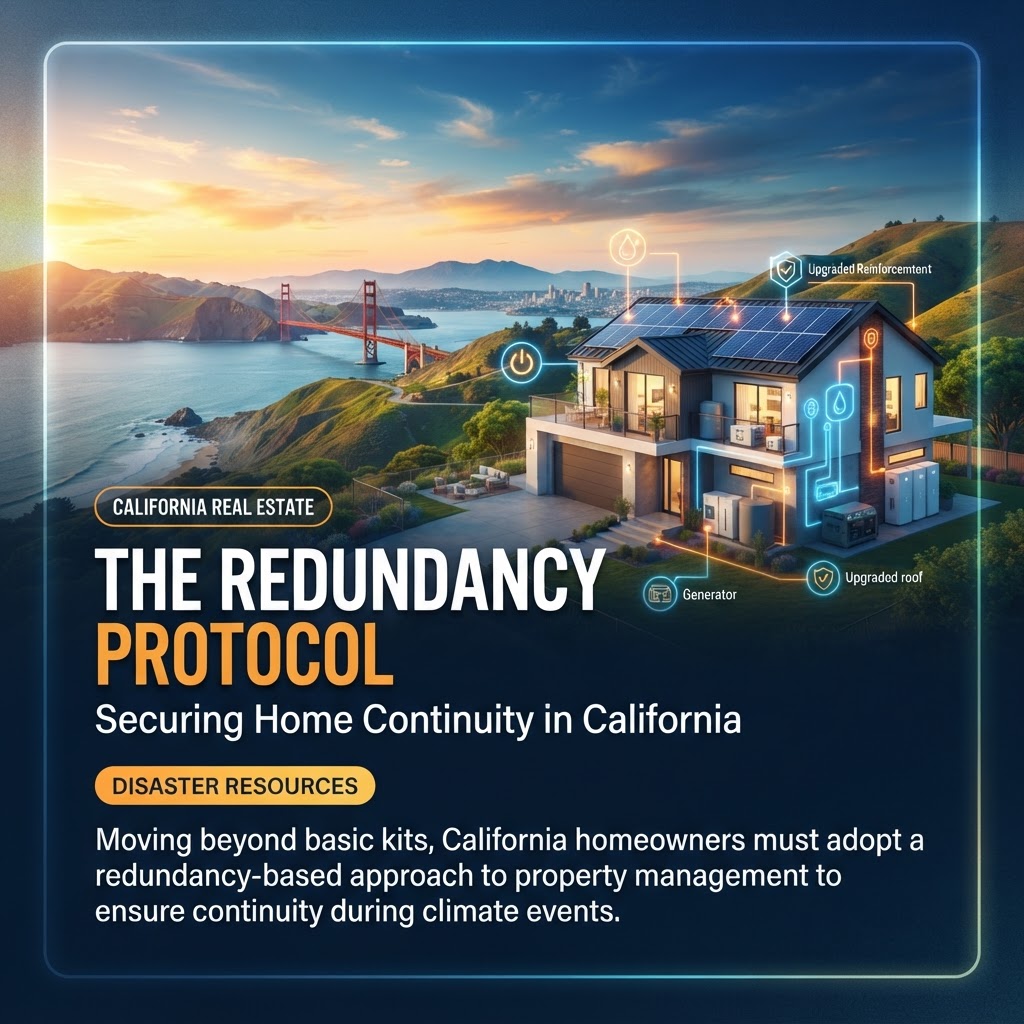
The California FAIR Plan and the diminishing pool of private insurers are increasingly prioritizing 'verifiable readiness.' For homeowners, this means maintaining a digital record of system health. Practical steps include: 1) Ensuring all IoT devices are UL-listed and meet the latest CAL FIRE standards; 2) Consolidating device alerts into a single 'Resilience Dashboard' that can be shared with underwriters during the annual policy review; and 3) Investing in redundant power sources, such as wall-mounted battery backups, to ensure sensors remain operational during Public Safety Power Shutoff (PSPS) events.
Practical Takeaways for Homeowners and Investors
To navigate the 2026 landscape, stakeholders should adopt the following checklist:
- Conduct a Tech-Audit: Before listing or buying, evaluate if the property has automated shut-offs for gas and water. These are now high-priority items during the due diligence phase.
- Leverage the 'Smart' Discount: Contact your insurance broker specifically to ask about 'Electronic Mitigation Credits.' Many homeowners are eligible for discounts they haven't yet claimed.
- Prioritize Power Redundancy: A smart sensor is useless without power. Ensure your home’s resilience stack is tied to a localized solar or battery system to bridge the gap during grid failures.