The Shift from Litigation to Construction in California’s Coastal Enclaves
As of April 2026, the California real estate landscape is navigating a pivotal transition. The era of theoretical legal battles over the 'Builder’s Remedy'—the provision in the Housing Accountability Act that allows developers to bypass local zoning in non-compliant cities—has evolved into a tangible construction boom. With the California Department of Housing and Community Development (HCD) reporting that over 90% of jurisdictions have now reached compliance for the 6th Cycle Housing Element, the remaining holdouts are facing a surge of high-density projects that are fundamentally altering land valuations.
Data-Driven Enforcement: The HCD Accountability Unit Effect
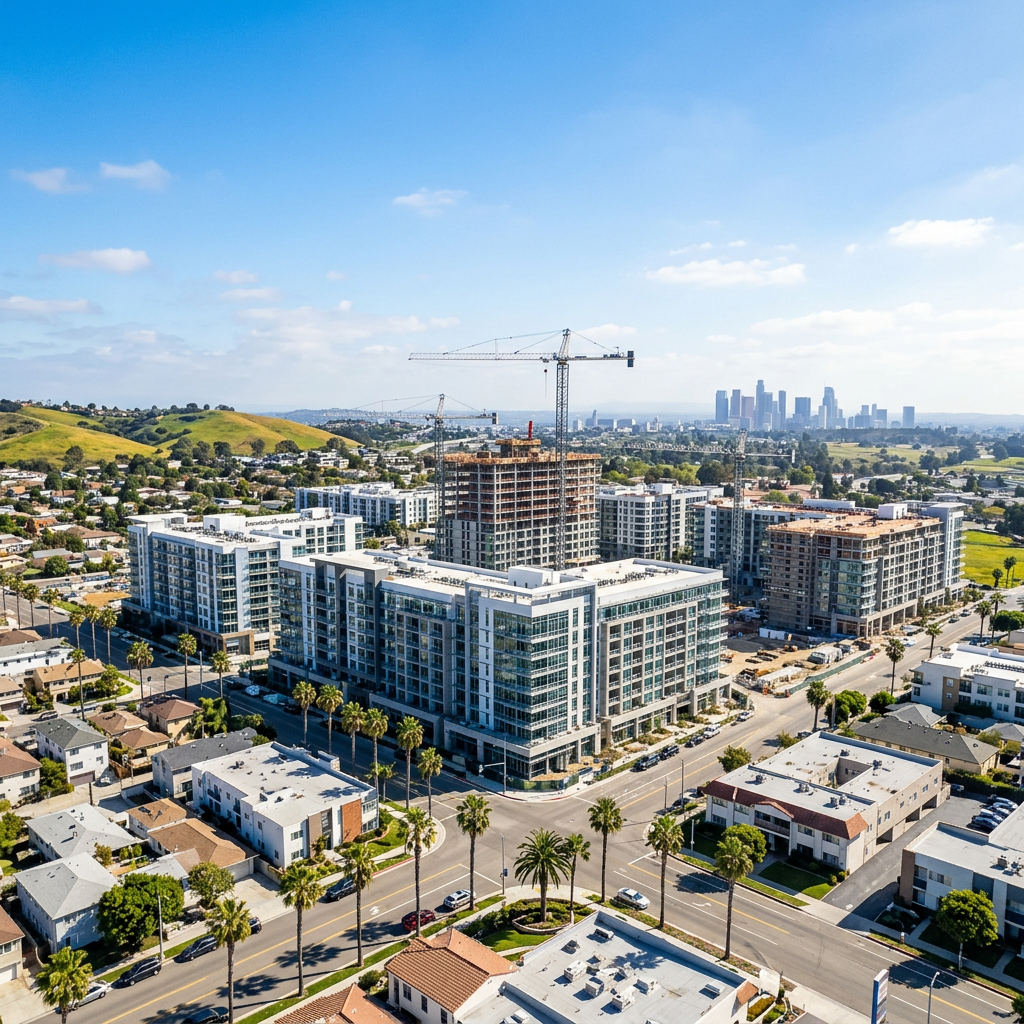
The 2026 market is defined by the rigorous oversight of the HCD’s Accountability Unit. According to recent data, the state has initiated enforcement actions against several dozen municipalities in the first quarter alone. This aggressive stance has created a 'density windfall' for developers who secured entitlements in 2024 and 2025. In cities like Santa Monica and Huntington Beach, projects that would have previously been capped at three stories are now breaking ground at eight to twelve stories, featuring significant affordable housing components that unlock state-mandated density bonuses.
The Investment Perspective: Pricing Contested Entitlements
For institutional investors, the 2026 focus has shifted from raw land acquisition to 'entitlement arbitrage.' CBRE research suggests that entitled 'Builder’s Remedy' sites in coastal markets are commandingly high premiums—often 25% to 40% above traditional zoning valuations. However, these assets come with unique risk profiles. Investors are now pricing in 'litigation contingency buffers,' as local opposition remains a hurdle, even if the legal precedent favors the developer. The yield on these projects remains attractive, with projected Internal Rates of Return (IRR) for high-density mixed-use developments in formerly low-density zones exceeding 18%, significantly outperforming traditional multi-family builds in compliant districts.
Economic Trends: The Decentralization of Affluence
The economic impact of this housing surge is beginning to manifest in the local labor market. By increasing housing supply in high-cost-of-living areas, California is seeing a stabilization in service-sector labor costs. As the 'missing middle' housing inventory increases, the wealth gap in these enclaves is slightly narrowing, creating a more sustainable economic base for local retail and commercial sectors. This trend is particularly visible in Silicon Valley, where mid-tier tech workers are finally finding inventory within reasonable commuting distances of the primary R&D hubs.
Practical Takeaways for Market Participants
- For Developers: Prioritize sites in 'non-compliant' or 'newly compliant' jurisdictions where the Housing Element implementation is still in its infancy. The window for maximum density leverage is narrowing as cities rush to finalize their zoning plans.
- For Investors: Focus on the 'Secondary Entitlement' market. Purchasing projects that have cleared initial CEQA hurdles but require construction financing offers a balanced risk-reward ratio in the current high-interest environment.
- For Sellers: Landowners in R1-zoned areas of affluent coastal cities should conduct a 'highest and best use' analysis that accounts for 2026 density bonus laws, as their land value may be double what traditional comps suggest.
The 2026 market proves that the 'Builder’s Remedy' was never just a legal threat; it was the catalyst for a structural re-zoning of California’s most desirable markets. As these units hit the market over the next 24 months, the state’s housing crisis may finally see its first meaningful downward pressure on pricing.