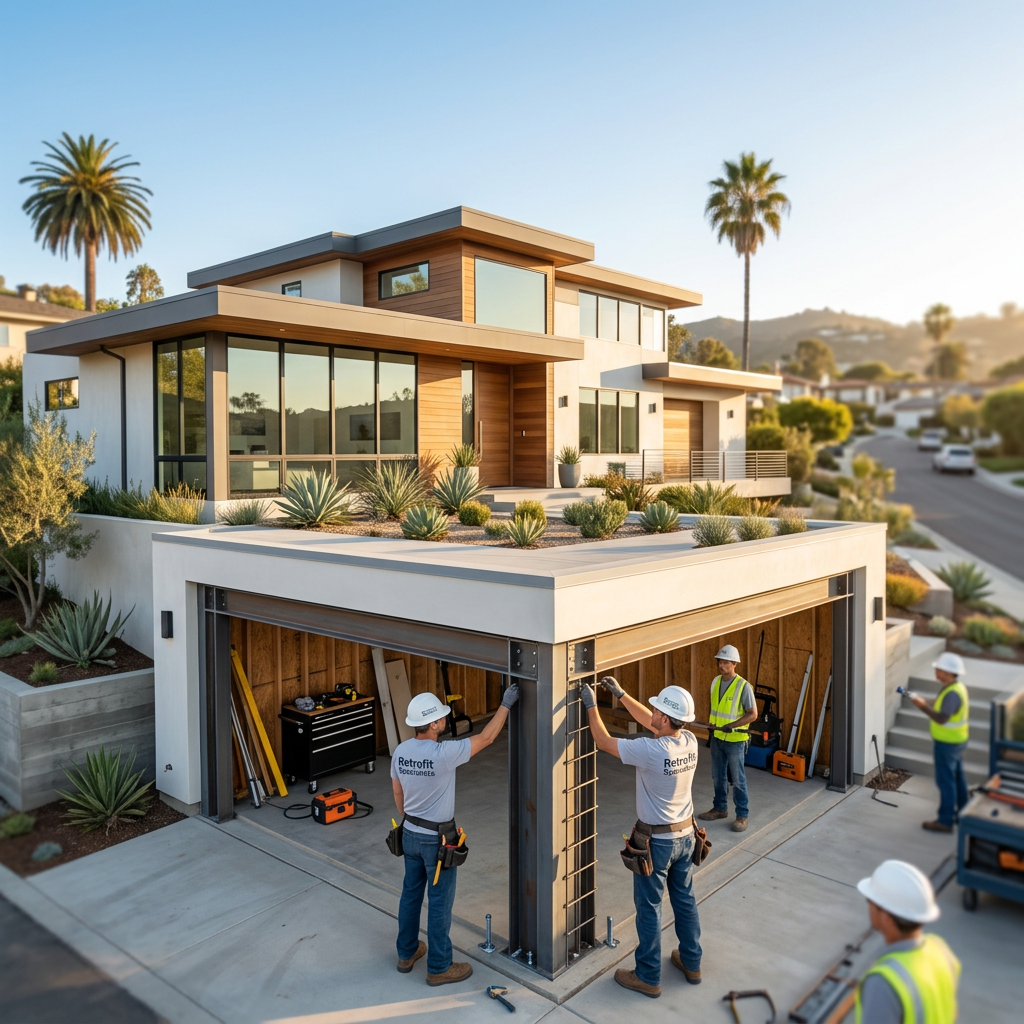
The Divergence of Peril Awareness
In the 2026 California real estate landscape, wildfire mitigation has become a standard line item in home maintenance. However, a more silent threat continues to jeopardize the long-term solvency of California homeowners: the seismic insurance gap. According to recent data from the California Earthquake Authority (CEA), while nearly 90% of California residents live on or near a major fault line, less than 13% of homeowners carry specific earthquake coverage. Unlike fire damage, which is typically covered under standard HO3 policies, earthquake damage is excluded, leaving the vast majority of the state’s $12 trillion in residential real estate exposed to total loss.
Quantifying the Seismic Probability
The United States Geological Survey (USGS) UCERF3 report indicates a 99% probability of a magnitude 6.7 or greater earthquake occurring in California within the next 30 years. For homeowners in the San Francisco Bay Area or the Los Angeles Basin, this is not a matter of 'if,' but 'when.' The financial impact of a major event is exacerbated by the modern 'liquidity crunch' in the insurance market. As private carriers restrict new fire policies, they are also tightening the underwriting requirements for the optional earthquake endorsements, often requiring homes built before 1980 to provide proof of seismic retrofitting before coverage is even considered.
Structural Hardening: Beyond Aesthetic Value
For a homeowner or investor, seismic resilience is no longer an invisible upgrade; it is a critical component of asset protection. Properties with 'soft-story' vulnerabilities—common in mid-century multi-family units and homes with living spaces over garages—face the highest risk of collapse. However, for the average single-family home, the primary failure point is the 'cripple wall'—the short wood-framed wall between the foundation and the floor of the house.
Technical interventions that provide the highest ROI include:
- Bracing and Bolting: Securing the house frame to the concrete foundation and reinforcing the cripple walls with structural plywood. According to the FEMA Benefit-Cost Analysis, every $1 spent on retrofitting can save up to $7 in recovery costs.
- Automatic Gas Shut-off Valves (ASVs): Data from the National Fire Protection Association shows that post-earthquake fires, often caused by ruptured gas lines, can cause more property damage than the shaking itself. Installing seismic valves is a low-cost, high-impact preventative measure.
- Foundation Anchoring: Essential for homes on sloped lots, ensuring the structure does not slide off its base during lateral movement.
Financial Incentives and Resilience Resources
California homeowners have access to specific mechanisms to offset the costs of these upgrades. The 'Earthquake Brace + Bolt' (EBB) program, managed by the California Residential Mitigation Program (CRMP), offers grants up to $3,000 for qualifying residential retrofits. Additionally, the CEA offers premium discounts of up to 25% for homeowners who can provide a signed 'Verification of Seismic Retrofit' form from a licensed contractor.
Practical Takeaways for the Proactive Homeowner
- Audit the Foundation: If your home was built before 1980, hire a structural engineer to assess whether it is bolted to the foundation. This is a primary requirement for many modern lenders and insurers.
- Review the 'Excluded Perils': Read your current homeowners policy declaration page. If 'Earthquake' is listed under exclusions, seek a quote for a standalone policy or a CEA wrap-around to protect your equity.
- Leverage the Modern MLS: Sellers should explicitly list seismic retrofits in the 'Property Disclosures' and marketing materials. In 2026, buyers are increasingly scrutinizing the 'Hazard Disclosure Report' (NHDR) and favoring homes with documented structural hardening.
- Install Secondary Protection: Invest in smart-home sensors that detect seismic activity and automatically shut off water and gas mains to prevent secondary flood and fire damage.
Conclusion
Resilience in the California market requires moving beyond reactive measures. By addressing the structural vulnerabilities of the home before the next major seismic event, homeowners can secure their physical safety while simultaneously protecting their largest financial asset against the shifting tide of insurance availability and cost.


