The Invisible Weak Link in Home Resilience
In 2026, California homeowners have become proficient in ‘hardening’ their individual properties—installing ember-resistant vents, Class A roofing, and specialized sprinkler systems. However, a property’s true resilience is only as robust as the municipal infrastructure connecting it to the world. As the California Department of Transportation (Caltrans) highlighted in their recent 2025 Climate Change Vulnerability Assessment, over 4,000 miles of state highways are currently at ‘high risk’ for catastrophic flooding or wildfire-related closures. For the homeowner, preparedness must now extend beyond the property line to include a critical audit of public infrastructure reliability.
The Egress Equation and Property Value
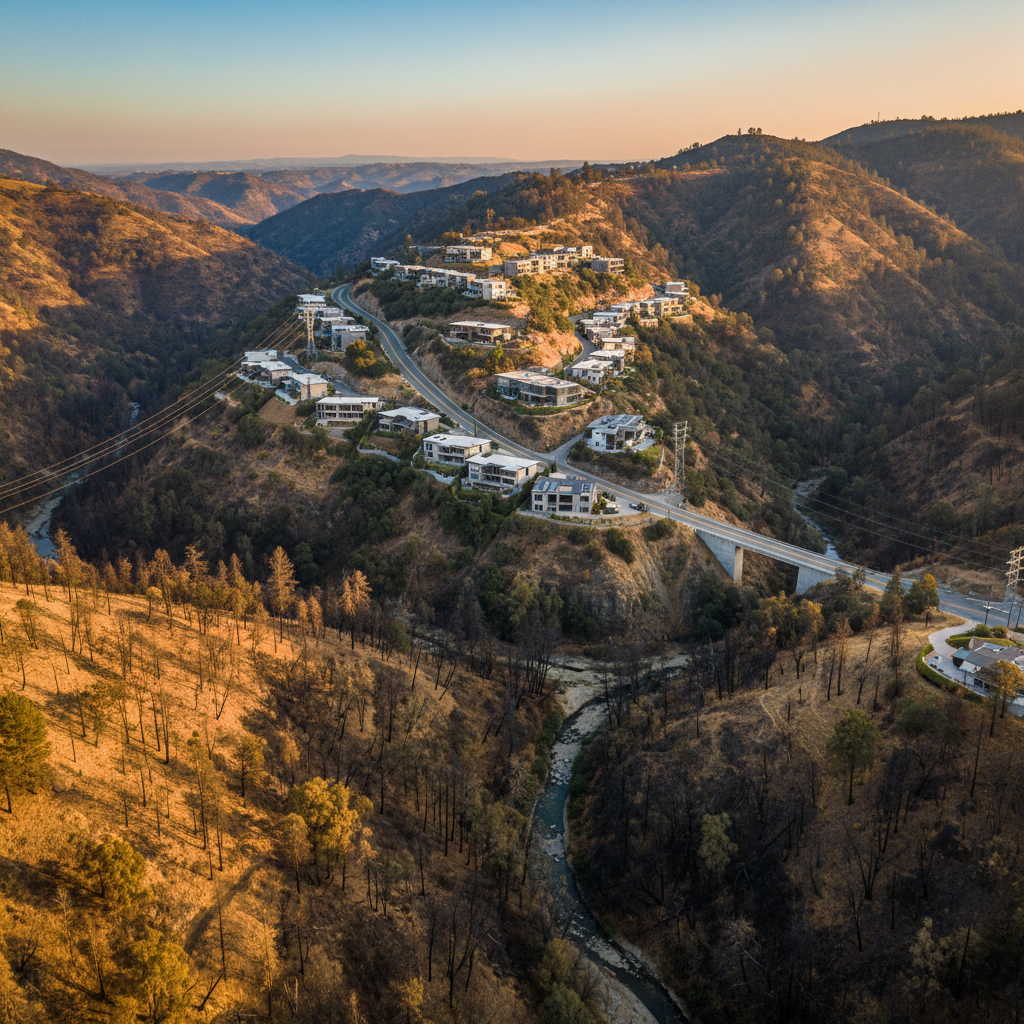
Data from the National Association of Realtors (NAR) suggests that properties with only one point of ingress or egress in Wildfire Urban Interface (WUI) zones saw a 12% slower appreciation rate over the last 18 months compared to those with multiple access routes. This ‘Access Paradox’ describes a situation where a home may survive a disaster physically but becomes a stranded asset due to road failure or bridge collapse. For investors and homeowners, verifying the structural integrity of county-maintained bridges and the frequency of road maintenance is now a necessary part of the due diligence process.
Utility Interdependency and the FAIR Plan
The 2024 California Building Industry Association (CBIA) report indicates that 18% of modern high-risk developments are moving toward ‘decentralized’ infrastructure. However, the majority of existing homes remain tied to aging municipal systems. In many WUI districts, the California FAIR Plan and private carriers are increasingly scrutinizing ‘fire flow’—the amount of water pressure available from municipal hydrants during a peak event. If a municipal water main is aged or poorly maintained, the individual home’s hardening efforts may be negated in the eyes of an underwriter. Homeowners should actively engage with local water districts to obtain fire flow test results for their specific street, as this data is becoming a primary driver of insurance eligibility.
The Infrastructure Resilience Audit
As the state moves further into 2026, the focus of disaster preparedness is shifting from reactive to systemic. Homeowners are no longer just preparing for the event; they are preparing for the aftermath. This includes assessing the ‘invisible’ infrastructure, such as fiber-optic redundancy and municipal drainage capacity. According to data from the California Office of Emergency Services (Cal OES), neighborhoods that invested in upgraded culverts and drainage systems saw a 40% reduction in secondary mudslide damage following the 2025 winter storm cycle.
Practical Takeaways for the Strategic Homeowner
- Map Secondary Egress: Identify at least two secondary exit paths. Verify if these are private easements or county-maintained roads; private roads often lack the clearance and maintenance required for emergency vehicle access.
- Request Fire Flow Data: Contact your local water municipality to request a hydrant pressure test for your immediate area. Low pressure can be a leading indicator of future insurance non-renewal.
- Monitor Municipal ‘Red Tags’: Check the local public works department for a list of bridges or roads with weight restrictions or deferred maintenance. A restricted bridge can delay emergency response times and impact property valuation.
- Invest in Digital Redundancy: Since subterranean fiber-optic lines are vulnerable to seismic shifts and fire, homeowners should maintain satellite-based backup systems to ensure access to emergency alerts and digital financial records when local infrastructure fails.