The Paradigm Shift: From Reactive Kits to Proactive Systems
For decades, disaster preparedness in California was framed around the 'emergency kit'—a dusty bin of canned goods and flashlights stored in the garage. However, in the 2026 real estate climate, where climate volatility has become a standard market variable, preparedness has transitioned from a one-time task to a core component of property management. For the modern California homeowner, resilience is no longer an event; it is a maintenance cycle.
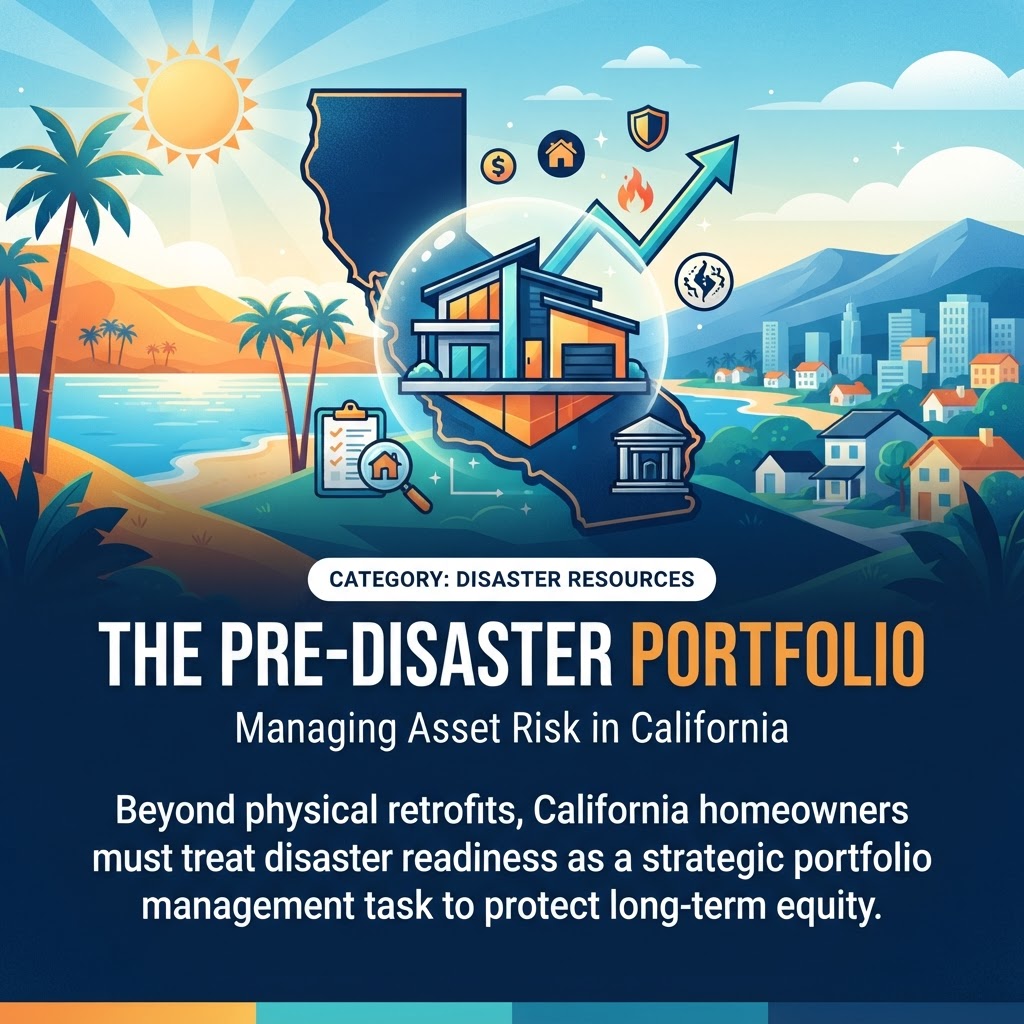
As the California Department of Insurance reports that non-renewal rates in high-risk zones have stabilized only for properties demonstrating 'Active Mitigation,' the financial stakes of preparedness have never been higher. Homeowners must now view disaster readiness through the lens of institutional risk management to preserve both physical safety and asset liquidity.
The 2026 Risk Reality: A Perpetual Cycle
California’s threat profile has evolved into a year-round reality. According to recent data from the California Governor’s Office of Emergency Services (Cal OES), the traditional 'fire season' has been replaced by a continuous risk window, punctuated by extreme seismic activity and winter atmospheric rivers. This requires a shift in how we approach home safety. Rather than preparing for a specific season, homeowners should adopt a quarterly Resilience Audit.
The Insurance-Maintenance Connection
The relationship between home maintenance and insurability has reached a critical juncture. Data from the 2025 National Association of Realtors (NAR) 'Sustainability Report' indicates that 72% of California buyers now prioritize properties with documented resilience histories. To maintain private-market coverage—and avoid the high premiums of the FAIR Plan—homeowners must treat defensible space and seismic bracing as recurring maintenance items.
Standard insurance carriers are increasingly requiring digital proof of 'Zone 0' compliance—the five-foot non-combustible perimeter around a structure. By integrating this into a standard spring and fall maintenance schedule, homeowners can provide the 'maintenance logs' that 2026 underwriters frequently demand during policy renewals.
The Digital Resilience Repository
Physical preparedness is only half the battle. The modern homeowner must maintain a Digital Resilience Repository. This is a centralized, cloud-based archive containing:
- Property Hardening Records: Receipts and certifications for Class A roofing, ember-resistant vents, and seismic retrofitting.
- Visual Inventory: A high-definition video walkthrough of the property, updated biannually, stored off-site for immediate insurance claims.
- Resource Mapping: Real-time links to the MyShake app for seismic alerts and local Zonehaven evacuation maps.
Practical Takeaways for the 2026 Homeowner
To successfully navigate California’s risk landscape, homeowners and investors should implement the following administrative and physical protocols:
- The Quarterly Defensible Space Audit: Every 90 days, inspect 'Zone 0.' Remove any organic mulch, dead vegetation, or stored firewood within five feet of the home. In 2026, this documentation can be used to negotiate lower insurance premiums.
- Seismic System Checks: Bi-annually test automatic gas shut-off valves and inspect foundation bolting for signs of corrosion or movement, especially following minor tremors.
- Policy Synchronization: Review your insurance declarations page annually. Ensure that 'Extended Replacement Cost' coverage accounts for the 15% rise in California construction labor costs observed over the last 18 months.
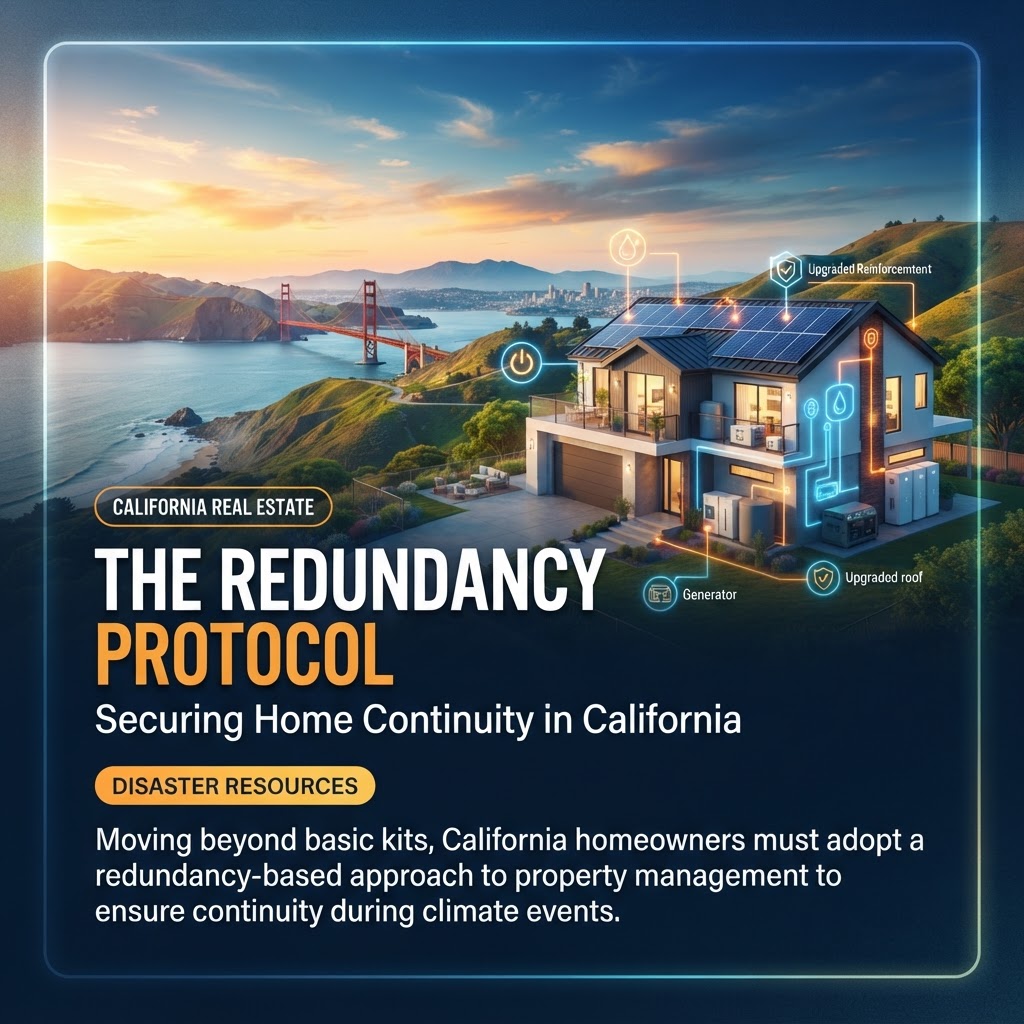
- Infrastructure Redundancy: Beyond solar power, ensure that secondary communication lines (such as satellite-linked internet) are integrated into your home office, as cellular networks are increasingly strained during regional emergencies.
In today's market, a 'prepared' home is a 'premium' home. By institutionalizing these preparedness measures into the standard lifecycle of homeownership, Californians can transform disaster readiness from a source of anxiety into a measurable asset.