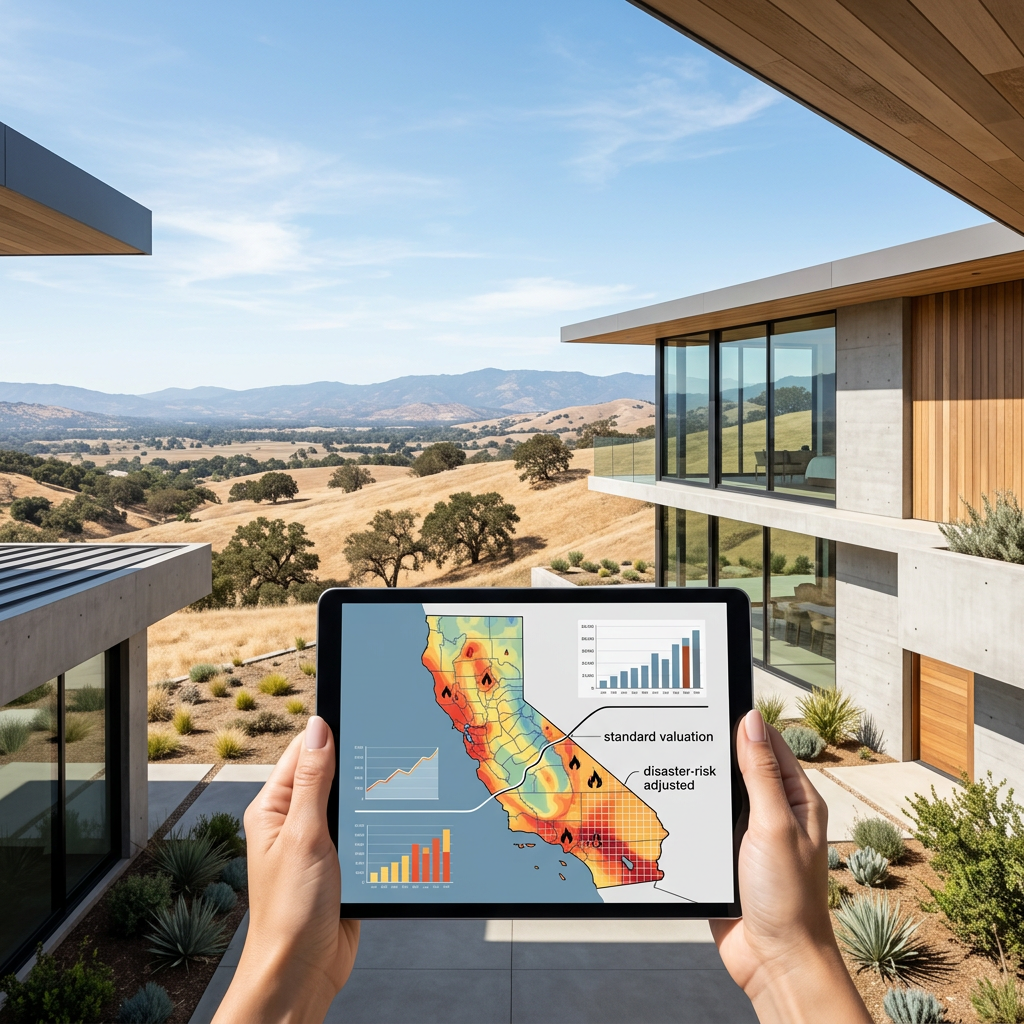
The Shift from Disclosure to Valuation
For decades, California homeowners viewed disaster preparedness as a matter of personal safety and insurance compliance. However, by the first quarter of 2026, a significant shift has occurred: disaster resilience has become a core metric in property appraisal. No longer relegated to a footnote in a disclosure packet, a property’s ‘Resilience Score’ now directly influences its market valuation and the loan terms available to buyers.
As the California Department of Insurance continues to refine the Sustainable Insurance Strategy, we are seeing a convergence between risk mitigation and equity preservation. According to data from the National Association of Realtors (NAR) and recent 2025 market trends, homes in high-risk wildfire or flood zones that lack modern hardening are seeing a 'valuation discount' of 5% to 12% compared to fortified neighbors.
The Rise of Granular Risk Scoring
Today’s appraisers and lenders are increasingly utilizing hyper-local data from platforms like First Street Foundation and specialized 2026 climate-risk algorithms. These tools look beyond general ZIP code risks to evaluate the specific parcel: the slope of the land, the proximity of defensible space, and the structural integrity of the roof and vents. This 'Appraisal Delta'—the difference in value between a resilient home and a vulnerable one—is now a critical factor in the California real estate ecosystem.
The Loan-to-Value (LTV) Squeeze
Federal mortgage backers and secondary market investors have tightened requirements for properties in California's Wildland-Urban Interface (WUI). For homeowners, this means that a lack of disaster-preparedness features can lead to lower LTV ratios. If an appraiser determines a property is at high risk of 'unmitigated peril,' a buyer may be required to provide a larger down payment to offset the lender's risk, effectively shrinking the pool of eligible buyers and dampening the sale price.
Quantifying the Resiliency Premium
Conversely, there is a burgeoning 'Resiliency Premium.' Data from the California Association of Realtors (CAR) indicates that homes with certified retrofits—such as the IBHS FORTIFIED standard or the California Wildfire Mitigation Program certification—are spending 15% less time on the market. These certifications provide a tangible assurance to both the appraiser and the buyer that the home is built to survive the specific perils of its geography.
Practical Takeaways for 2026 Homeowners
- Audit Your Risk Profile: Before listing or refinancing, obtain a professional resilience audit. Understanding your property’s risk score as seen by lenders is as important as knowing your credit score.
- Secure Transferable Certifications: Invest in hardening measures that come with formal certification. These documents should be provided to the appraiser at the time of inspection to justify a higher valuation.
- Monitor the Insurance-to-Appraisal Link: With the 2026 insurance market stabilizing through surplus lines and the FAIR Plan’s expansion, ensure your coverage limits reflect the cost of modern, resilient rebuilding, not just the market value.
- Highlight ‘Passive’ Resilience: Features like microgrids, advanced drainage, and ember-resistant landscaping should be marketed as financial assets that reduce the total cost of ownership (TCO) by lowering long-term insurance and maintenance costs.
In the 2026 landscape, disaster preparedness is no longer just a weekend project—it is an essential strategy for protecting a homeowner's most significant financial asset. The ability to demonstrate a property’s resilience is becoming just as valuable as a renovated kitchen or an extra bedroom.


