The 2026 Shift: Beyond the Single-Family Traditionalist
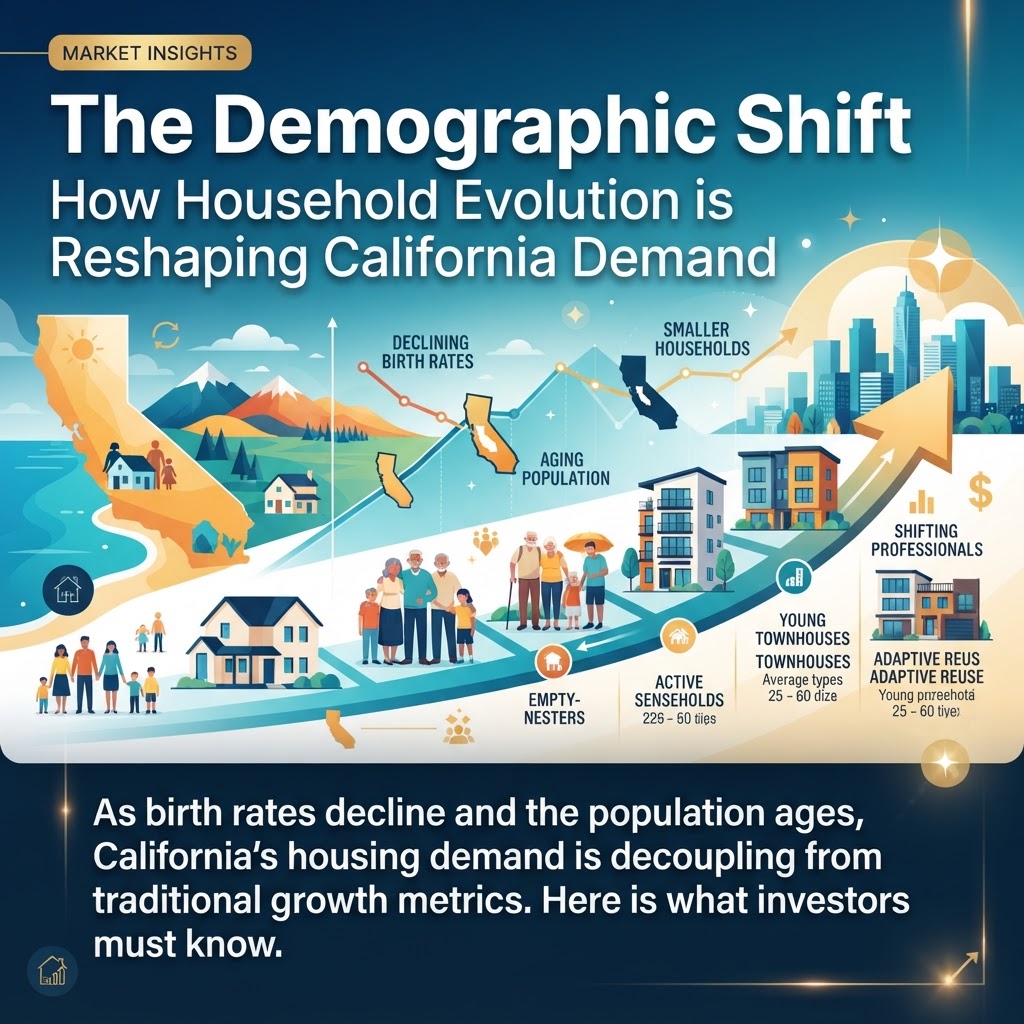
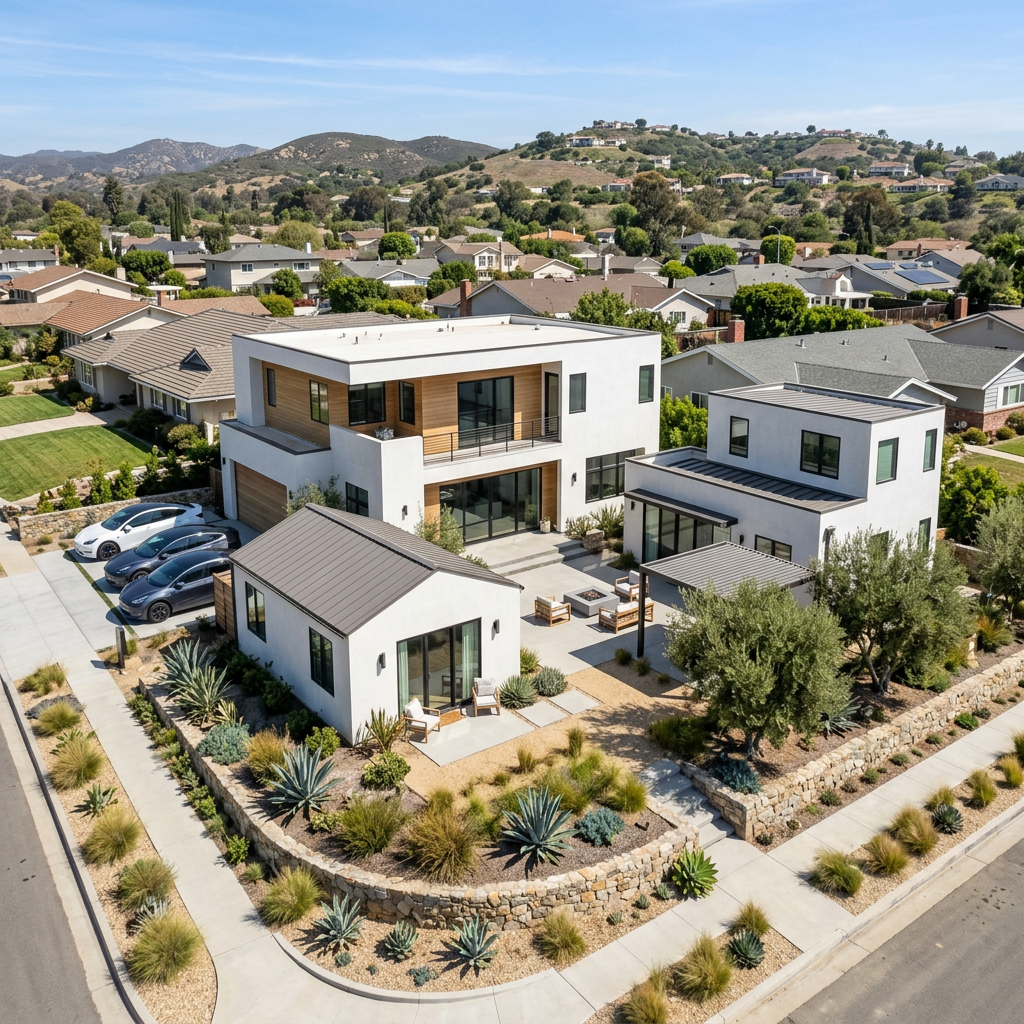
For decades, the California real estate dream was built on the foundation of the detached single-family home. However, as of March 2026, a structural transformation is reaching a tipping point. Driven by the maturation of Senate Bill 9 (SB 9) and subsequent local density incentives, the market is moving away from the 'renovate and flip' model toward the 'micro-density compound.' This trend involves the strategic conversion of single-residential lots into three-to-four-unit residential clusters, fundamentally changing the investment calculus in suburban hubs.
Data-Driven Density: The 2026 Landscape
According to recent data from the California Department of Housing and Community Development (HCD), permits for 'urban lot splits' and multi-unit conversions on formerly R1-zoned land have increased by 22% year-over-year. While the initial years of zoning reform saw slow adoption due to high construction costs, 2026 has introduced a more favorable environment. The California Association of Realtors (CAR) reports that properties with existing Accessory Dwelling Units (ADUs) or lot-split potential are commanding a 15-18% premium over standard single-family homes in markets like San Jose, San Diego, and Orange County.
Furthermore, CBRE’s 2026 Pacific Outlook highlights that the 'cap rate compression' seen in traditional multi-family complexes has driven mid-tier investors toward these smaller, high-yield suburban compounds. In many cases, these micro-communities offer a gross rent multiplier that outperforms traditional apartment buildings due to lower overhead and higher desirability for 'missing middle' renters.
Investment Perspective: The IRR of Multi-Unit Conversion
Investors are no longer looking at California real estate through the lens of simple appreciation. Instead, the focus has shifted to yield optimization per square foot. The 'Suburban Compound' model—where a primary residence is flanked by a detached ADU and a junior ADU, or the lot is split entirely—allows for diversified income streams.
Economic trends in 2026 show that while mortgage rates have plateaued, the cost of land remains the primary barrier to entry. By intensifying the use of a single parcel, investors are effectively lowering their land cost per door. Analysis of recent MLS data indicates that three-unit residential compounds in the Inland Empire and Sacramento suburbs are yielding an average internal rate of return (IRR) of 12%, significantly outperforming the 7% average for standard single-family rentals.
Practical Takeaways for the 2026 Market
- For Investors: Prioritize lots with 'favorable geometry' (wide street frontage and alley access) which simplify the logistical challenges of lot splits and utility separation.
- For Sellers: Before listing, obtain a feasibility study for a lot split or ADU addition. Even if you don't build, selling the 'entitled potential' can significantly increase the sale price in a density-starved market.
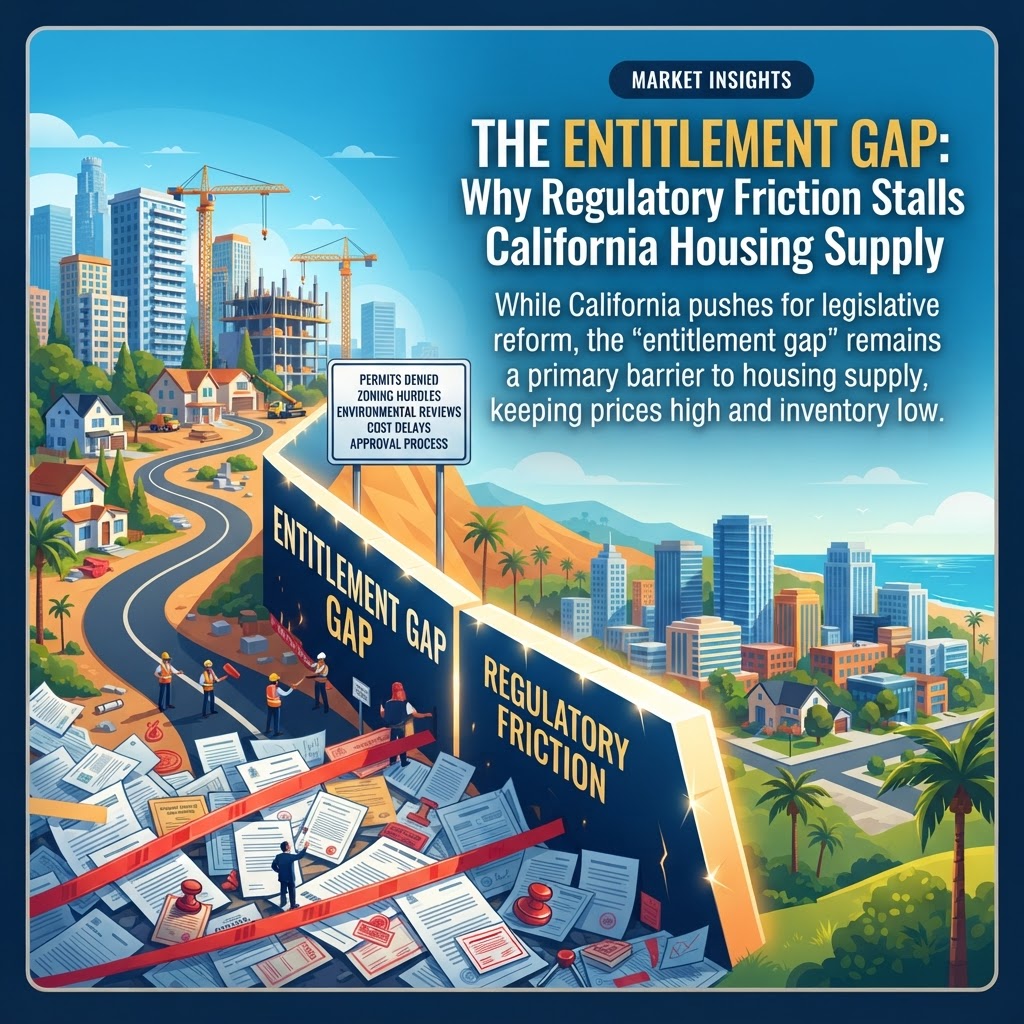
- For Buyers: Look for 'under-improved' properties in neighborhoods where the local municipality has streamlined the ministerial approval process for SB 9 projects, reducing the time from acquisition to cash flow.
The Economic Ripple Effect
This pivot toward micro-density is doing more than just padding investor portfolios; it is addressing the chronic supply-demand imbalance that has plagued California for decades. By 2026, the 'gentle density' approach is proving to be a more politically and economically viable path than large-scale high-rise developments in suburban enclaves. As these micro-compounds become a standard feature of the California landscape, we expect to see a stabilization of rental prices in the 'missing middle' segment, providing a rare win-win for both investors and the state’s workforce.