The Shift from Location to Efficiency
In the California real estate landscape of March 2026, a significant shift in buyer psychology has solidified. While 'location, location, location' remains the golden rule, it has been joined by a secondary mandate: 'efficiency, efficiency, efficiency.' Driven by the 2025 updates to the Title 24 Building Standards and a cumulative 25% increase in utility rates over the last three years from major providers like PG&E and SCE, the market is now bifurcating between energy-efficient 'Green-Tier' homes and legacy stock.
Data-Backed Market Divergence
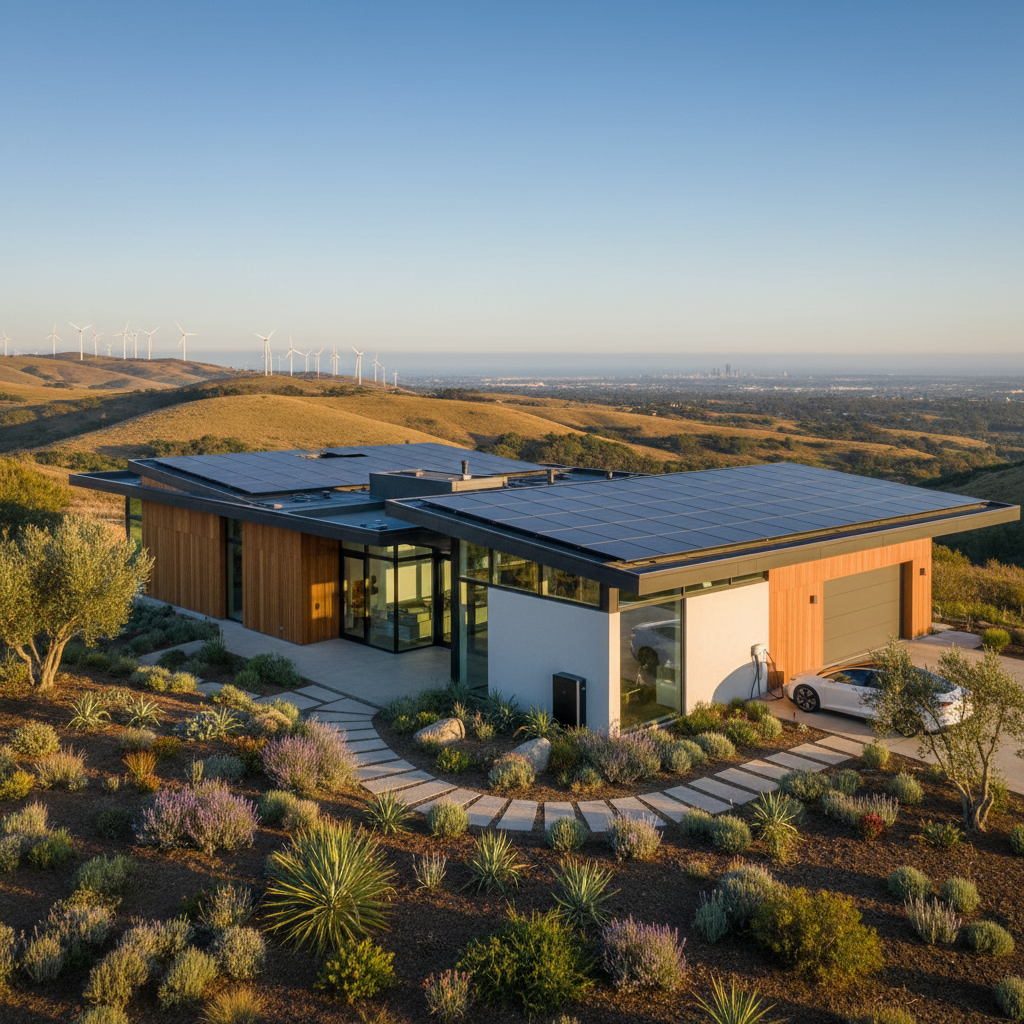
According to recent MLS data and a Q1 2026 report from the California Association of Realtors (CAR), homes equipped with full solar arrays, battery storage (such as Tesla Powerwalls or similar), and high-efficiency heat pump systems are selling 18% faster than those without. More importantly, these 'Net-Zero Ready' properties are commanding an average price premium of 12.4% across the state, with the highest margins found in the Inland Empire and Central Valley, where cooling costs are a primary economic concern.
The California Energy Commission’s latest mandates have effectively turned new construction into the gold standard for efficiency. However, with housing starts still lagging behind demand, the real opportunity has moved to the resale market. Investors are no longer just looking for cosmetic 'fixer-uppers'; they are targeting 'energy-flip' opportunities—older homes that can be retrofitted to meet modern efficiency standards.
The Economic Driver: Total Cost of Ownership
The 2026 market is defined by a more sophisticated understanding of the Total Cost of Ownership (TCO). With mortgage rates hovering in the 6% range, buyers are hypersensitive to monthly outlays. A $900,000 home with a $50 monthly utility bill is now viewed as more affordable than an $850,000 home with a $600 monthly utility bill. Financial institutions have noticed; several California-based credit unions have introduced 'Green-Value' appraisals that factor in projected energy savings when determining loan-to-value ratios.
Practical Takeaways for Stakeholders
- For Sellers: Prioritize energy audits before listing. Investing in attic insulation, smart thermostats, and heat pump water heaters often yields a 150% ROI in the current market, far outstripping the returns on kitchen cosmetic refreshes.
- For Buyers: Look beyond the list price. Use a TCO calculator to compare homes. A property with a 'Net-Zero' profile offers a hedge against future utility rate hikes, which are projected to continue through 2028.
- For Investors: The 'Energy Retrofit' is the new 'Open Concept.' Targeting mid-century homes in high-heat zones for deep energy retrofits—including window upgrades and HVAC electrification—is currently one of the highest-alpha strategies in California real estate.
Investment Perspective: The Future of Valuation
As we look toward the remainder of 2026, the 'Eco-Premium' is expected to transition from a luxury feature to a standard expectation. CBRE's recent analysis suggests that commercial-to-residential conversions and new multi-family developments are already integrating micro-grid technology to de-risk investments against volatile energy markets. For the individual investor, the message is clear: the most resilient assets in a high-cost environment are those that decouple housing from the rising costs of traditional energy consumption.