California Housing Market Update: November 2026
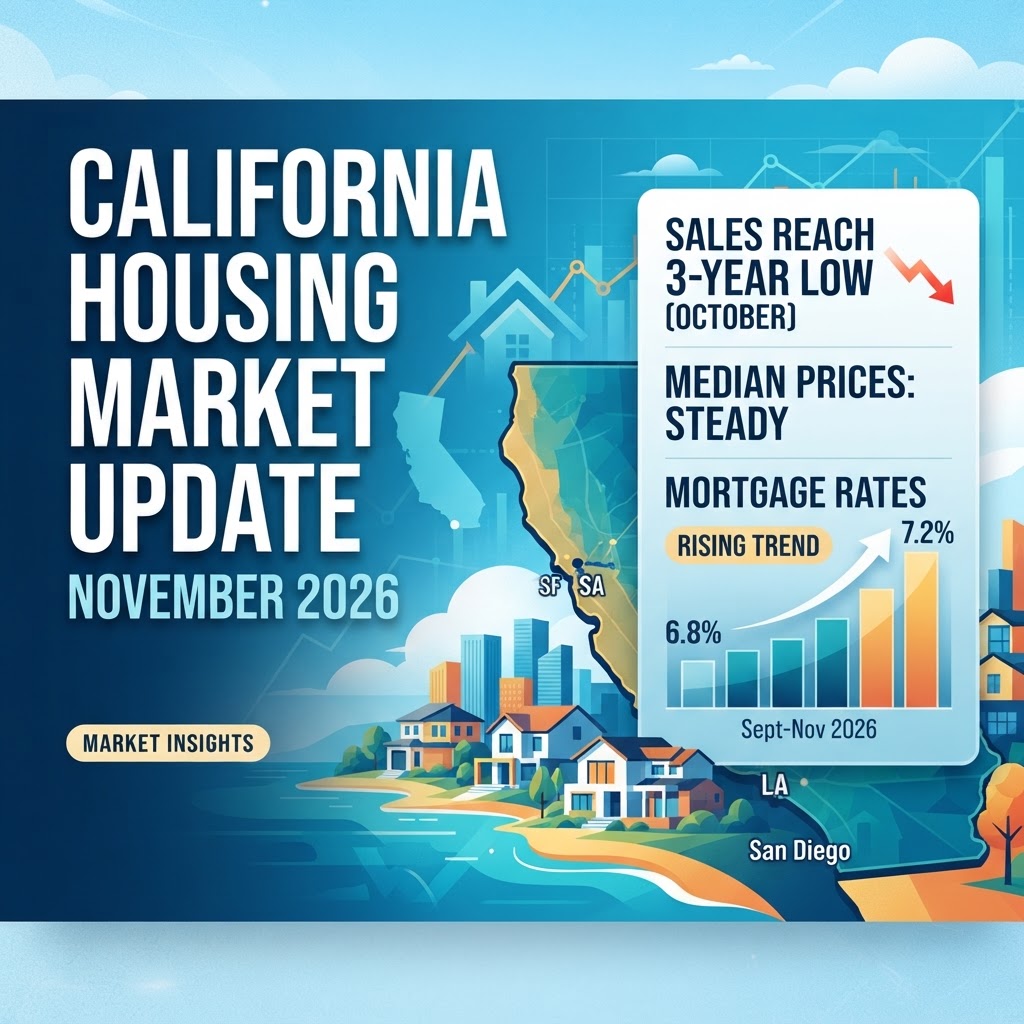
As of November 17 and November 19, 2026, California's housing market is experiencing a period of reduced activity. According to the California Association of Realtors, existing single-family home sales reached a seasonally adjusted annualized rate of 246,830 in October 2026. This represents the lowest sales level in nearly three years and marks the 49th consecutive month that sales have remained below the 300,000-unit benchmark.
The statewide median single-family home price was $886,760 in October 2026, according to the California Association of Realtors. While sales volume has declined, prices have remained relatively stable, suggesting that sellers are maintaining their price expectations despite the cooling demand.
The Impact of Rising Mortgage Rates
Financing costs continue to influence market participation. As of November 19, 2026, the 30-year fixed mortgage rate is 7.28%, up 0.17 from the previous week, while the 15-year fixed mortgage rate is 6.66%, up 0.21 from the week before, per the Freddie Mac Primary Mortgage Market Survey. These elevated rates have caused many prospective buyers to reassess their purchasing power.
New Construction Activity
On the supply side, the U.S. Census Bureau reported that privately-owned housing units authorized by building permits reached a seasonally adjusted annual rate of 1,295,000 in October 2026. Privately-owned housing starts for the same period were at a seasonally adjusted annual rate of 1,309,000.
What This Means for You
- For Buyers: With fewer buyers in the market, competition for available homes may be lower. However, because mortgage rates are rising, it is essential to consult with a licensed lender to verify your financing and monthly payment capacity before making an offer.
- For Sellers: While prices have held steady, the decline in sales volume suggests that homes priced above current market support may sit on the market longer. Ensure your property is priced competitively for the current interest rate environment.
- For Investors: Monitor regional inventory levels and interest rate trends closely. Consult with a licensed financial advisor or CPA regarding the tax and investment implications of current market conditions.