California Housing Market Update: October 2026
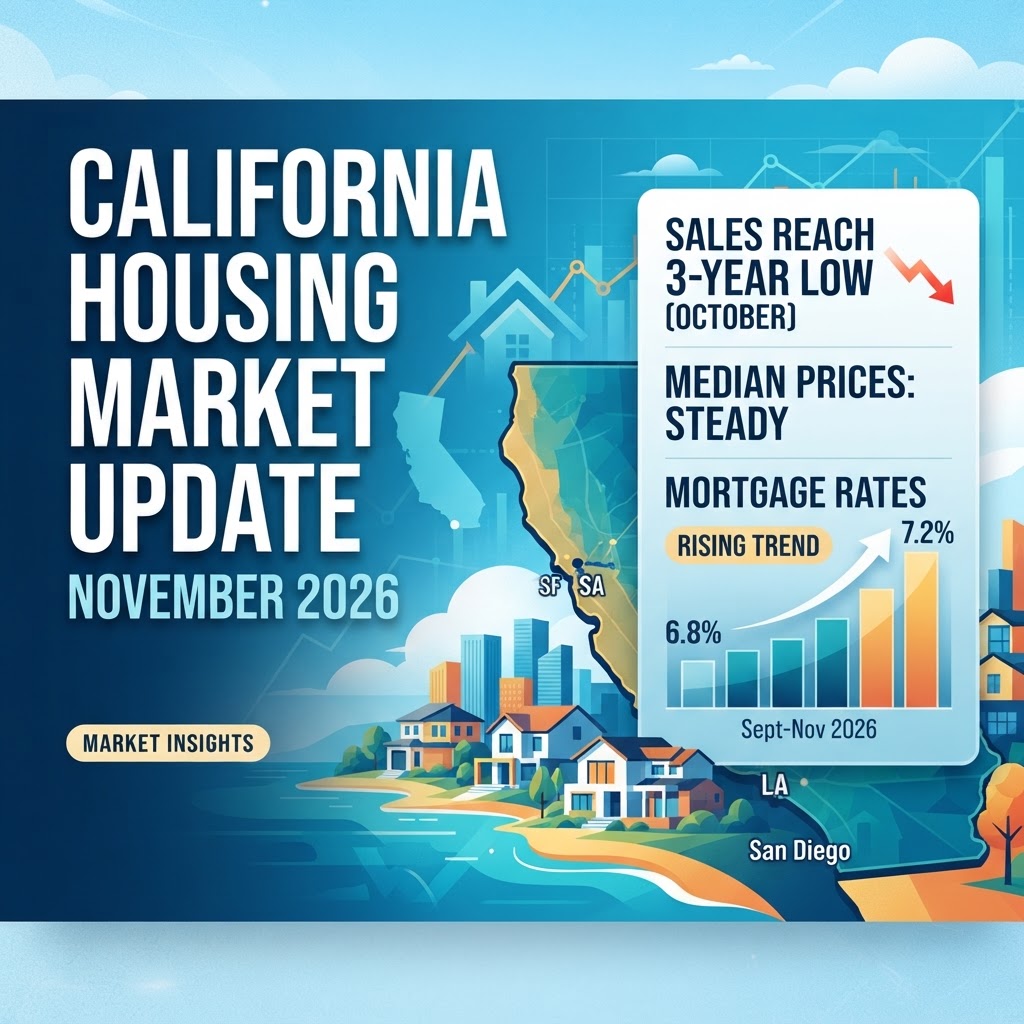
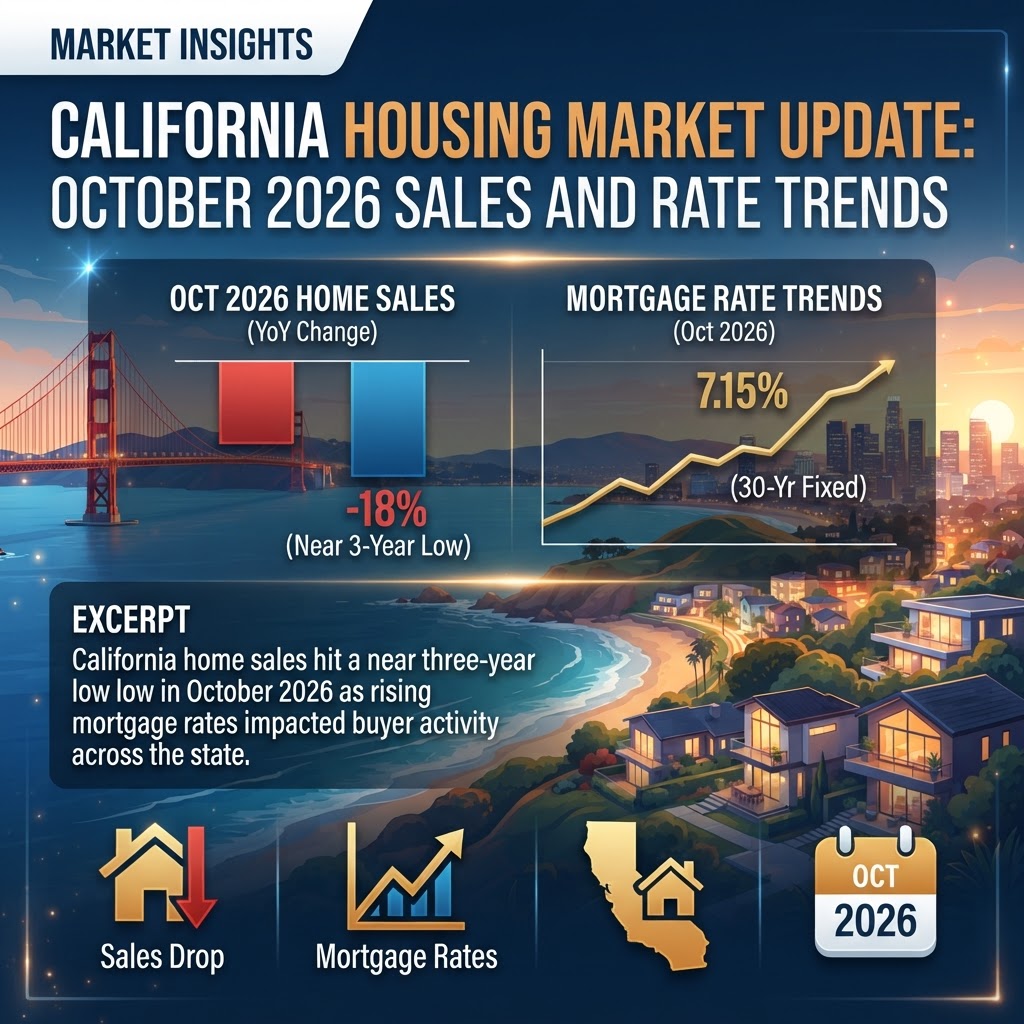
As of November 24, 2026, the latest data from the California Association of Realtors shows that existing single-family home sales in California reached a seasonally adjusted annualized rate of 246,830 in October 2026. This figure represents a 5.2% decline from September and a 12.7% decrease compared to October 2025, marking the lowest sales level in nearly three years.
Market Conditions and Pricing
Despite the drop in transaction volume, the statewide median home price was $886,760 in October 2026, according to the California Association of Realtors. This reflects a 1.4% decrease from September, which the association noted is in line with historical seasonal trends. On a year-over-year basis, the median price remained essentially unchanged.
The market continues to face pressure from rising borrowing costs. According to Freddie Mac, as of November 19, 2026, the 30-year fixed mortgage rate rose to 7.28%, up from 7.11% the previous week. The 15-year fixed mortgage rate also increased, reaching 6.66% from 6.45% the week prior.
National Housing Context
Nationally, the U.S. Census Bureau reported that privately-owned housing starts were at a seasonally adjusted annual rate of 1,309,000 in October 2026. During the same period, privately-owned housing completions reached a seasonally adjusted annual rate of 1,272,000.
What This Means for You
- For Buyers: With mortgage rates rising—the 30-year fixed rate increased by 0.17 percentage points and the 15-year fixed rate by 0.21 percentage points week-over-week as of November 19, 2026, per Freddie Mac—it is essential to verify your financing and updated monthly payment obligations with a licensed lender before making an offer.
- For Sellers: While sales volume has slowed, the statewide median price of $886,760 remains relatively stable, as reported by the California Association of Realtors. Consult with a local real estate professional to understand how specific price segments in your area are performing, as demand varies significantly by property value.
- For Investors: Monitor the gap between housing starts and completions reported by the U.S. Census Bureau to gauge future inventory levels, which may impact local market competition.