The Calibration Gap: Navigating California’s New Market Equilibrium
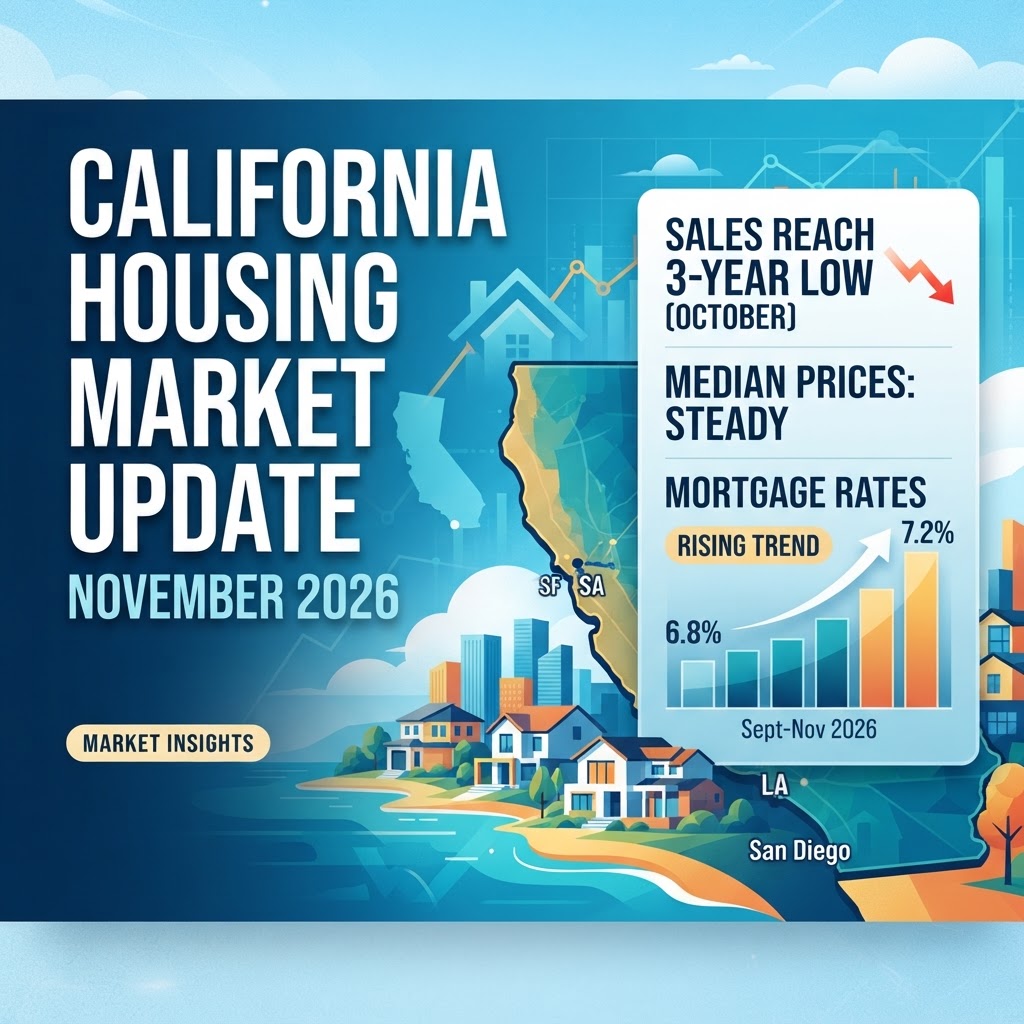
California’s real estate landscape in late 2026 is defined by a persistent disconnect between high asset valuations and restrained transaction velocity. With mortgage rates hovering near 6.8% and a four-year trend of substandard sales volume, the market has moved beyond the initial shock of the post-pandemic era into a period of structural recalibration.
The Investment Pivot: From Speculation to Selectivity
The current environment rewards extreme selectivity. While broad market metrics suggest a stalemate, granular data reveals a bifurcated reality. In the commercial sector, while office vacancy rates in markets like San Francisco remain high, there is a notable shift toward adaptive reuse and repositioning. Conversely, the industrial sector, which previously enjoyed a period of unchecked growth, is now facing vacancy levels not seen in years, forcing investors to re-evaluate their leverage and exit strategies.
For multifamily investors, the "rent-versus-own" gap remains a critical driver. With ownership costs approximately 62% higher than rental costs, demand for rental housing remains structurally sound, particularly in the Inland Empire and Central Valley. However, disciplined leverage is the new standard; CBRE data from Q2 2026 indicates that commercial loan markets remain active, but lenders are prioritizing lower loan-to-value (LTV) ratios, averaging 59.6%.
Construction and the Supply Paradox
New residential construction remains inadequate to meet long-term demand, yet developers are showing extreme caution. High construction costs and economic uncertainty have created a "supply paradox" where inventory is loosening not because of new completions, but because sales are slow. Developers are increasingly focusing on neighborhood-serving retail and grocery-anchored centers, moving away from speculative large-format projects to align with durable, localized demand.
Practical Takeaways for Market Participants
- For Investors: Prioritize cash-flow stability over appreciation. With mortgage rates elevated, the math on acquisitions must account for higher debt-service coverage ratios. Focus on markets where rent growth is outpacing value growth, as this indicates yield expansion potential.
- For Sellers: Recognize that the "seller’s market" of the previous decade has fully reversed. As for-sale inventory grows, buyer caution is rising faster than the owner's need to sell. Pricing strategies must be aggressive and data-backed to avoid lingering on the market.
- For Agents: The current recessionary environment requires a diversification of income streams. Professionals are increasingly integrating property management, insurance advisory, and specialized leasing services to maintain stability while transaction volumes remain suppressed.
As we look toward 2027, the market is unlikely to see a rapid return to the low-rate environment of the early 2020s. Instead, participants should prepare for a prolonged period of price discovery, where the property, the leverage, and the specific regional economic fundamentals dictate the success of every transaction.