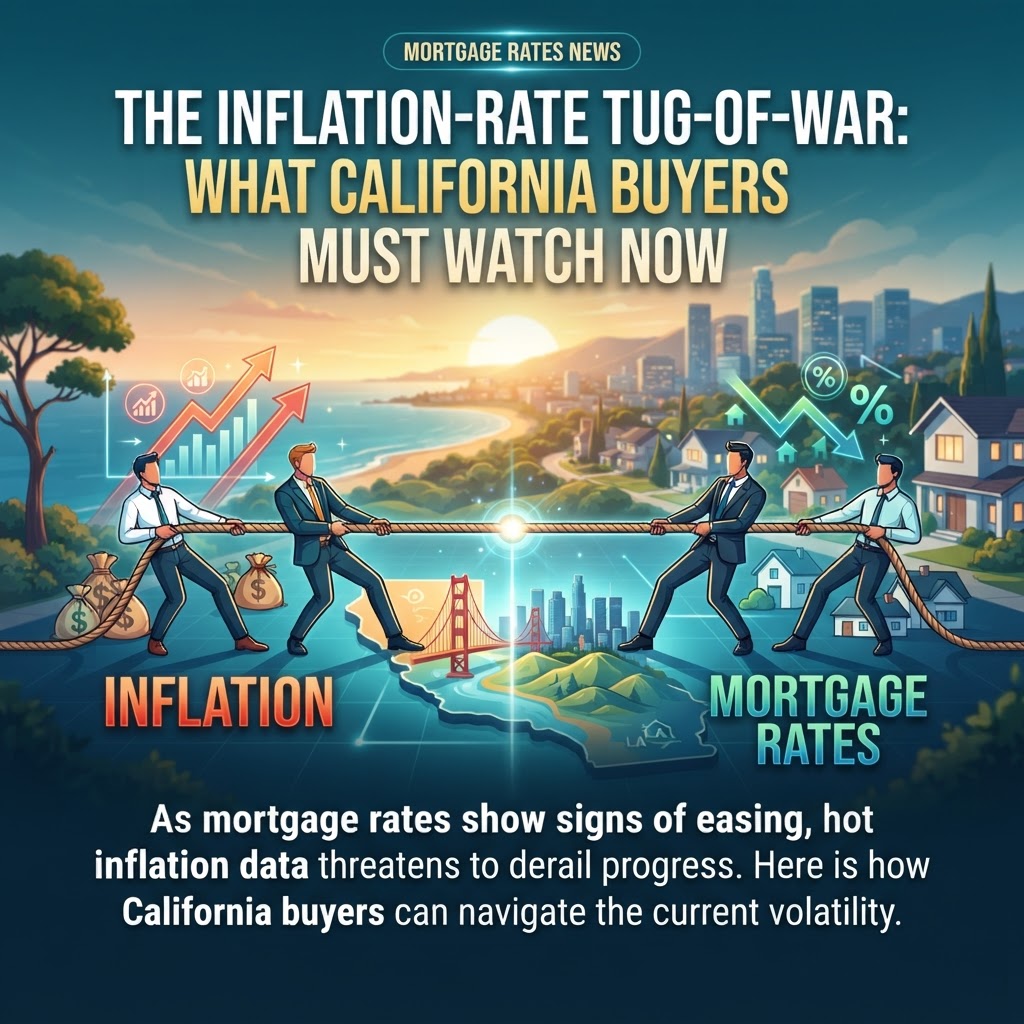
The 7% Floor: Why California Buyers Must Rethink Long-Term Financing
As of November 10, 2026, the mortgage market is showing signs of a fragile stabilization. With the 30-year conventional mortgage rate averaging approximately 7.02% [1], the industry is grappling with a persistent '7% floor.' While rates have retreated slightly from the 7.18% reported by Freddie Mac on November 5 [3], the dream of a rapid return to sub-6% territory remains elusive for California home buyers.
The New Normal: Beyond the Rate Hunt
For California residents, the current environment is defined by a paradox: while rates are showing a modest downward trend, the cost of entry remains high. Economists note that affordability is effectively 'trapped' [2]. Even as rates dip, home prices have not experienced a corresponding collapse, largely because inventory levels have remained resilient throughout 2026 [7].
Implications for the California Market
In California, where the barrier to entry is already among the highest in the nation, the 7% threshold acts as a significant drag on buyer sentiment [5]. However, there is a silver lining for those who can navigate the current landscape:
- Inventory Stability: Unlike the second half of 2022, when higher rates caused a sharp contraction in new listings, 2026 has seen a healthier flow of inventory, with over 80,000 new listings per week nationally during peak periods [7].
- Strategic Financing: With jumbo rates currently hovering near 7.25% [1], high-net-worth buyers in California are increasingly looking at adjustable-rate mortgages (ARMs) as a way to manage short-term cash flow, a trend that remains popular for non-conforming loan sizes [3].
Practical Takeaways for Buyers and Investors
If you are looking to enter the California market, the current data suggests that waiting for a 'perfect' rate environment may be a losing strategy. Instead, consider these actionable steps:
- Focus on Total Cost of Ownership: Rather than fixating on the 7% headline rate, evaluate properties based on long-term utility and potential for appreciation. With listing prices showing seasonal cooling in late 2026 [5], there may be room for negotiation that didn't exist earlier in the year.
- Monitor the Spread: Mortgage rates are currently decoupled from Treasury yields due to wider mortgage spreads [7]. If these spreads tighten, we could see rates drop below 7% even without significant Federal Reserve intervention.
- Prioritize Loan Product Advisor (LPA) Readiness: As lenders tighten underwriting, ensuring your financial profile is optimized for automated systems like Freddie Mac’s LPA is more critical than ever to secure the best available pricing [3].
The 2026 market is not a repeat of the volatility seen in previous years; it is a period of recalibration. For the California buyer, success now depends on moving away from the 'rate-chasing' mentality and toward a strategy that accounts for sustained, higher-for-longer interest costs.