The Green Premium: California’s New Frontier for Residential Value
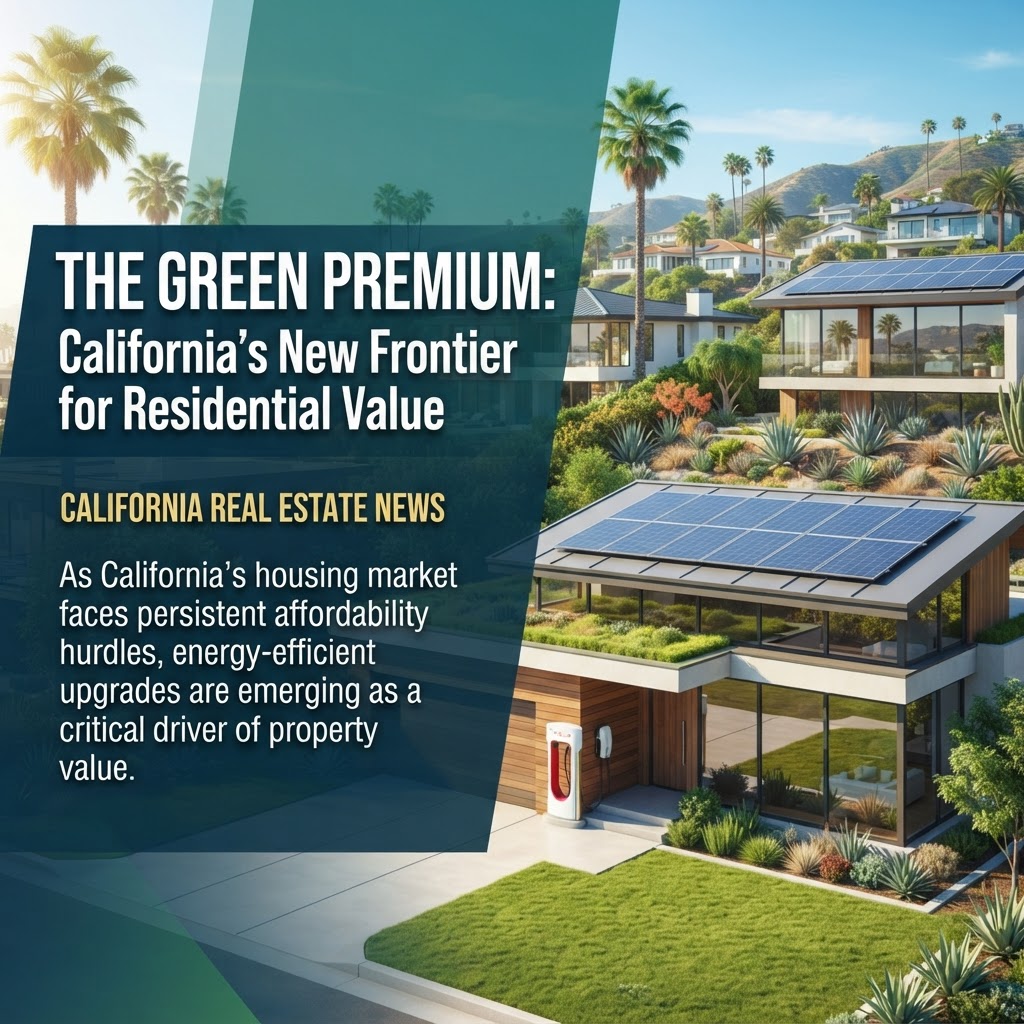
As of November 2026, the California real estate market remains defined by a complex interplay of high borrowing costs and a stubborn inventory shortage. With only 19% of households currently able to afford a median-priced home, buyers and investors are increasingly looking beyond traditional metrics to identify value. A significant, emerging trend is the 'Green Premium'—a growing willingness among buyers to pay more for homes equipped with advanced energy-efficient systems.
The Shift Toward Sustainable Assets
Recent industry analysis indicates that properties featuring solar integration, high-performance insulation, and energy-efficient HVAC systems are commanding higher interest in a cooling market. According to market research, the transition toward sustainable housing is no longer just a niche preference; it is becoming a core component of long-term asset valuation. This shift is bolstered by the availability of green financing, where lenders offer preferential interest rates for homes with high energy ratings, effectively offsetting some of the sting from current 7% mortgage rates.
Navigating the 'New Baseline' for Buyers
For those entering the market today, the financial landscape is starkly different from previous years. New buyers are entering at higher assessed property tax values compared to those who purchased in 2024, as home values have climbed and local bond measures have been layered onto tax bills. Because California property taxes are tied to the purchase price, waiting for a market correction often results in a higher tax baseline, making the total cost of ownership a moving target.
Practical Takeaways for Market Participants
- For Buyers: Prioritize homes with existing energy-efficient certifications. These properties may qualify for specialized 'green' mortgage products that provide lower interest rates, potentially lowering your monthly PITI (Principal, Interest, Taxes, and Insurance) payment.
- For Sellers: In a market where transaction volume has slowed—down 6.5% year-over-year as of September—highlighting energy-saving features can be a key differentiator. Documentation of solar lease buyouts or recent HVAC upgrades can justify a higher asking price to value-conscious buyers.
- For Investors: The 'Build-to-Rent' (BTR) sector and adaptive reuse projects are increasingly focusing on net-zero communities. Aligning portfolios with these standards may mitigate risks associated with future environmental regulations and rising utility costs.
While the broader market continues to grapple with high interest rates and limited inventory, the focus on sustainability offers a rare bright spot. By prioritizing energy efficiency, stakeholders are finding a way to create value in an environment where traditional affordability remains elusive.