California Housing Market Faces Sales Decline Amid Rising Mortgage Rates
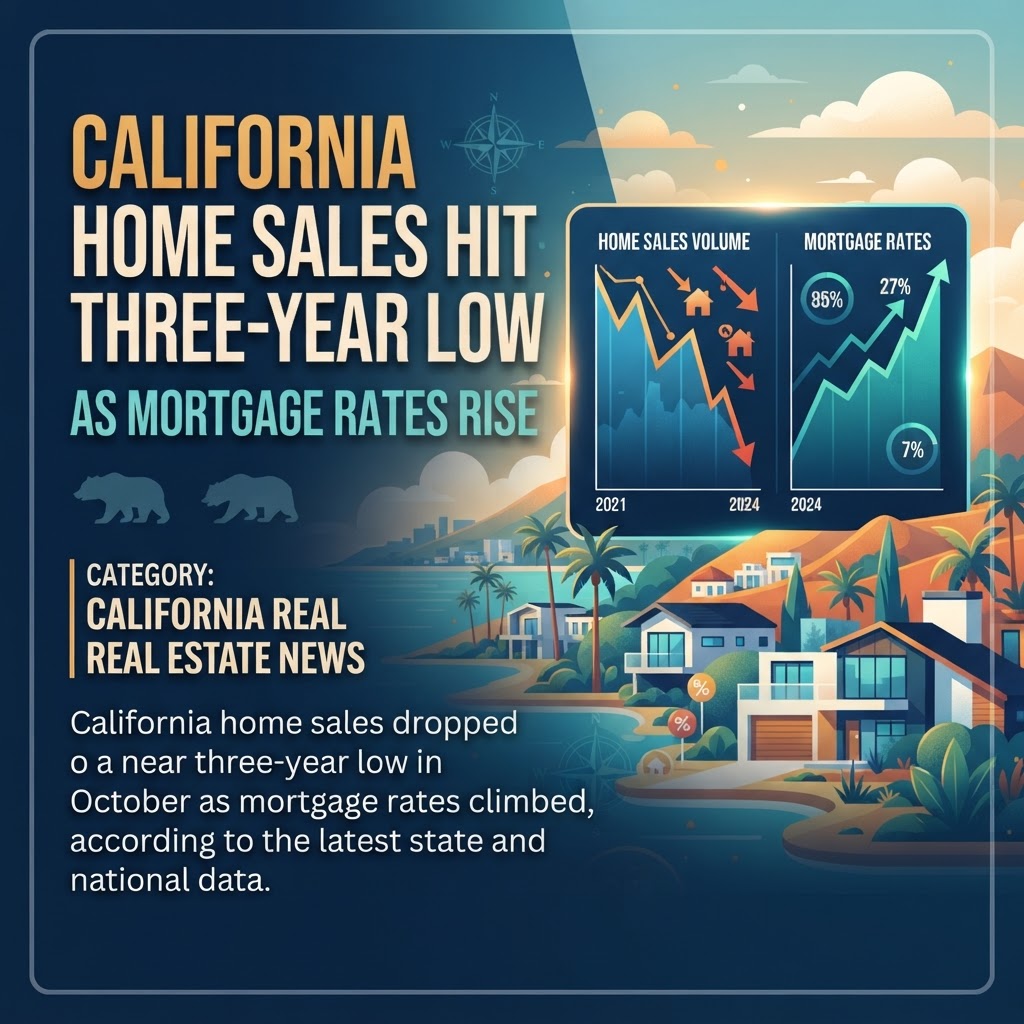
As of November 23, 2026, the latest data reveals a cooling trend in California's housing market. According to the California Association of Realtors, existing single-family home sales reached a seasonally adjusted annualized rate of 246,830 in October 2026. This figure represents a 5.2% decline from September and a 12.7% drop compared to October 2025, marking the lowest sales level in nearly three years.
Despite the slowdown in transaction volume, the statewide median home price was $886,760 in October 2026, according to the California Association of Realtors. This reflects a 1.4% decrease from September, which the association notes is in line with historical seasonal patterns, and leaves the median price essentially unchanged from a year ago.
The market environment is heavily influenced by borrowing costs. As of November 19, 2026, the Freddie Mac Primary Mortgage Market Survey reported that the 30-year fixed mortgage rate rose to 7.28%, up 0.17 from the previous week. The 15-year fixed mortgage rate also increased, reaching 6.66%, up 0.21 from the week before.
Nationally, construction activity remains under pressure. The U.S. Census Bureau reported that privately-owned housing units authorized by building permits were at a seasonally adjusted annual rate of 1,295,000 in October 2026. Privately-owned housing starts for the same period were at a seasonally adjusted annual rate of 1,309,000.
What This Means for Readers
For those looking to participate in the California market, the current data suggests a period of adjustment. With mortgage rates rising week-over-week, affordability remains a primary concern for buyers. Sellers, meanwhile, are seeing fewer transactions but prices have not experienced a sharp decline.
- Review your financing: With the 30-year fixed mortgage rate at 7.28% as of November 19, 2026, consult with a licensed lender to understand how current rates impact your monthly payment capacity before making an offer.
- Analyze local inventory: Because sales are down, buyers may find less competition for specific properties, but it is essential to verify local market conditions in your specific city or county, as trends can vary significantly from the statewide average.
- Consult professionals: Before making any real estate decisions, speak with a licensed attorney or CPA regarding the legal and tax implications of buying or selling in the current interest rate environment.