The Inventory Illusion: Why California’s Market Stagnation Persists
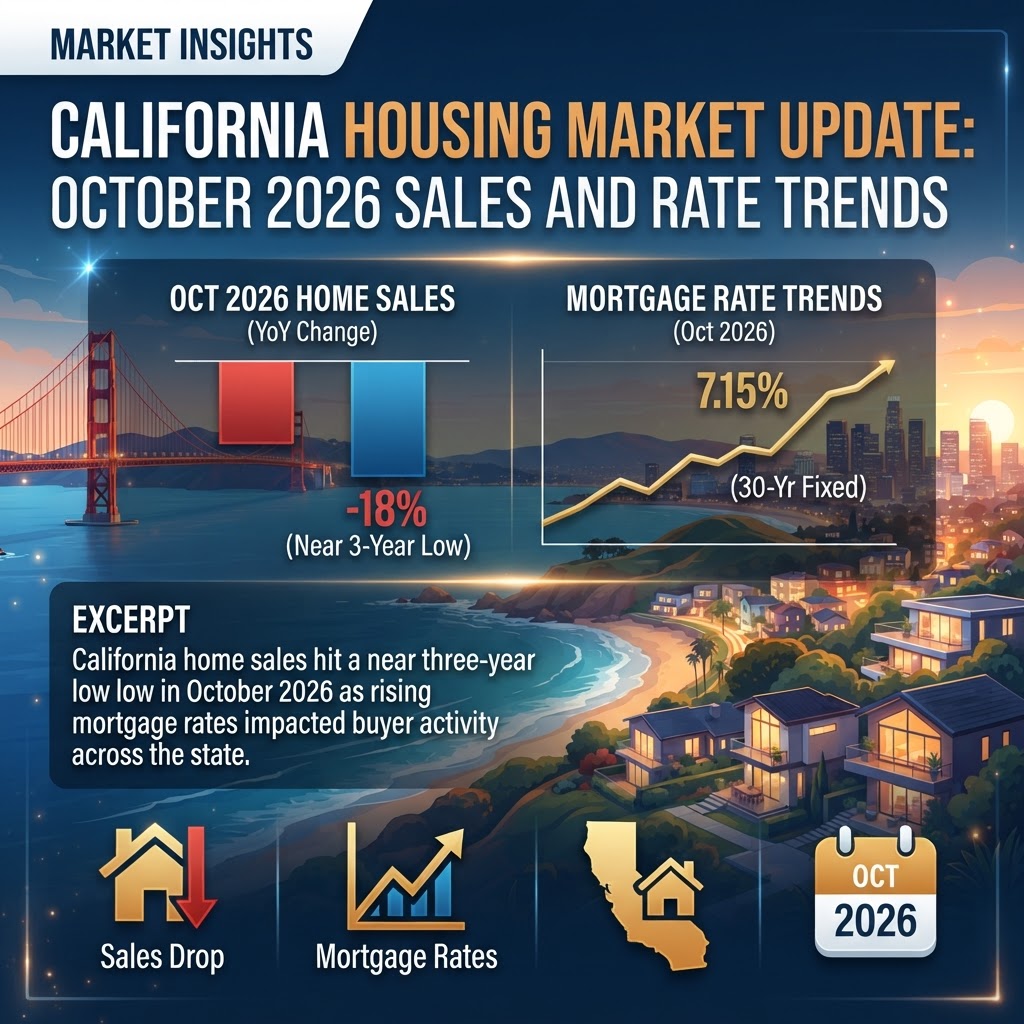
The California housing market has entered a period of profound inertia. As of September 2026, existing single-family home sales have remained below the 300,000-unit annualized threshold for 48 consecutive months, according to the California Association of Realtors (C.A.R.). While headlines often focus on the 'mortgage rate lock-in effect' as the primary culprit for low supply, a more nuanced reality is emerging: the market is currently defined by a standoff between buyer hesitation and price resilience.
The Anatomy of Stagnant Volume
Recent data indicates that while active listings saw a modest year-over-year increase of 0.5% in September—the first such rise in eight months—this growth is not the result of a construction boom or a wave of new listings. Instead, it is a byproduct of slower sales velocity. When homes sit on the market longer, inventory naturally accumulates, creating an illusion of increased supply that does not necessarily translate into more options for buyers or a cooling of prices.
This phenomenon is particularly visible in Southern California, which recorded a 9.1% decline in annual sales, the sharpest drop among the state’s major regions. Conversely, the Central Coast remains an outlier, posting a 4.4% increase in sales, suggesting that localized demand drivers still outweigh broader macroeconomic headwinds in specific coastal enclaves.
The Price Floor Paradox
Despite the cooling in transaction volume, the statewide median home price remains resilient, hovering near $899,720. This price floor is maintained by two competing forces:
- Constrained Supply: The mortgage rate lock-in effect continues to anchor potential sellers to their existing, lower-rate financing, preventing a meaningful influx of resale inventory.
- Buyer Caution: High borrowing costs have significantly dampened purchasing power, leading to a 'wait-and-see' approach among prospective buyers, which prevents the rapid price appreciation seen in previous cycles.
Investment Perspectives and Practical Takeaways
For market participants, the current environment requires a shift in strategy:
- For Buyers: The market is no longer a 'frenzy' environment. With inventory accumulating due to slower sales, buyers have more leverage to negotiate on price and terms in markets where days-on-market are trending upward. Focus on submarkets where inventory growth is outpacing demand, as these areas offer the best opportunities for price discovery.
- For Sellers: The 'list and wait' strategy is becoming less effective. As buyer caution rises, properties that are not priced to reflect current affordability constraints are likely to linger. Sellers should prioritize professional staging and realistic pricing to capture the limited pool of active, qualified buyers.
- For Investors: The rent-versus-own gap remains a structural support for rental demand. While capital appreciation may be muted in the near term, the fundamental lack of new construction starts—which remain inadequate to meet long-term population needs—suggests that the supply-demand imbalance will persist, supporting long-term hold strategies.
Ultimately, California’s real estate market is not experiencing a sharp correction, but rather a gradual, painful adjustment. Until mortgage rates stabilize or the 'lock-in' effect is mitigated by a shift in owner necessity, the market will likely continue to trade in this narrow, low-volume band.