Riverside’s Wood Streets: A 2026 Case Study in Historic Preservation Value
In the evolving landscape of the 2026 Inland Empire real estate market, few neighborhoods offer the architectural consistency and community cohesion found in Riverside’s Wood Streets. While many suburban corridors prioritize rapid, modern development, the Wood Streets neighborhood stands as a testament to the enduring value of historic preservation and intentional urban planning.
A Legacy of Design
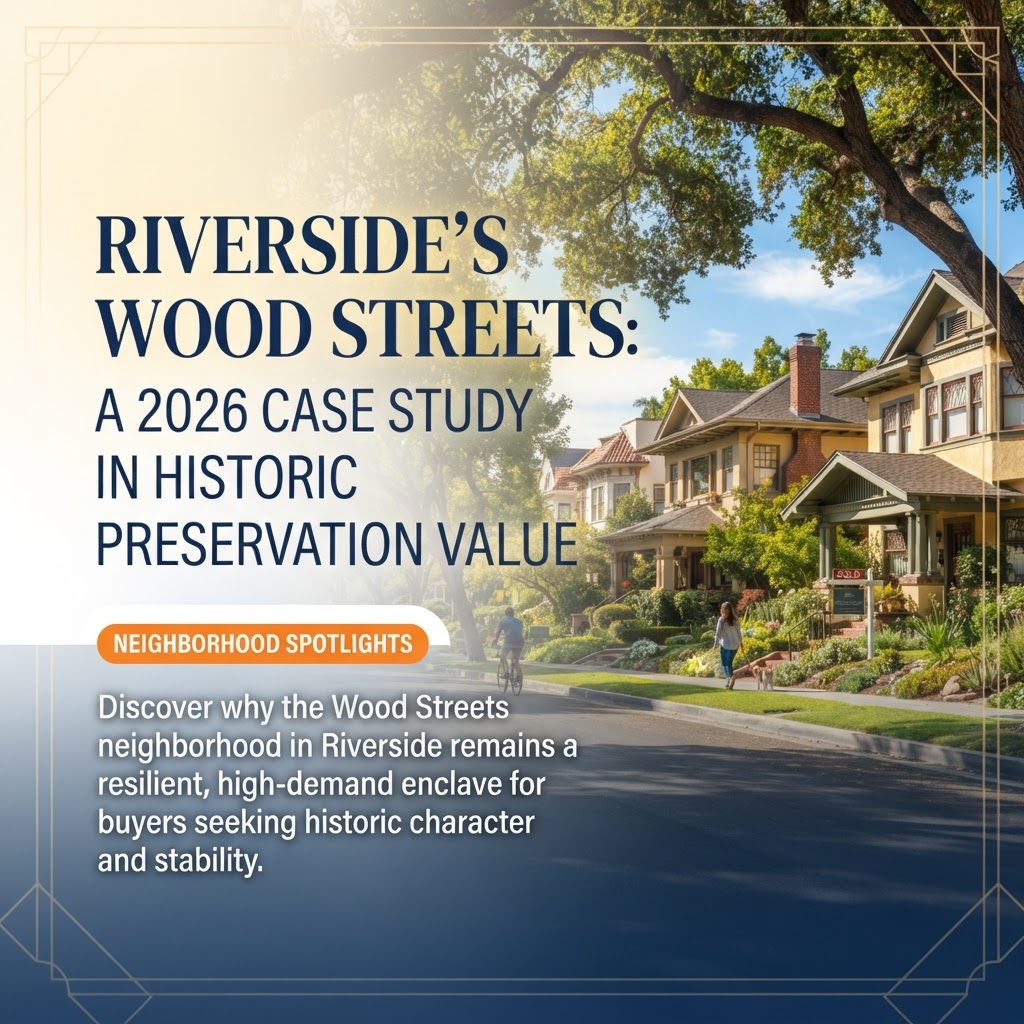
Transitioning from citrus groves to a residential enclave starting in 1913, the Wood Streets neighborhood is defined by its distinct architectural identity. Unlike the sprawling, uniform developments common in newer suburban pockets, this area features a high concentration of early-20th-century Craftsman bungalows and period-revival homes. For investors and homeowners, this aesthetic consistency acts as a natural hedge against market volatility, as the limited supply of historic housing stock remains perpetually desirable.
Market Context and Stability
As of September 2026, the broader Riverside market maintains an average home value of approximately $645,110, with median listing prices hovering near $733,537. The Wood Streets neighborhood consistently commands attention within this framework due to its proximity to downtown Riverside and its established infrastructure. While newer developments in the region may offer more square footage, the Wood Streets offer a "lifestyle premium"—walkability, mature tree-lined streets, and a sense of place that cannot be replicated in newer master-planned communities.
Community Features and Amenities
The appeal of the Wood Streets extends beyond its architecture. The neighborhood’s proximity to the downtown core provides residents with seamless access to regional transit, cultural institutions, and local dining. Unlike car-centric suburbs that require long commutes for basic services, the Wood Streets benefit from a "neighborhood-first" design that fosters local engagement. Residents enjoy easy access to local parks and the historic charm of the city’s central business district, which has seen a steady revitalization of its retail and dining sectors throughout 2026.
Practical Takeaways for Stakeholders
- For Buyers: Focus on the "bones" of the property. Because the neighborhood is protected by its historic character, renovations that honor the original architectural integrity often yield higher long-term appreciation than modernizing for the sake of trends.
- For Sellers: Leverage the neighborhood’s history. Marketing materials should emphasize the specific architectural style (e.g., Craftsman, Spanish Colonial) and the maturity of the landscaping, which are key selling points for this demographic.
- For Investors: Monitor the rental demand. With Riverside’s population exceeding 300,000, the demand for unique, character-rich rental properties remains high. The Wood Streets offer a stable, albeit competitive, entry point into the Riverside market.
As the 2026 market continues to favor areas with strong "livability scores" and established community identities, the Wood Streets remain a strategic anchor for those looking to balance historic charm with the convenience of a major California city.