Tracy Hills: A Strategic Commuter Haven in the 2026 Central Valley Market
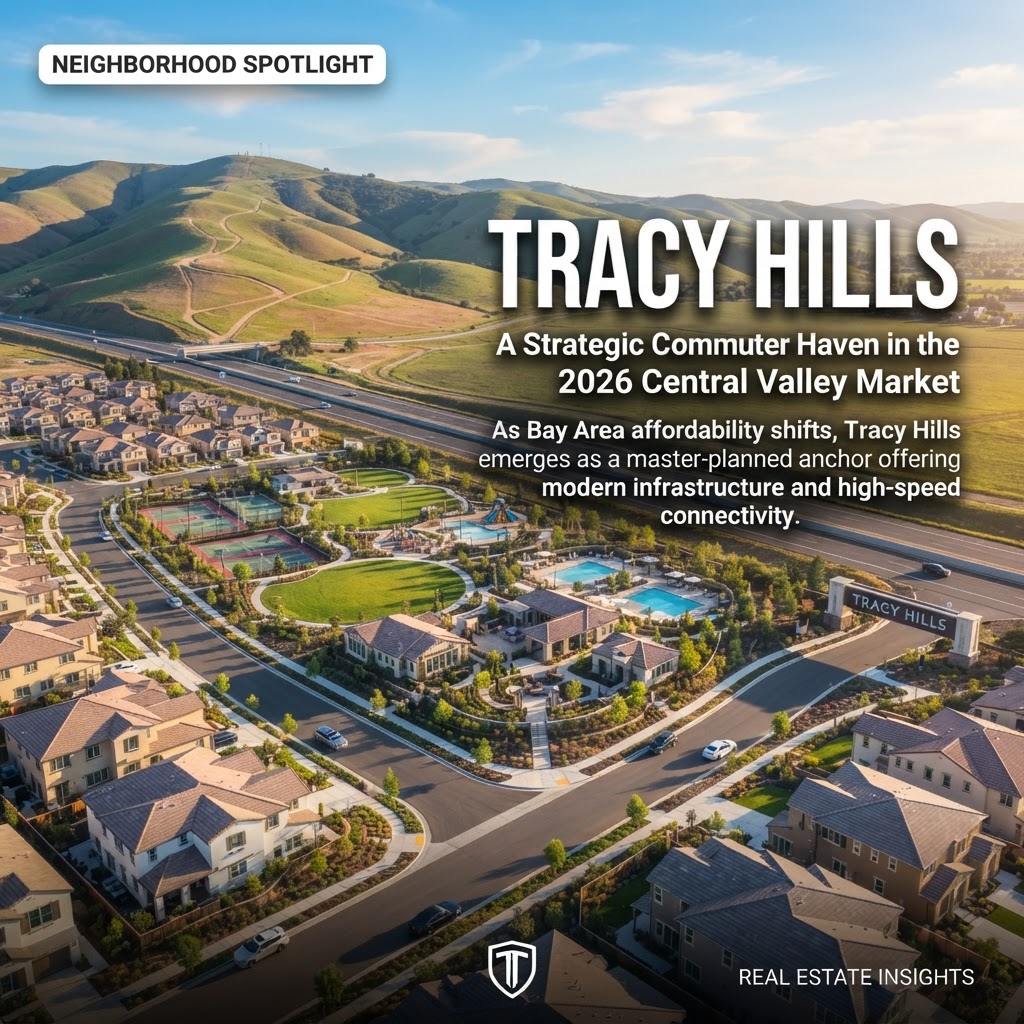
In the evolving landscape of Northern California real estate, the definition of a 'commuter neighborhood' is undergoing a significant transformation. As of November 2026, Tracy Hills has solidified its position as a premier master-planned community, serving as a critical release valve for Bay Area professionals seeking modern amenities without the prohibitive price tags of the inner East Bay.
The Value Proposition
While the broader Tracy market has seen median home prices stabilize in the high-$600,000s to mid-$700,000s, Tracy Hills commands a premium due to its newer construction and integrated infrastructure. Data from early 2026 indicates a competitive market environment, with the neighborhood scoring an 88 out of 100 for market desirability. For buyers, this represents a strategic trade-off: paying a slight premium over older Tracy inventory in exchange for energy-efficient homes, modern floor plans, and community-specific amenities that are increasingly rare in older suburban pockets.
Community Features and Lifestyle
Unlike the organic, grid-based growth of older Central Valley towns, Tracy Hills was designed with a focus on lifestyle-centric development. The community features extensive trail systems, neighborhood parks, and dedicated recreational facilities that cater to the post-pandemic preference for outdoor access. The neighborhood is particularly attractive to families and remote-hybrid workers who prioritize community-wide connectivity and planned social spaces over the density of urban centers.
Transportation and Connectivity
The primary appeal of Tracy Hills remains its strategic location relative to the I-580 corridor. As hybrid work models normalize, the ability to access the Tri-Valley and the broader Bay Area via a manageable commute has become a primary driver of value. The community’s proximity to major transit arteries allows residents to maintain a connection to the Bay Area economy while enjoying the lower cost of living and increased square footage characteristic of San Joaquin County.
Practical Takeaways for 2026
- For Buyers: Focus on the 'new construction' premium. While prices are higher than the citywide median, the long-term maintenance costs of newer, energy-efficient homes in Tracy Hills often offset the initial purchase price difference compared to older, deferred-maintenance properties.
- For Sellers: Highlight the community's master-planned status. Buyers in 2026 are increasingly risk-averse; emphasizing the stability of the HOA-managed environment and the proximity to newer school facilities can significantly shorten days-on-market.
- For Investors: Monitor the ADU (Accessory Dwelling Unit) potential. With California's ongoing focus on housing density, properties in Tracy Hills that allow for ADU conversions are seeing increased interest from renters looking for high-quality, suburban living options.
Tracy Hills is no longer just a 'bedroom community'; it is a self-sustaining node in the Northern California housing market. By balancing modern infrastructure with strategic access to the Bay Area, it offers a compelling, data-backed alternative for those navigating the 2026 real estate landscape.