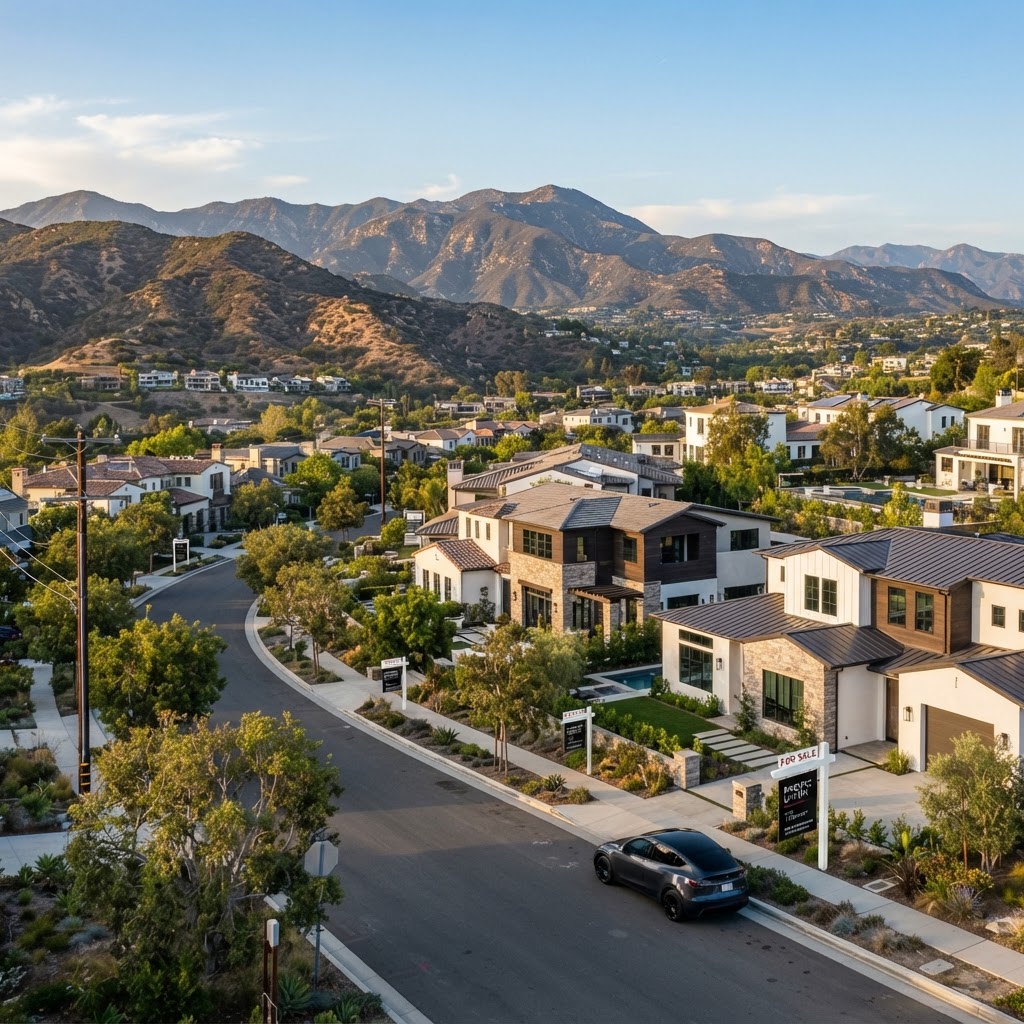
California's Inventory Surge: A New Reality for Mountain and Suburban Markets
As of November 2026, the California real estate landscape is defined by a persistent affordability stalemate, with the California Association of Realtors reporting that only 19% of households can afford a median-priced home [4]. While statewide prices have seen a slight cooling—dropping 2.3% in the third quarter—the rise in 30-year fixed mortgage rates to 6.80% has effectively neutralized any potential gains for prospective buyers [4].
The Regional Inventory Shift
Beyond the statewide averages, a significant trend is emerging in regional and mountain communities: a notable accumulation of inventory. In areas like Lake Arrowhead and Arrowhead Woods, market data from November 6, 2026, indicates a shift toward buyer-friendly conditions, with inventory levels reaching approximately 9.2 to 9.3 months [1][6]. Similarly, Green Valley Lake is seeing inventory levels as high as 13.5 months, signaling a transition away from the hyper-competitive seller environments of previous years [7].
This trend is not limited to remote areas. Suburban hubs like Roseville have experienced an 88.2% year-over-year increase in active listings, with homes now lingering on the market for an average of 104 days—a significant jump from 61 days just a year ago [10]. This accumulation suggests that while demand remains, the velocity of transactions has slowed considerably as buyers grapple with the high income requirements—now exceeding $228,000 annually—needed to sustain current monthly payments [4].
Practical Takeaways for Market Participants
- For Buyers: The increase in "months of inventory" in mountain and suburban regions provides a rare window of negotiation. With properties staying on the market longer, buyers should prioritize thorough inspections and be prepared to negotiate on price, as sellers may be more motivated to close deals before the winter season.
- For Sellers: In markets with high inventory, such as Roseville or the Lake Arrowhead region, pricing strategy is paramount. With days-on-market metrics rising, sellers must align their expectations with current, rather than historical, demand to avoid prolonged listing periods.
- For Investors: The bifurcation between high-demand urban cores and inventory-heavy regional markets offers opportunities for those looking to capitalize on localized price corrections. However, investors should remain cautious of the high interest rate environment, which continues to compress potential yields.
As the state moves into the final quarter of 2026, the market remains in a fragile equilibrium. While inventory is finally providing some relief to buyers, the high cost of borrowing continues to act as a significant barrier to entry for the majority of Californians [4].