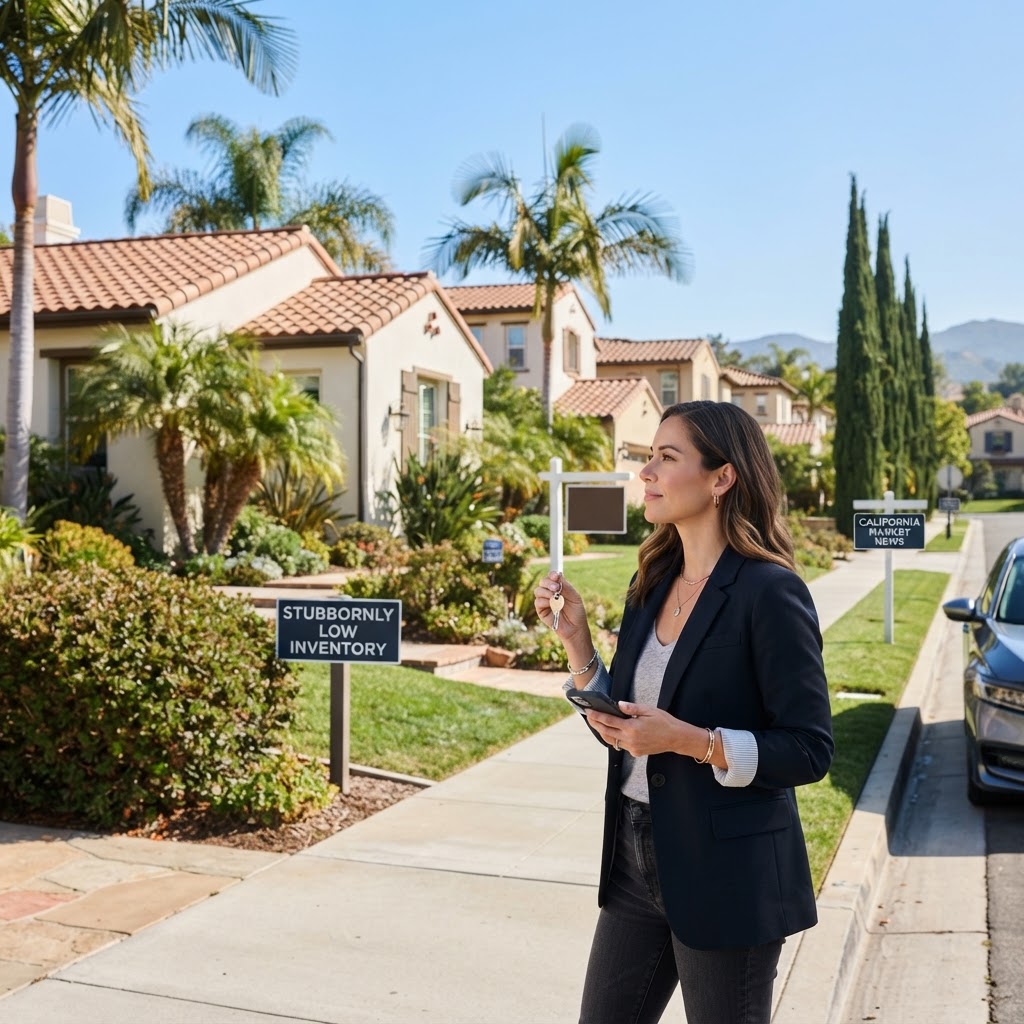
The Lock-In Effect: Why California’s Inventory Remains Stubbornly Low
As of October 2026, the California real estate market continues to navigate a complex landscape defined by the persistent 'lock-in effect.' While recent data from the U.S. Census Bureau indicates that national housing starts remain under pressure—with building permits in September 2026 falling 3.0% below the previous year's levels—California’s specific inventory challenges are rooted in the reluctance of existing homeowners to trade their pandemic-era mortgage rates for current market financing.
The Persistence of the Rate-Lock Barrier
Market analysts note that the primary driver of California's supply constraint is not a lack of demand, but a lack of mobility among current owners. According to J.P. Morgan Global Research, homeowners who secured historically low interest rates during the 2020-2021 period are effectively sidelined, as they cannot transfer those favorable terms to new properties. This has kept existing-home listings at historically tight levels, preventing the typical seasonal inventory expansion that buyers often rely on.
Market Bifurcation and Competitive Pressure
Despite the inventory squeeze, the market is not entirely stagnant. Redfin data from September 2026 shows that 37.1% of homes in California are still selling above list price, a 2.8 percentage point increase year-over-year. This suggests that in high-demand corridors, particularly within the tech-heavy Silicon Valley and parts of the San Francisco Bay Area, competition remains fierce for the limited stock available.
Practical Takeaways for Market Participants
- For Buyers: With inventory remaining tight, buyers should focus on 'off-market' opportunities or properties that have lingered on the market for more than 30 days, as these may offer more room for negotiation despite the statewide trend of homes selling above list price.
- For Sellers: While the lock-in effect limits your ability to move, current equity levels remain high. If you are considering a move, evaluate the 'total cost of ownership' rather than just the interest rate, as the long-term appreciation in California's core markets often offsets higher financing costs.
- For Investors: The single-family rental sector continues to show resilience. As affordability pressures keep potential buyers in the rental market, properties in suburban areas that offer a balance of space and proximity to employment hubs remain a stable asset class.
As we move toward the end of 2026, the California market remains a study in resilience. While legislative efforts and tax reforms continue to be debated in the state legislature, the fundamental supply-demand imbalance remains the primary force shaping the experience for buyers and sellers alike.