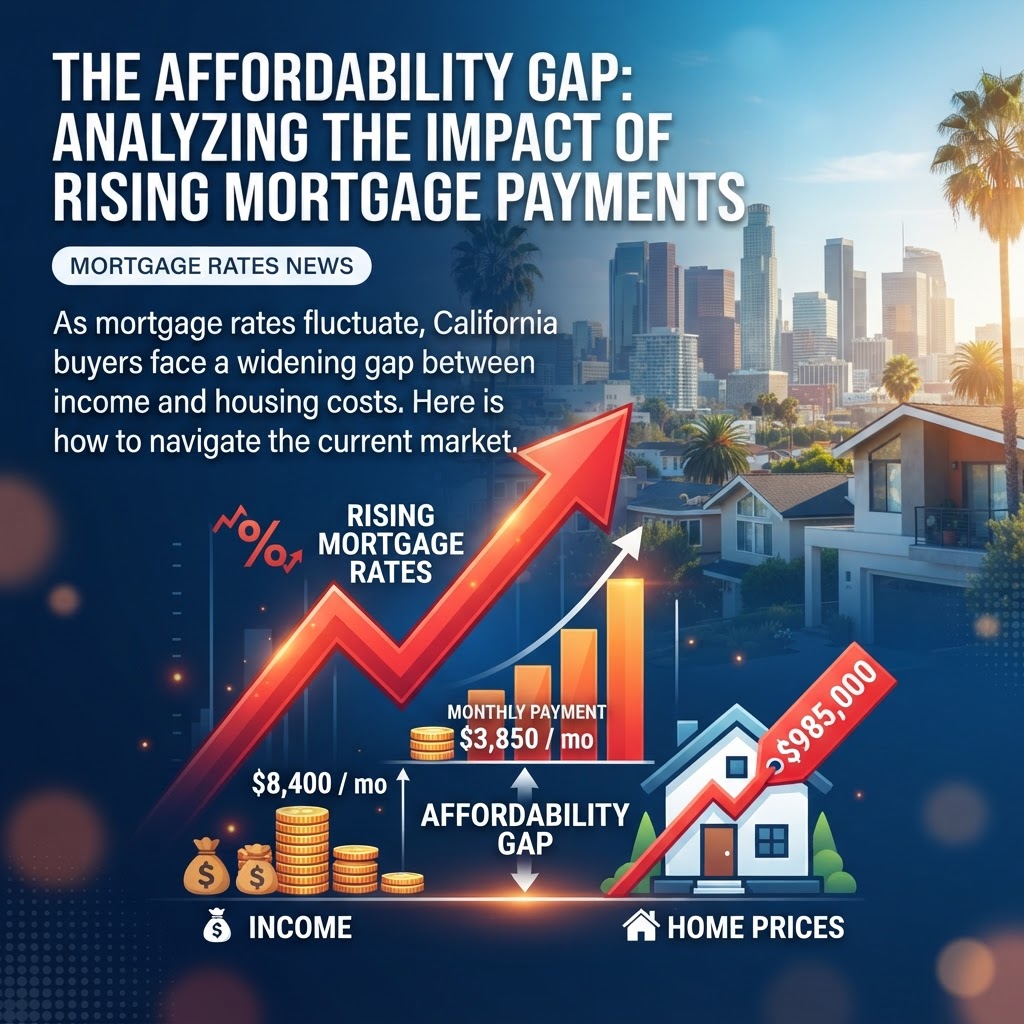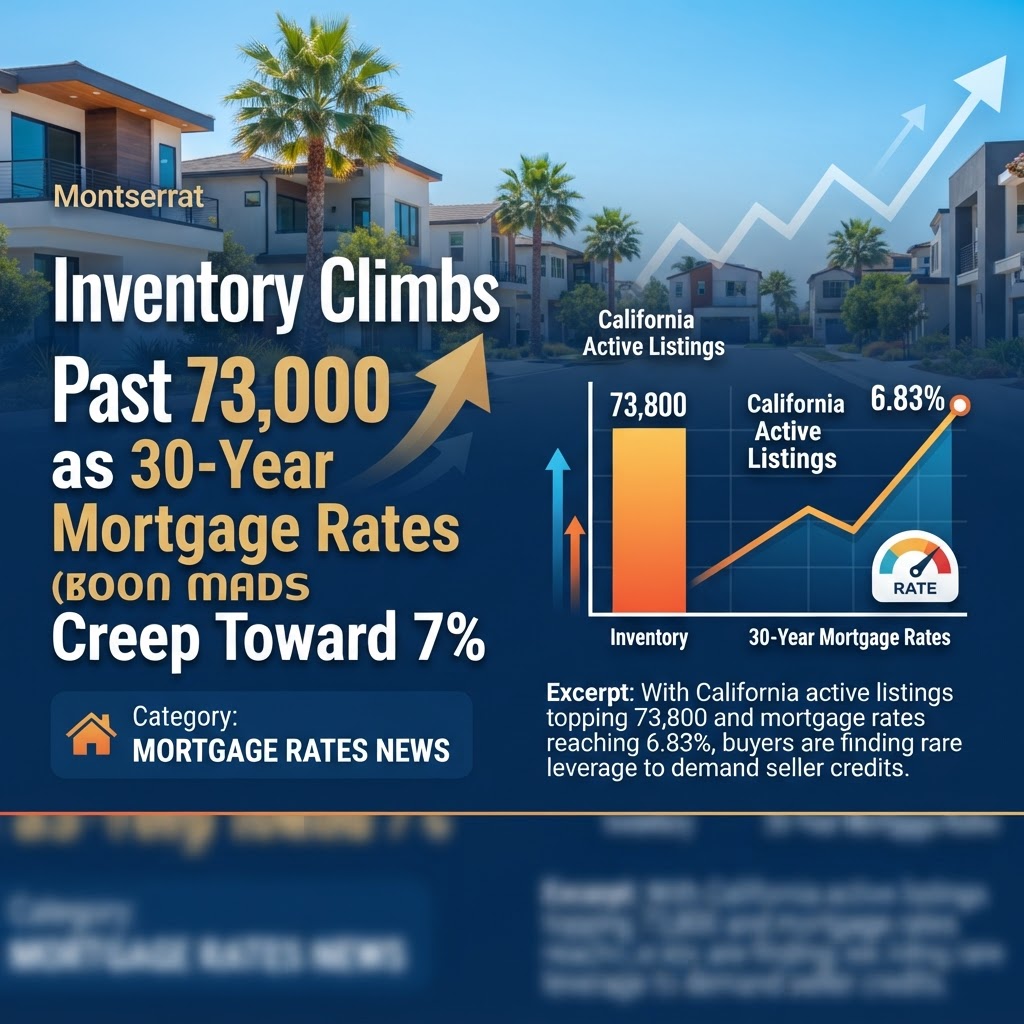
A shifting balance of power is reshaping the California housing market this September. Even as benchmark 30-year fixed mortgage rates climbed to a fresh 2026 high of 6.83% according to Wall Street Journal / Bankrate rate surveys, home shoppers are confronting an unexpected silver lining: an expanding supply of homes for sale.
Inventory Expansion Challenges Seller Pricing Power
According to Realtor.com inventory data released via the Federal Reserve Bank of St. Louis (FRED), active listings across California rose to 73,896 in August 2026, marking a consecutive monthly climb from 65,685 in April, 70,504 in May, and 72,497 in June. This continuous accumulation of supply represents the highest listing count in the state since early 2023.
While rising mortgage rates typically squeeze purchasing power—pushing quoted rates on conventional 30-year purchase products close to the psychologically significant 7% threshold—the steady expansion of active inventory is fundamentally altering negotiation dynamics. For much of the post-2021 period, strict supply deficits forced California buyers to compete under extreme time pressure and bid over asking price. Now, rising days on market and expanding choices are softening seller resistance across major metropolitan pockets, from the Inland Empire and Sacramento to the Bay Area perimeter.
The Rate Environment: Why Yields Are Rising in September
The upward pressure on home borrowing costs follows a broader global bond sell-off documented by CNN Business, where surging mortgage-backed security (MBS) yields continue to outpace earlier expectations for rapid Fed easing. The Mortgage Bankers Association (MBA), as cited in Forbes Advisor projections, previously anticipated benchmark rates would settle in the mid-6% tier through the third and fourth quarters. Instead, persistent economic strength and inflation stubbornness have driven average fixed yields toward 6.83%, with direct quotes at several California lenders reaching up to 6.99%.
For a California household financing the state median purchase, the difference between earlier 6.50% projections and today’s 6.83% level adds roughly $180 to $230 to the monthly principal-and-interest obligation on a typical $700,000 to $800,000 loan balance.
How California Buyers and Investors Can Capitalize
Rather than retreating from the market, proactive borrowers are leveraging rising listing counts to neutralize rate pressure:
- Prioritize Direct Seller Price Adjustments: With active listings nearing 74,000 statewide, properties lingering past 21 days often face price reductions. Target listings with multiple price cuts to offset higher financing hurdles with lower entry basis.
- Demand Substantial Seller Credits for Rate Relief: Sellers accustomed to multiple bids are increasingly agreeing to concession packages. Instead of traditional price cuts, ask for 2% to 3% seller concessions to fund permanent interest-rate discount points, pulling a 6.83% rate into the low-6% range.
- Monitor Down Payment Standards: While conventional underwriting allows varying down payment minimums, National Association of Realtors data compiled by NerdWallet shows first-time home buyers maintained a median down payment of 10%. Keeping adequate cash reserves rather than over-allocating upfront capital provides cushion against variable home maintenance and escrow adjustments.
- Re-Underwrite Local Property Tax and Insurance Impacts: High financing charges compound local property expenses. Buyers evaluating coastal or elevated wildfire zones must secure insurance binder estimates early in escrow to avoid debt-to-income (DTI) spikes that could derail underwriting approvals.
As California enters the autumn transactional window, elevated financing costs remain a fixture of the lending landscape. However, for well-qualified buyers equipped to negotiate concessions against motivated sellers, the expansion of inventory above 73,800 active homes offers an opening rarely seen over the past three years.