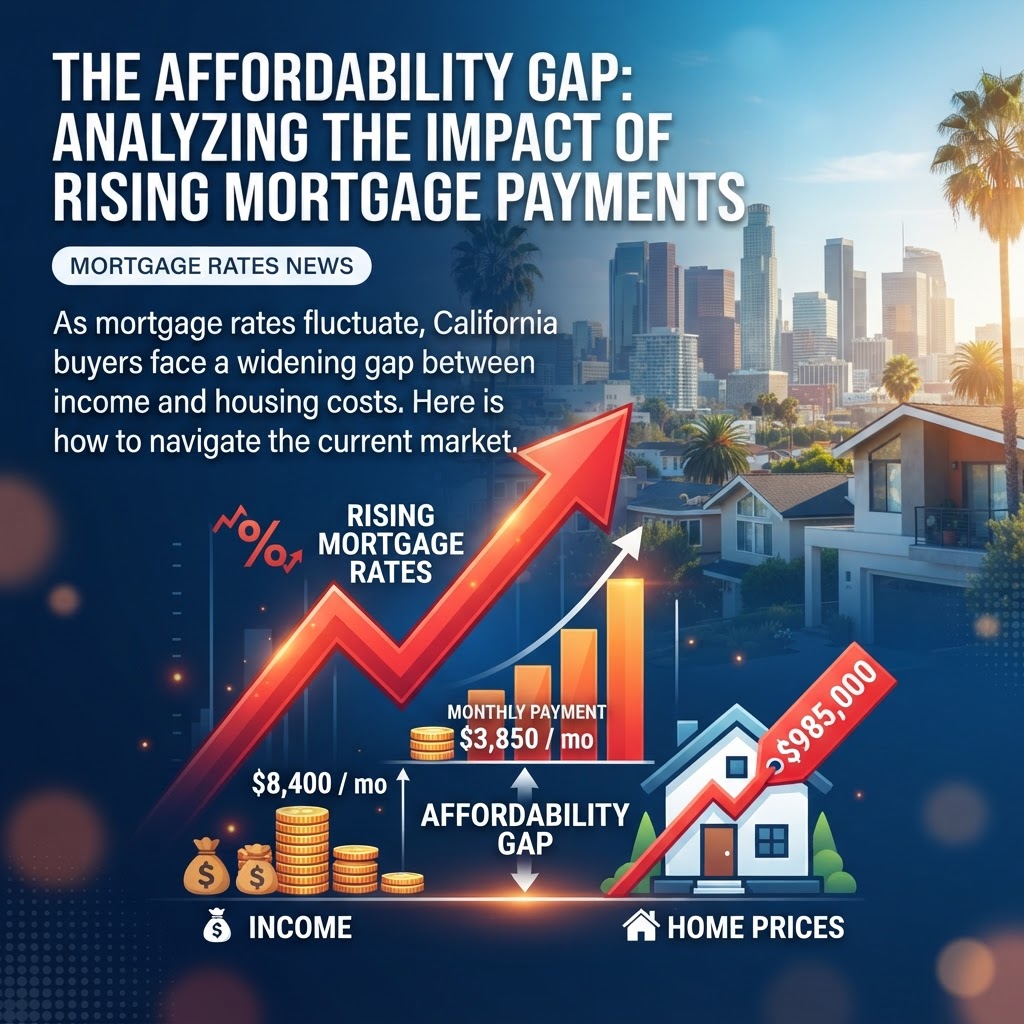
The Affordability Gap: Analyzing the Impact of Rising Mortgage Payments
For California home buyers, the current real estate landscape is defined by a persistent tension between cooling mortgage rates and the harsh reality of monthly payment obligations. While recent data from Freddie Mac indicates a modest decline in the 30-year fixed-rate mortgage to 7.24% as of October 29, 2026, the broader economic picture remains challenging for those looking to enter the market.
The Disconnect Between Rates and Affordability
While a dip in interest rates is typically viewed as a positive signal for buyers, the Mortgage Bankers Association (MBA) reports that homebuyer affordability actually declined in September. The national median payment applied for by purchase applicants rose to $2,215, up from $2,162 in August. This increase highlights a critical issue: even when rates show signs of easing, the combination of home prices and existing financial pressures can push monthly costs beyond the reach of many households.
Implications for the California Market
California remains one of the most sensitive markets to these shifts. With mortgage payments up more than seven percent compared to a year ago, many prospective buyers are finding that their earnings growth is failing to keep pace with the cost of financing. This creates a 'payment-to-income' squeeze that is particularly acute in high-cost coastal regions.
Practical Takeaways for Buyers and Investors
- Focus on Debt-to-Income (DTI) Ratios: With affordability metrics tightening, lenders are scrutinizing DTI ratios more closely. Reducing non-mortgage debt before applying can significantly improve your qualification odds.
- Evaluate Total Monthly Outlay: Do not look at the interest rate in a vacuum. Factor in property taxes, insurance, and potential HOA fees, which are often higher in California, to understand your true monthly commitment.
- Consider Long-Term Financial Planning: Given that affordability has deteriorated in 39 states, buyers should stress-test their budgets against potential future rate volatility rather than assuming current trends will lead to immediate, sustained relief.
As the market continues to digest economic data and Federal Reserve policy, the most successful buyers will be those who prioritize financial flexibility over timing the absolute bottom of the rate cycle. Understanding that affordability is a function of both rates and total loan amounts is essential for navigating the current California housing environment.


