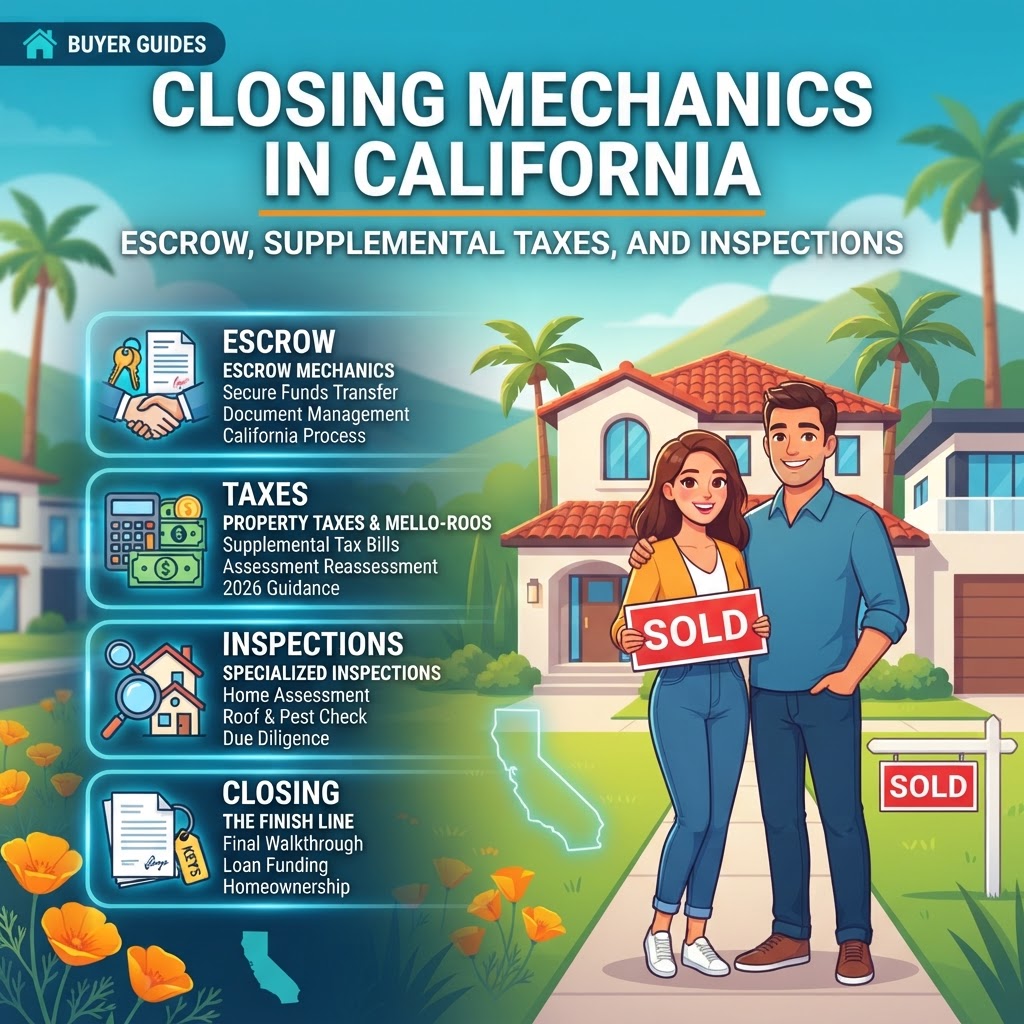
As of September 2026, the California housing market continues to challenge buyers with a unique blend of high competition and transformative new legislation. While the median home price has reached a projected record of $905,000 according to the California Real Estate Association, the landscape for buyers has shifted significantly due to recent zoning overrides and changes in how real estate professionals are compensated.
The SB 79 Landscape: Buying for Future Density
The most significant shift for 2026 buyers is the implementation of SB 79, which took effect on July 1, 2026. This historic housing bill effectively upzones many single-family neighborhoods across the state to allow for higher density, particularly in transit-rich areas like Westwood and parts of Los Angeles [Daily Bruin]. For a buyer, this means the value of a property is no longer tied solely to its current structure, but to its potential for future development under these new state mandates that override local control [SM Daily Journal].
Navigating the 'New Transparency' in Representation
Following the landmark NAR settlement, the way buyers interact with their agents has fundamentally changed. As of late 2024 and solidified in 2026 practice, offers of compensation for buyer agents are no longer allowed to be listed on the Multiple Listing Service (MLS) [NAR Consumer Guide].
In today's market, buyers must be prepared to:
- Sign a Written Representation Agreement: Before touring a home, you must have a signed agreement with your agent that clearly outlines their fee.
- Negotiate Seller Concessions: While sellers are not required to pay buyer agent fees, many still do to attract a larger pool of buyers. However, this must now be negotiated as part of the purchase offer rather than being a pre-set figure on the MLS [reAlpha].
Current Market Conditions and Competition
Data from June 2026 indicates that the market remains highly competitive despite modest inventory growth. Approximately 36.1% of homes in California sold above list price, a 2.0-point increase year-over-year [Redfin]. The sale-to-list price ratio stands at a staggering 99.8%, meaning buyers have very little room for low-ball offers in desirable metros like Berkeley or San Francisco, where median prices have hit $1.7M [Redfin].
Practical Takeaways for 2026 Buyers
- Verify Zoning Potential: Before purchasing a single-family home, check if the lot falls under SB 79 upzoning. This could significantly increase the property's long-term value or impact the neighborhood's future density [LA Times].
- Budget for Representation: If a seller refuses to offer a concession for your agent's fee, you may need to cover this cost out-of-pocket. Factor this into your cash-to-close calculations alongside the standard 1% to 1.25% property tax base [MagicDoor].
- Look for 'Stale' Listings: While 36% of homes go above list, roughly 15.9% of homes saw price drops in mid-2026 [Redfin]. These properties offer the best leverage for negotiating seller-paid closing costs or agent fees.
- Secure a 'Certified' Pre-Approval: With mortgage rates hovering around 6.6% [CorAdvisors], having a fully underwritten pre-approval is essential to compete with the high volume of multiple-offer scenarios.