The Widening Chasm Between Owning and Renting
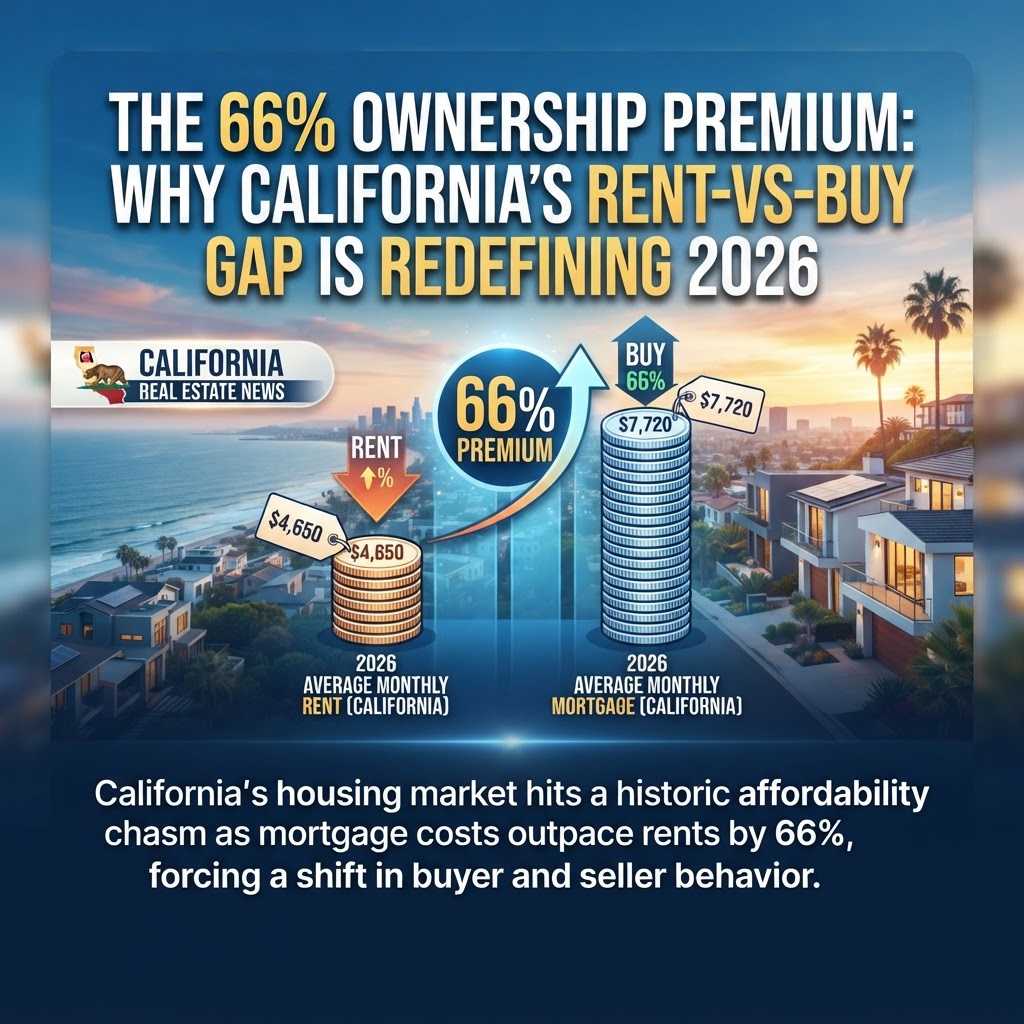
As of September 2, 2026, the California real estate market is grappling with a historic divergence between the cost of homeownership and the cost of renting. According to the California Housing Affordability Tracker, the monthly cost of owning a typical two-bedroom home has surged to approximately $4,600—including principal, interest, taxes, and insurance. In contrast, the average rent for a comparable property sits at $2,700. This 66% premium to own versus rent is one of the widest gaps in state history, fundamentally altering the math for first-time buyers and long-term investors alike.
The Qualification Crisis
This affordability gap has led to a significant contraction in the pool of eligible buyers. Data from the Legislative Analyst’s Office indicates that only 22% of California households currently qualify for a mid-tier home mortgage, a sharp decline from 31% in 2019. The situation is even more pronounced for entry-level buyers; only 44% of households qualify for bottom-tier homes, down from 57% seven years ago. While the statewide median home price moderated slightly to $904,640 in June 2026—a 2.8% dip from the May peak of $930,260—the relief for buyers has been offset by persistent mortgage rates that remain well above the sub-5% levels enjoyed by 76% of current homeowners [California Housing Market: Prices, Trends, Forecast 2026], [California Housing Affordability Tracker].
The Rise of the 'Accidental Landlord'
The financial friction of the "lock-in effect" has birthed a new market segment: the accidental landlord. With 76% of California homeowners holding mortgage rates below 5%, the cost of selling and buying a similarly priced home at 2026 rates would increase monthly payments by approximately 13%, or $230,000 over the life of the loan [California Housing Affordability Tracker]. Consequently, many would-be sellers are choosing to retain their primary residences as rental properties while they move, further constraining the supply of homes for sale but bolstering the inventory of Class B and C rental units in coastal submarkets [California Housing Market 2026: Outlook & Trends].
Regulatory Relief for the 'Missing Middle'
While large-scale developments face high-interest headwinds, new regulations are attempting to streamline smaller projects. Assembly Bill 253, which took full effect in 2026, has introduced strict timelines for post-entitlement permitting for residential buildings with 10 units or fewer. State agencies now have just 15 days to determine application completeness and 30 to 60 days to approve or deny permits [California's 2026 Housing Laws: What You Need to Know]. This regulatory shift is expected to support the "missing middle" of housing, even as multifamily-driven construction starts saw a sharp pullback in early 2026 [California Construction and Housing Update].
Strategic Takeaways for the 2026 Market
- For Buyers: Leverage softer-than-expected demand to negotiate. While prices remain high, the 16.5% of listings seeing price cuts provide a window for those who can navigate the 66% ownership premium [California Seller Disclosure Requirements].
- For Sellers: Consider lease-option or seller-financing strategies. With many buyers priced out by traditional lenders, providing alternative financing can help maintain a higher sale price while solving the buyer's qualification hurdle.
- For Investors: Focus on Class B and C assets in supply-constrained coastal cities. These submarkets are outperforming Class A new construction in urban cores like Downtown LA, which are currently facing oversupply issues [California Housing Market 2026: Outlook & Trends].