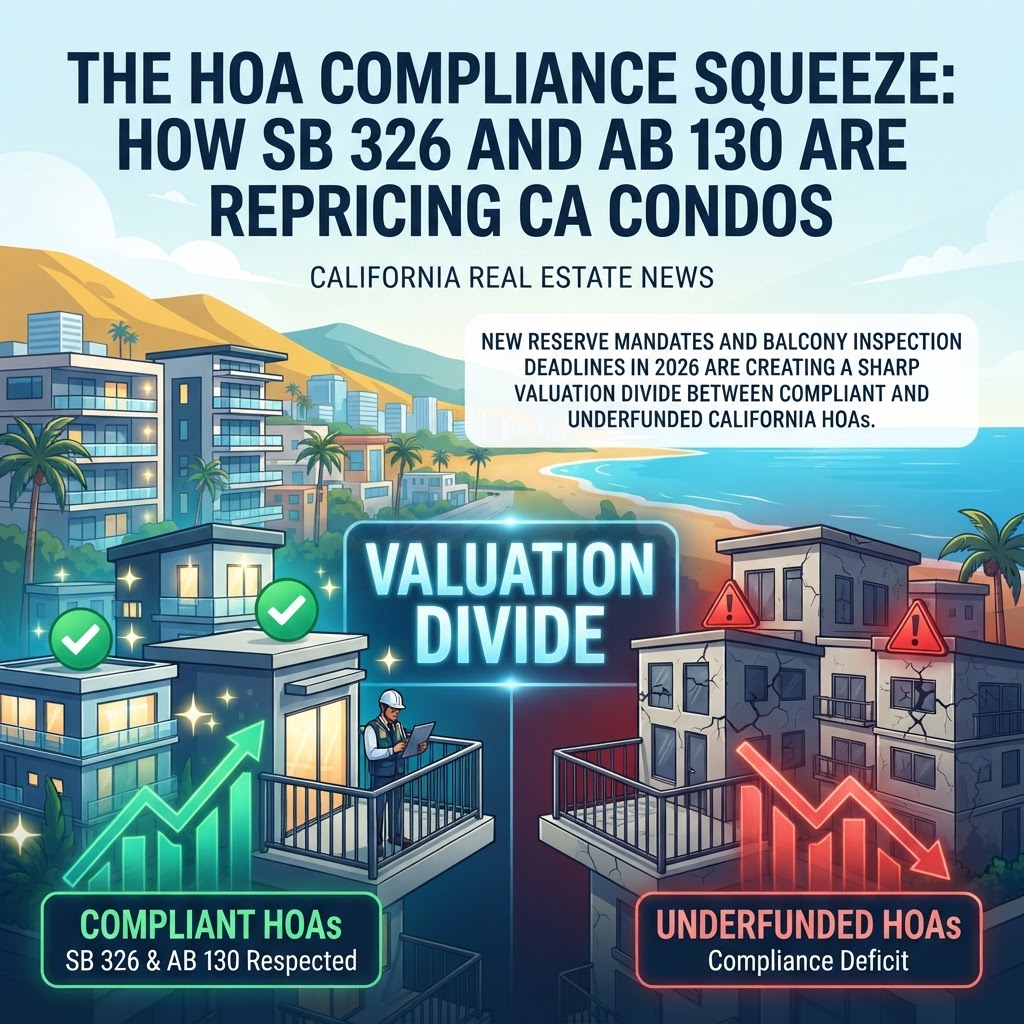
Across California’s common-interest developments, a quiet regulatory reckoning is transforming the condominium and townhouse market. Entering late 2026, buyers, sellers, and lenders are no longer appraising condominiums solely on square footage, location, and interior finishes. Instead, governance disclosures, structural reserve studies, and state compliance filings have become primary determiners of residential equity.
The Structural and Regulatory Squeeze
Two key statutory shifts have reached critical implementation thresholds this year: the inspection and repair compliance timeline under Senate Bill 326 (the ‘balcony inspection’ law) and the statutory fine ceilings and procedural constraints introduced under Assembly Bill 130. Combined with soaring master insurance policy premiums, these rules are forcing Homeowners Associations (HOAs) across the state to confront decades of deferred maintenance and depleted reserve accounts.
According to analysis from the Foundation for Community Association Research and industry reports, California ranks among the top three states nationwide in total community associations. However, the financial health among these associations is diverging sharply. While compliant boards have raised regular dues to build adequate reserve funds, underfunded HOAs are slapping owners with sudden, five-figure special assessments to fund mandatory exterior elevated element (EEE) structural inspections and remediation work.
The $45,000 Governance Discount
With California’s median single-family home price hovering near $900,000, market data shows that poorly managed, under-reserved common-interest developments are incurring steep transaction discounts. Industry valuation figures indicate that a 5% decline in relative property value due to deferred structural maintenance, active litigation, or depleted reserves translates to an immediate loss of roughly $45,000 in equity for the average unit owner.
Lenders are driving much of this repricing. Under Fannie Mae and Freddie Mac condominium project review standards, properties with substantial deferred maintenance or associations allocating less than 10% of their annual budget toward replacement reserves face blacklisting. Once a complex is deemed non-warrantable, conventional mortgage financing dries up, forcing prospective buyers toward all-cash purchases or higher-rate specialty private loans—and forcing sellers to slash asking prices.
Regional Performance Disparities
The impact varies significantly across submarkets:
- Coastal Urban Cores (San Francisco, Silicon Valley, San Diego): Despite elevated structural repair costs, tight vacancy (holding below 5%) and resilient buyer demand have allowed well-governed associations to pass through necessary dues adjustments without collapsing transaction volume.
- Inland and Downtown Southern California: In submarkets facing competing new multi-family construction—such as parts of Los Angeles absorbing thousands of newly delivered Class A units—older condo complexes saddled with imminent structural assessments are lingering on the market, forcing steep seller price concessions.
Practical Takeaways for Buyers, Sellers, and Investors
- For Prospective Buyers: Insist on reviewing the HOA’s last three years of board meeting minutes, the most recent reserve study (ensuring funded levels exceed 70%), and written documentation of completed SB 326 structural balcony inspections before removing contract contingencies.
- For Condo Sellers: Proactively compile an association transparency package. Communities with fully funded reserves and clean inspection certifications are trading at a measurable premium; make proof of SB 326 compliance front and center in the listing disclosures.
- For Investors and Landlords: Scrutinize net yield calculations against upcoming special assessment risk. High rental demand cannot offset emergency capital calls that exceed an entire year’s net operating income. Verify whether the complex holds pre-2005 exemptions or falls under local rent stabilization ordinances when planning long-term cash flow.