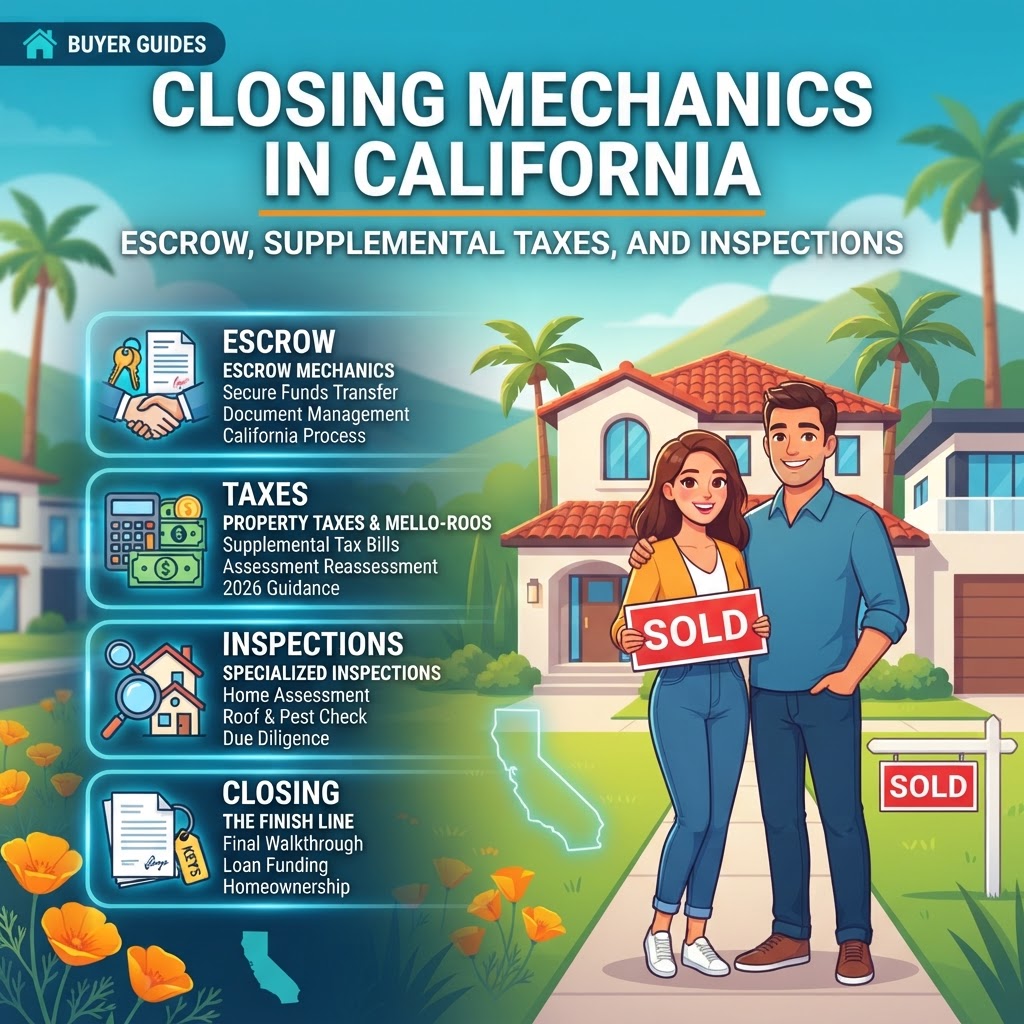
The 2026 California Buyer’s Financial Strategy: Beyond the Purchase Price
As California’s housing market shifts toward a more balanced state in 2026, buyers are finding that success requires more than just a competitive offer. With statewide median home prices hovering near $914,810, understanding the hidden financial levers of a California transaction is essential for long-term stability.
1. Mastering the Property Tax Landscape
New buyers often overlook the "Prop 13 reset." In California, your property tax base is reassessed to the purchase price upon acquisition. Unlike long-term owners who benefit from capped annual increases, your initial tax bill will be based on your purchase price, typically around 1% plus local voter-approved bonds. Always use a county-specific property tax estimator before finalizing your budget to avoid "sticker shock" in your first year of ownership.
2. Leveraging State-Backed Assistance
Affordability remains a hurdle, with only about 18% of households able to afford a median-priced home. However, the California Housing Finance Agency (CalHFA) continues to offer critical support. Programs like the MyHome Assistance Program provide second mortgage options for down payment and closing cost assistance. Ensure your lender is "CalHFA-approved," as not all mortgage professionals are equipped to process these specific state-backed applications.
3. Regional Nuance: The "Inland vs. Coastal" Divide
Market conditions are not uniform. While coastal hubs like Los Angeles and San Diego remain competitive, inland regions like Sacramento are showing clearer signs of a buyer’s market. Buyers should prioritize "commuter-friendly" suburbs where inventory growth is outpacing demand, allowing for more leverage during the negotiation phase.
Practical Takeaways for 2026 Buyers
- Factor in the Tax Reset: Calculate your post-purchase tax liability immediately to ensure your monthly mortgage payment remains sustainable.
- Audit Your Lender: Confirm your loan officer has direct experience with CalHFA and other state-specific down payment assistance programs.
- Analyze Days on Market: Use local MLS data to track how long homes stay listed. If a property has been on the market for more than 30 days, you have increased leverage to negotiate seller concessions, which can help offset closing costs.
- Monitor Inventory Trends: With active listings up roughly 18% compared to last year, patience is a strategic asset. Do not feel pressured to waive inspections or overbid in markets where inventory is clearly rising.
By focusing on these financial fundamentals, you can move beyond the emotional stress of the search and build a sustainable foundation for homeownership in the Golden State.