The Great Decarbonization Divide
On August 21, 2026, California’s residential market is facing a silent but significant valuation shift. While interest rates have dominated the headlines, a secondary market bifurcation is occurring: the gap between all-electric new builds and gas-dependent legacy homes. Driven by the 2025-2026 updates to Title 24 Building Standards, which effectively ended gas hookups in new residential construction, the "Electrification Gap" is now a primary factor in appraisal premiums.
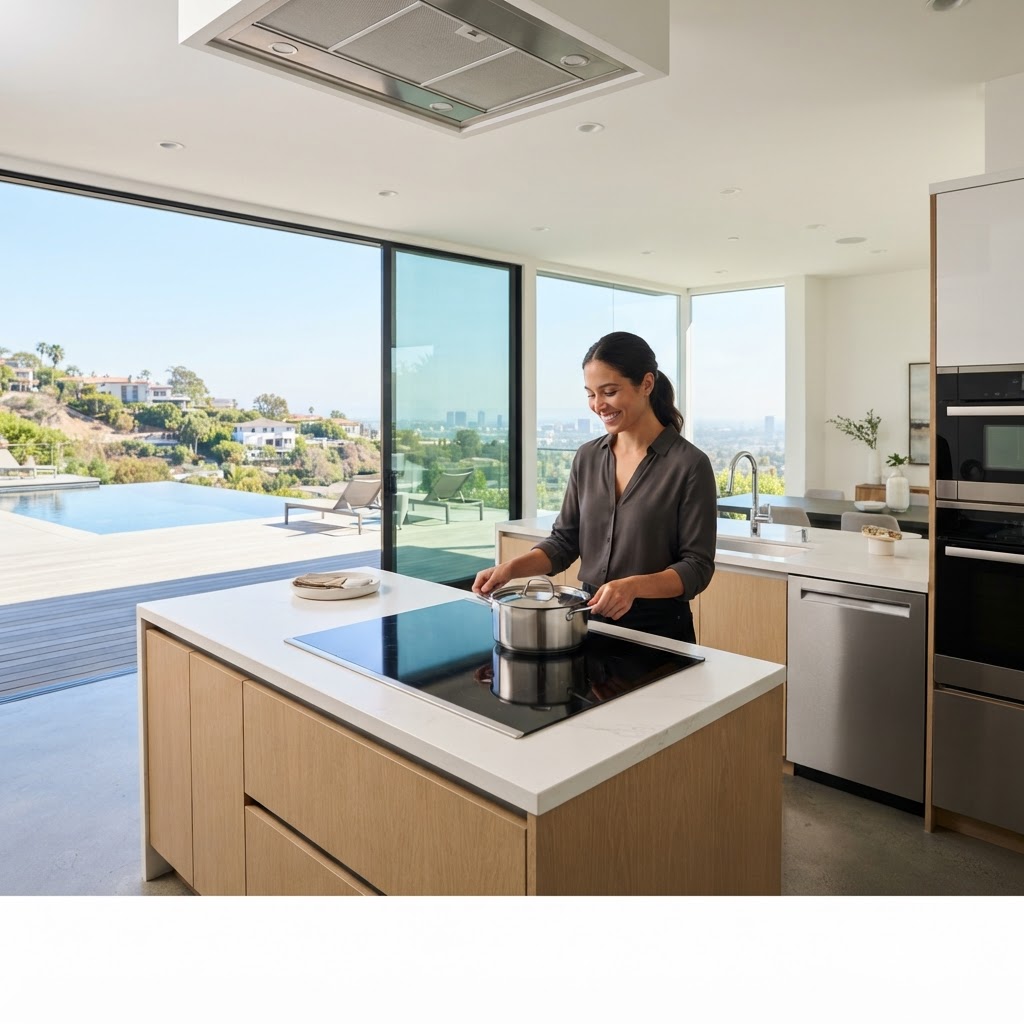
According to data from the California Energy Commission (CEC), over 85% of new permits issued in the first half of 2026 were for fully electrified homes featuring heat pump HVACs, induction cooktops, and integrated battery storage. For buyers, these systems are no longer "green novelties"—they are the new baseline for luxury and long-term asset protection.
The Premium on ‘Future-Proofed’ Inventory
Recent MLS data from Northern and Southern California suggests that homes marketed as "Full Electric" or "Zero-Emission Ready" are fetching a 4.2% price premium compared to similar gas-burning counterparts. While that percentage may seem modest, in a market where the median home price hovers near $930,000, it represents nearly $40,000 in added equity.
“We are seeing a clear preference shift,” says Elena Rodriguez, a senior analyst at a leading California-based real estate brokerage. “The affluent buyer in 2026 views a gas range not as a gourmet tool, but as a liability for future retrofitting. They are pricing in the cost of the inevitable transition before they even sign the disclosure pack.”
The Retrofit Hurdle: A $35,000 Consideration
The challenge lies with California’s aging housing stock. For the 70% of California homes built before 1990, the transition to all-electric is not a simple appliance swap. It often requires significant panel upgrades—moving from 100-amp to 200-amp or 400-amp service—which can cost between $5,000 and $12,000 alone depending on local utility constraints.
Data from the National Association of Realtors (NAR) 2026 Sustainability Report indicates that the average cost to fully electrify a 2,000-square-foot legacy home in California now averages $35,000. While federal rebates from the High-Efficiency Electric Home Rebate Act (HEEHRA) cover a portion of this, the remaining out-of-pocket expense is becoming a point of contention at the escrow table.
Practical Takeaways for the 2026 Market
- For Sellers: If your home still relies on gas, consider investing in a 200-amp panel upgrade before listing. Even if you don’t replace the appliances, "EV-Ready" and "Electric-Ready" status removes a significant psychological hurdle for modern buyers.
- For Buyers: Scrutinize the electrical panel during inspections. A home with an original 100-amp fuse box is effectively obsolete in an era of mandatory EV charging and heat pump requirements, providing a lever for price negotiations.
- For Investors: Focus on Class B assets in inland markets where electrification mandates are less strictly enforced at the local level but will eventually catch up. The "Green Flip"—buying a gas-heavy home and retrofitting it using state subsidies—is emerging as a high-yield strategy for 2027.
The Path Forward
As California pushes toward its goal of three million climate-ready homes by 2030, the real estate market is acting as the primary enforcer of state policy. The “Gas-Free” label has transitioned from an environmental statement to a financial necessity. In the eyes of the 2026 appraiser, a home’s carbon footprint is now inextricably linked to its terminal value.