The Shift in California’s Rental Landscape
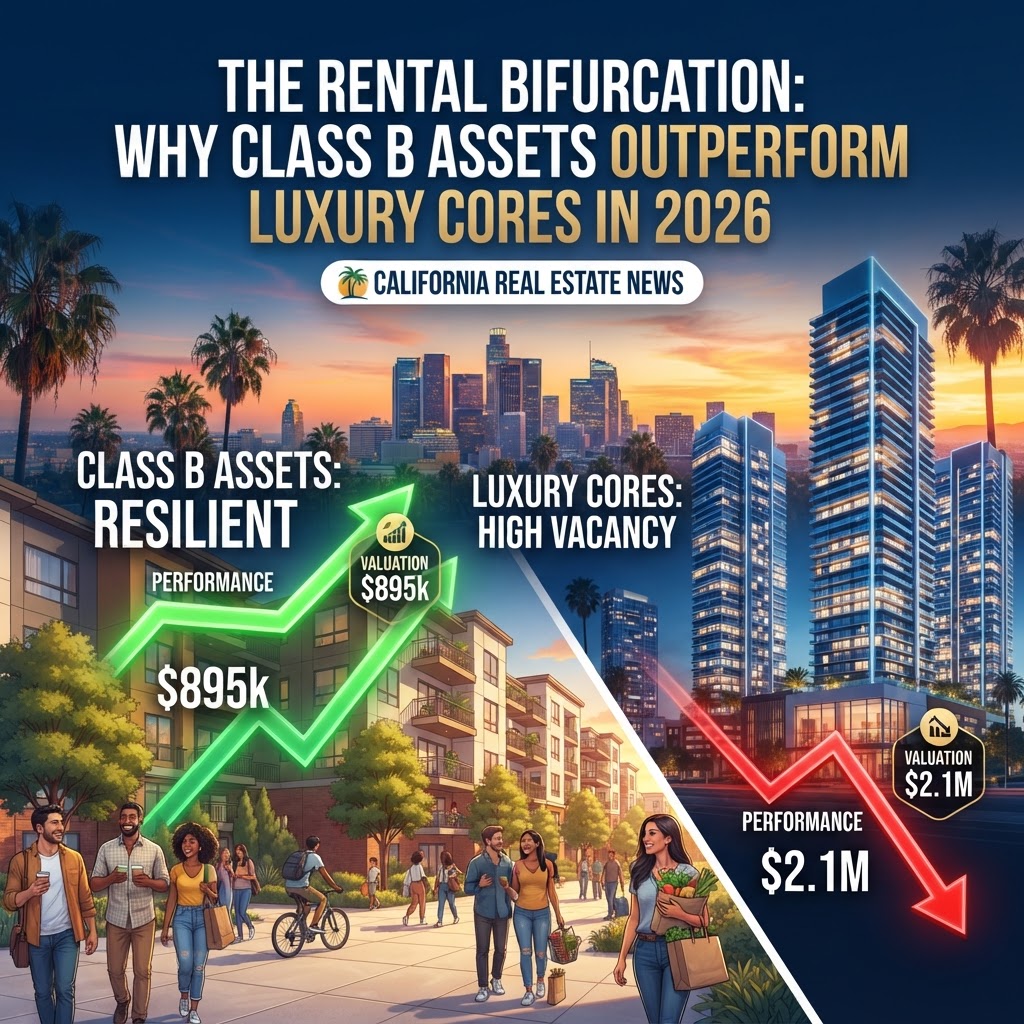
While California’s for-sale market enters a period of stabilization, the rental sector is witnessing a sharp divergence in performance. As of August 2026, the 'rising tide' that once lifted all rental assets has officially receded, leaving a clear winner: Class B and C properties in supply-constrained coastal submarkets. According to the USC Casden forecast for Southern California rent growth 2026, the days of uniform rent hikes are over, replaced by a market where asset class and submarket location dictate survival.
The Luxury Glut vs. Middle-Market Resilience
Data from mid-2026 reveals a growing vacancy problem in California’s urban cores. Class A new construction in areas like Downtown Los Angeles and parts of Sacramento is currently underperforming due to a temporary oversupply of luxury units. In contrast, Class B and C properties—often referred to as 'workforce housing'—are seeing sustained demand as the California Housing Affordability Tracker notes that the estimated rent for a two-bedroom home has reached approximately $2,700.
This pricing floor has pushed a significant portion of the population out of the luxury market and into mid-tier housing. For investors, this has translated into lower turnover rates and more predictable cash flows in the Class B sector, while luxury landlords are increasingly forced to offer concessions to maintain occupancy.
Regulatory Headwinds: The AB 1482 Compliance Trap
Operational success in 2026 is increasingly tied to regulatory precision. The California Tenant Protection Act (AB 1482) remains a primary hurdle for landlords. Industry reports indicate that errors in calculating annual rent increases against the applicable Consumer Price Index (CPI) are the leading cause of tenant disputes this year. With median rents remaining high, the financial risk of a non-compliant eviction or an incorrectly issued rent increase notice is substantial; a 60-day vacancy in a $2,800-per-month unit can cost a landlord over $5,600 in lost revenue before legal fees are even considered.
Practical Takeaways for Investors and Landlords
- Prioritize Submarket Data: Avoid making investment decisions based on city-wide averages. In 2026, vacancy rates are highly localized. Focus on coastal submarkets where geographic barriers prevent new supply from diluting the Class B market.
- Audit Compliance Documentation: Ensure all rent increase notices are documented and calculated strictly against the current CPI index as required by AB 1482. The California Department of Real Estate’s 2026 Real Estate Law updates emphasize that proper written notice is no longer just a courtesy—it is a liability shield.
- Focus on Retention over Turnover: Given the high cost of vacancy in the current high-rent environment, retaining qualified tenants is more profitable than seeking the maximum possible rent increase. Consider 'stay-incentives' for long-term tenants in Class B assets to avoid the costs of unit turns.
The Outlook for Late 2026
As we move into the final quarters of 2026, the bifurcation of the market is expected to widen. While the NAR Forecast suggests a jump in home sales for 2026, the rental market remains the primary housing vehicle for the 56% of California households who cannot yet qualify for a mortgage. For the savvy investor, the 'boring' Class B apartment complex in a stable neighborhood is proving to be the gold standard of the 2026 California market.