The New Hydrological Hurdle
As of August 16, 2026, the California real estate market is grappling with a challenge that transcends interest rates and inventory: the "Dry Pipeline." A new federal and multi-state agreement regarding the Colorado River has mandated water cutbacks of up to 20% for Arizona, California, and Nevada Churchill Mortgage. While coastal metros like San Francisco see prices rise 7.5% due to AI-driven wealth Cotality, the Inland Empire and Southern California border regions are seeing a different trend: the rise of the "water-contingent" development permit.
Supply Constraints Meet Resource Scarcity
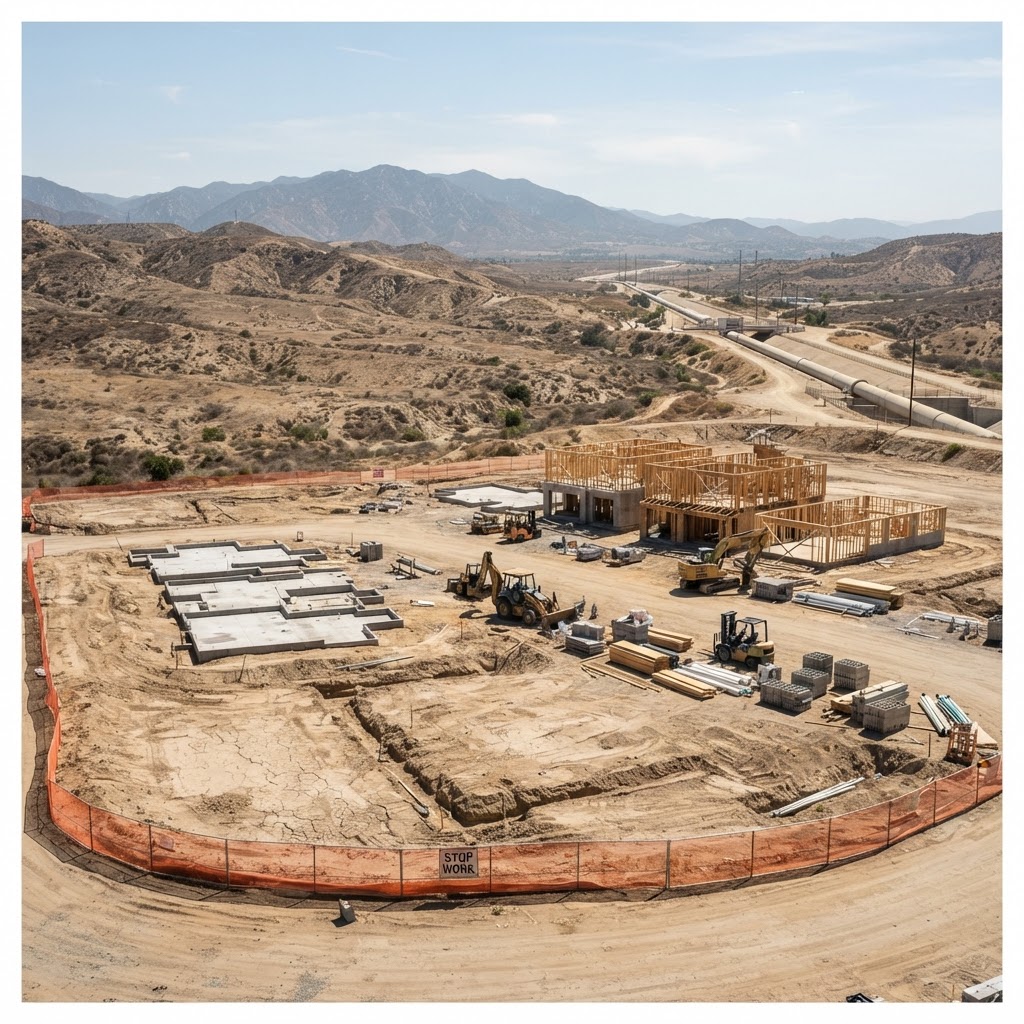
The California housing shortage has long been driven by regulatory and economic factors Wikipedia. However, the 2026 water plan adds a physical constraint that is already impacting the 157,595 active listings currently on the market Realtor.com. In high-growth areas like Riverside and San Bernardino, local planning commissions are increasingly requiring developers to prove 20-year water security before breaking ground on new subdivisions.
According to recent data, California's statewide median sold price sits at $785,000, a 1.95% increase year-over-year Realtor.com. However, in regions most dependent on the Colorado River, price growth is beginning to decouple from the state average as "water impact fees" for new builds have surged by an average of 12% since January.
The Divergence of the California Market
The impact of these resource constraints is not uniform. While San Diego County maintains a robust median sale price of $952,313 (up 3.9% from last year) Redfin, agricultural-heavy regions like Napa are seeing a 5.0% year-over-year decline in home price indices Cotality. This divergence highlights a market where localized demand shocks—driven by water rights and industrial shifts—are contradicting broader regional trends.
Practical Takeaways for 2026 Stakeholders
- For Developers: Prioritize "infill" projects in coastal cities where water infrastructure is already established, rather than "greenfield" developments in desert-adjacent counties that face the highest risk of permit denials.
- For Buyers: When purchasing in the Inland Empire or Coachella Valley, verify the specific water district's allocation status. Properties with senior water rights or those within districts with diversified portfolios (e.g., desalination or advanced recycling) are likely to hold value better than those on the fringes.
- For Investors: Monitor the "water-contingent" status of new builds. A project that has been approved but lacks a secured water certificate is a high-risk asset in the current regulatory climate.
As the state continues to navigate its housing shortage, the intersection of environmental policy and real estate law will define the next decade of growth. For now, the "Dry Pipeline" remains the most significant headwind for Southern California's expansion goals.