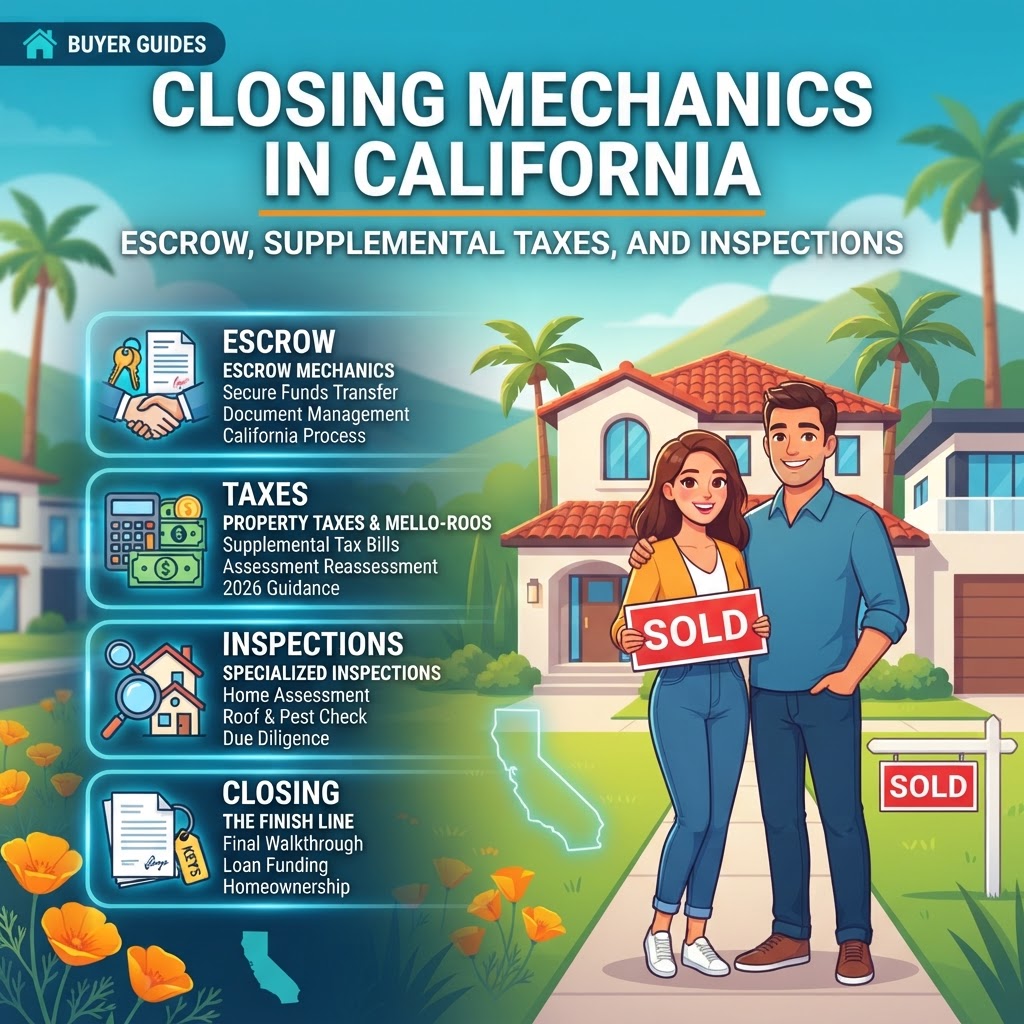
The New Negotiation Paradigm: 2026 California Buying
As of mid-August 2026, the California housing market has fully integrated the structural changes resulting from the 2024 NAR settlement and subsequent state-level legislative updates. For the modern buyer, the process is no longer just about finding a home; it is about managing the complex intersection of Buyer Representation Agreements (BRAs), high-balance loan limits, and aggressive seller concession strategies.
According to data from the California Association of Realtors (C.A.R.), the average California home price in Q3 2026 remains resilient at $872,000, with inventory hovering at a 3.4-month supply. While interest rates have stabilized near 6.2%, the primary hurdle for today’s buyer is the "liquidity squeeze"—the challenge of covering both a down payment and professional representation fees in an environment where these costs are now explicitly negotiated.
The Buyer Representation Agreement: Your First Financial Hurdle
In 2026, you cannot tour a home with a licensed agent without a signed Buyer Representation Agreement. This document establishes your agent's compensation, a cost that was historically obscured. Practical buyers must now view this as a "closing cost" that needs to be funded through one of three avenues:
- Out-of-Pocket: Direct payment to the brokerage (least common).
- Seller Credit: Negotiating for the seller to pay the buyer's broker fee via the Seller Payment for Buyer’s Broker (SPBB) form.
- Financed: Asking the seller to credit the commission amount back to the buyer to offset other closing costs, effectively wrapping the fee into the mortgage (subject to lender LTV limits).
Leveraging the SPBB Form in a Competitive Market
In California’s 2026 market, the Seller Payment for Buyer’s Broker (SPBB) form has become as critical as the Residential Purchase Agreement (RPA) itself. Data from MLS listings in Los Angeles and the Bay Area suggests that 78% of successful offers in the $700k–$1.2M range include a request for seller-paid buyer commissions.
To win a bidding war while protecting your cash, your strategy should be: The Gross-Up Method. If a home is listed at $900,000 and you need a 2.5% credit for your broker, consider offering $922,500 with a request for the 2.5% credit. This keeps the seller’s net profit identical to a full-price offer while preserving your liquid capital for repairs or emergencies.
Appraisal Gaps and the "Concession Cap"
As you navigate 2026 market conditions, be aware of lender limits on Interested Party Contributions (IPCs). For conventional loans with less than a 10% down payment, the total seller contribution is typically capped at 3% of the purchase price. In California’s high-cost counties, where many buyers use Fannie Mae/Freddie Mac High-Balance loans, exceeding this cap can lead to a financing denial.
Pro-Tip: Ensure your agent provides a comparative market analysis (CMA) that justifies a "grossed-up" price to prevent an appraisal gap. If the house doesn't appraise for the higher amount, you may be forced to pay your broker out-of-pocket, despite the agreement.
The 2026 California Due Diligence Checklist
Before submitting an offer in today’s market, buyers must verify these CA-specific factors to avoid post-close financial shock:
- Prop 19 Portability: If you are over 55 or a victim of a wildfire, ensure your escrow officer is prepared to handle the tax base transfer to avoid a massive property tax spike.
- ADU Valuation: With California's 2026 focus on density, ensure your lender uses an appraiser experienced in ADU (Accessory Dwelling Unit) income valuation if the property has a secondary unit. This can increase your qualifying income by up to 25% in some cases.
- Fire Zone Insurance: The 2026 FAIR Plan rates have adjusted; always secure an insurance quote within the first 48 hours of your 17-day contingency period.
Key Takeaways for 2026 Buyers
- Negotiate Early: Discuss commission structures before you start touring. Understand exactly what your agent’s fee is and how you will ask the seller to cover it.
- Audit the Net Sheet: Always ask for a "Seller's Net Sheet" simulation when making an offer. If your offer results in the highest net for the seller, you win—even if you're asking for the most concessions.
- Monitor LTV Limits: Coordinate with your lender to ensure your requested seller credits don't exceed the maximum IPC (Interested Party Contribution) for your specific loan type.
- Use the SPBB Form: Never rely on verbal agreements regarding commission. If it isn't on the SPBB form and attached to the RPA, it doesn't exist in the eyes of escrow.