The Shift from Aesthetics to Infrastructure
In the California real estate landscape of late 2026, the traditional metric of "location, location, location" has evolved. While neighborhood prestige and school districts remain vital, the state’s intensifying climate volatility and energy transition have birthed a new priority: Infrastructure Resilience. As we navigate the August heatwaves, buyers are discovering that a home’s ability to remain powered, connected, and hydrated is the ultimate arbiter of its long-term market value.
1. The Energy Reliability Audit: Beyond Solar
With the California Independent System Operator (CAISO) reporting increased grid strain during peak summer months, a home’s energy profile is no longer a secondary concern. While 2026 mandates require solar on new builds, buyers of existing stock must look deeper.
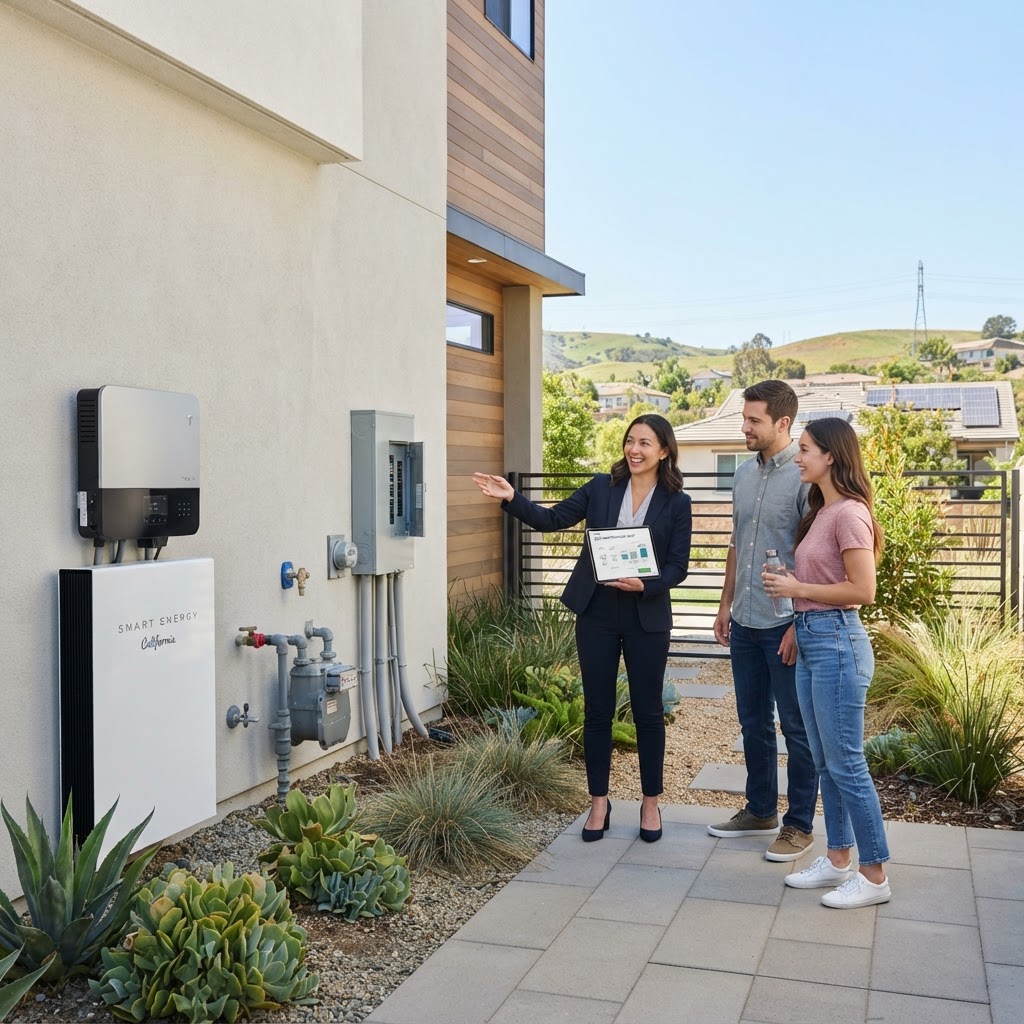
- Battery Storage Capacity: Data from the California Energy Commission suggests that homes equipped with localized battery storage (e.g., Tesla Powerwall 3 or equivalent) retain a 4.5% valuation premium over homes with solar alone in Public Safety Power Shutoff (PSPS) zones.
- EV Readiness: By August 2026, California’s progress toward the 2035 zero-emission mandate has made Level 2 charging capability a standard expectation. A home requiring a panel upgrade (often $3,000–$5,000) to support dual-EV charging should be negotiated as a capital expense.
2. Water Security and Xeriscaping Equity
The California Department of Water Resources continues to update regional groundwater sustainability maps. For buyers in the Central Valley or Inland Empire, water rights and well depth are the primary risk factors. However, even in coastal urban centers, infrastructure dictates costs.
Practical buyers should audit the irrigation systems. Properties that transitioned to smart, weather-synced irrigation and native landscaping see significantly lower utility overhead. According to NAR’s 2026 Green Home Trends report, "drought-resilient curb appeal" is now a faster-selling feature than traditional manicured lawns in Southern California.
3. The Connectivity Quotient
With 42% of California’s professional workforce maintaining a hybrid or fully remote schedule, digital infrastructure is a non-negotiable utility. A property’s value is now tethered to its fiber-optic availability.
- The Fiber Gap: Buyers should verify fiber-to-the-home (FTTH) availability rather than relying on generic provider maps. In micro-markets like the Santa Cruz Mountains or rural San Diego County, the presence of redundant high-speed providers can increase a home’s liquidity by 15% compared to neighbors stuck on satellite or legacy copper lines.
- Internal Wiring: Look for Cat6e or Cat7 cabling in newer renovations. In a world of 8K streaming and multi-user VR workrooms, internal bandwidth bottlenecks are the new "outdated wallpaper."
4. Navigating the Micro-Climate Micro-Market
California’s geography creates extreme localized variance. A "practical guide" in 2026 requires understanding the Infrastructure Vulnerability Zone (IVZ). Before placing an offer, buyers should consult the California Public Utilities Commission (CPUC) Fire-Threat Maps. Properties in Tier 2 or 3 zones face higher operational costs, not just in insurance, but in the physical hardening of the home (e.g., ember-resistant venting and non-combustible decking).
Practical Takeaways for the 2026 California Buyer
- Audit the Electrical Panel: Ensure the home has a 200-amp service minimum to handle the future of all-electric appliances and EV charging.
- Verify Backup Systems: If the home is in a PSPS-prone area, request a functional test of the automatic transfer switch (ATS) during the inspection period.
- Check Broadband Redundancy: Use tools like BroadbandNow to verify if the address has access to multiple gigabit providers.
- Factor in Modern Utility Costs: Request a 12-month trailing history of utility bills to account for the 2026 tiered-rate structures implemented by major IOUs (Investor-Owned Utilities).
Conclusion
The 2026 California buyer cannot afford to be blinded by a renovated kitchen if the underlying infrastructure is obsolete. By prioritizing energy independence, water efficiency, and digital connectivity, you aren't just buying a home—you are securing a resilient asset in one of the world's most dynamic, yet demanding, real estate markets.