The Evolution of the Urban Core
By August 2026, the narrative of California’s urban centers has shifted from a post-pandemic recovery to a sophisticated stabilization. While many metropolitan hubs struggled with office-to-residential conversions, San Diego’s Little Italy (92101) emerged as the gold standard for the "Vertical Village." This 48-square-block neighborhood has successfully integrated high-density luxury living with a street-level vibrancy that few other California enclaves can match.
According to mid-2026 MLS data, Little Italy has maintained a price-per-square-foot premium of 18% over the broader Downtown San Diego market. This resilience is driven not just by its famed culinary scene, but by a strategic maturation of infrastructure that caters to a new class of "lock-and-leave" professionals and downsizing empty nesters.
The 15-Minute City in Practice
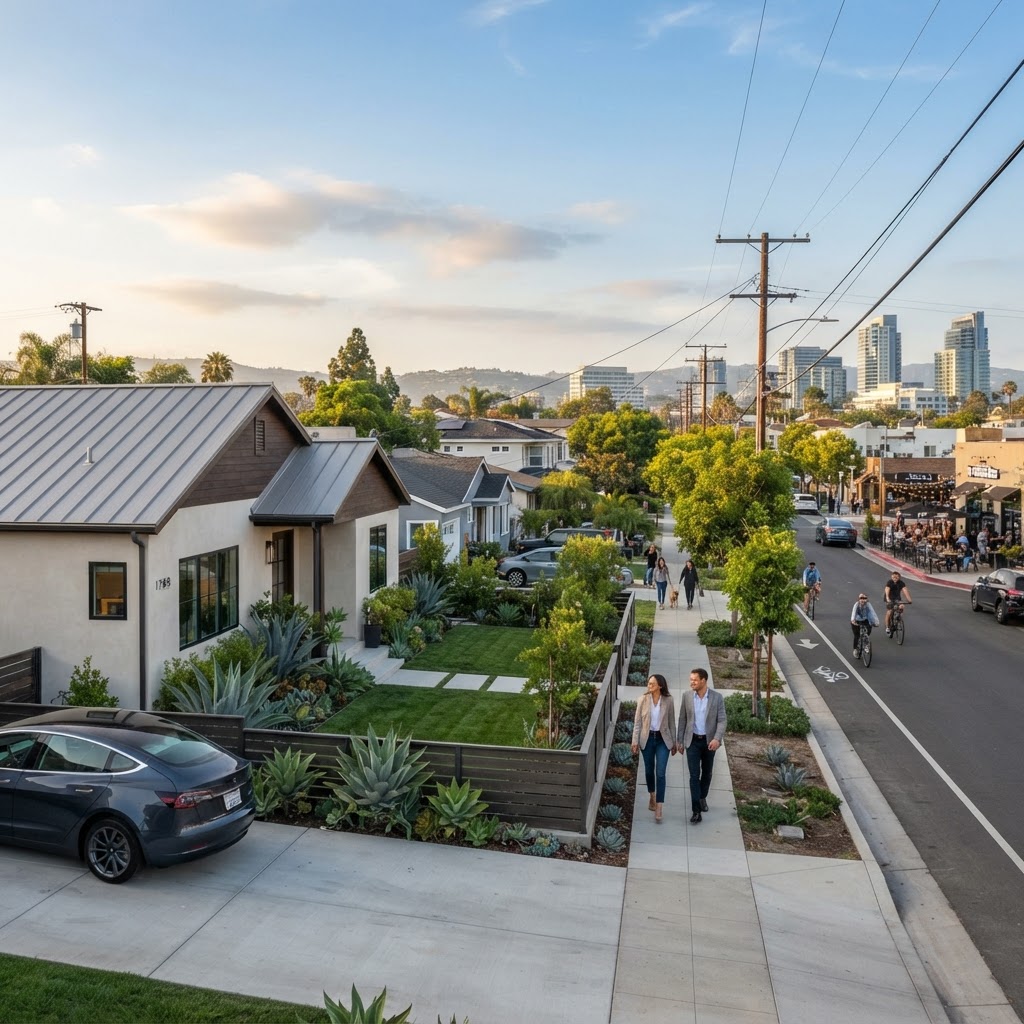
The heart of the neighborhood’s appeal remains the Piazza della Famiglia, a 10,000-square-foot European-style pedestrian corridor. In 2026, this space acts as more than a tourist destination; it is the community’s primary living room. The neighborhood’s walkability score remains a near-perfect 98, bolstered by the 2025 completion of the "Green Loop" expansion, which safely connects Little Italy residents to the Embarcadero waterfront via protected cycle tracks.
Amenities in the district have evolved to meet the needs of permanent residents. While the Mercato (Farmer’s Market) remains a weekend staple, the influx of boutique grocery concepts and wellness-focused co-working spaces has addressed the historical "food desert" and "office desert" complaints of urban living. Community features now prioritize high-end fitness clubs and private rooftop gardens, which have become standard in the latest wave of residential towers.
Transportation: The Biotech Connection
A significant driver of Little Italy’s 2026 value proposition is its role as a transit-oriented hub. The expansion of the UC San Diego Blue Line Trolley has fundamentally changed the neighborhood's demographics. Residents can now commute from the County Center/Little Italy station to the biotech clusters of UTC and La Jolla in under 35 minutes, bypassing the chronic congestion of the I-5. This "Reverse Commute" capability has attracted high-earning STEM professionals who prefer the urban density of 92101 over the suburban sprawl of North County.
Education Urbanism
Historically, San Diego’s downtown was overlooked by families. However, 2026 Census data shows a 12% increase in households with children within Little Italy over the last five years. This shift is largely attributed to the continued excellence of Washington Elementary (STEAM Magnet). The school’s integration with local tech firms and its focus on science, technology, engineering, arts, and math has turned it into a premier urban campus, allowing families to remain in the neighborhood long after their children reach school age.
Investment Outlook and Market Reality
For investors and buyers, the 2026 landscape in Little Italy is defined by scarcity. With the neighborhood nearly built to its zoning capacity, new inventory is rare, shifting the market toward the appreciation of existing premium condos.
Practical Takeaways:
- For Buyers: Look for units in mid-rise buildings with established HOAs. The 2026 market favors buildings that have already navigated the state’s updated structural reserve requirements (SB 326), offering more predictable monthly costs.
- For Sellers: The "Work-from-Home" flex space is no longer a luxury but a requirement. Units staged with dedicated, acoustically treated home offices are commanding 5-7% higher closing prices than those with traditional layouts.
- For Investors: 1-bedroom units with "view corridors" toward San Diego Bay remain the highest-yielding assets. Rental demand is currently buoyed by the 2026 expansion of the San Diego Global Campus and the adjacent life sciences boom in the Research and Development District (RaDD).
The Bottom Line
Little Italy 2026 is no longer just a weekend destination for pasta and espresso. It is a fully realized residential ecosystem. By prioritizing transit connectivity and a high-quality public realm, it has insulated itself from the volatility seen in other California urban centers, proving that when density is done right, the market responds with unwavering demand.