The Commercial-to-Residential Shift
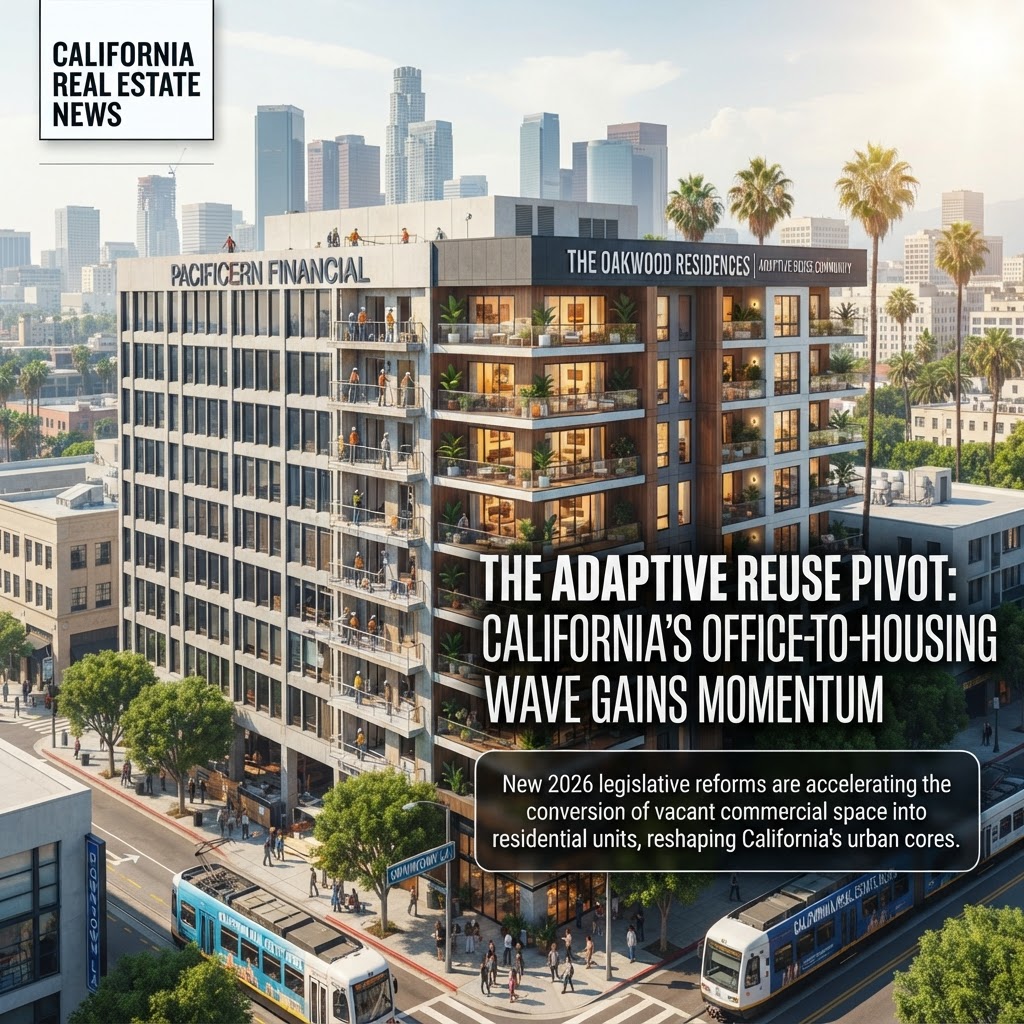
As California grapples with a chronic housing shortage and a shifting post-pandemic economy, the state’s real estate landscape is witnessing a significant transformation. In August 2026, the focus has shifted from traditional new construction to the 'Adaptive Reuse' of underutilized commercial assets. State policymakers have aggressively pursued initiatives to remove barriers to converting older commercial buildings into housing, providing a much-needed supply injection into supply-constrained markets according to Office-to-housing conversion initiatives proliferate in California.
Streamlining the Conversion Process
The momentum behind these conversions is fueled by a suite of 2026 legislative reforms designed to lower construction and finance costs. Organizations like California YIMBY have successfully advocated for policies that complement recent CEQA and zoning reforms, making it easier for developers to pivot from office to residential use. These changes are particularly impactful in urban centers where office vacancies have remained stubbornly high, even as the broader housing market shows signs of broadening demand, with year-to-date sales growth reaching 1.9 percent through the first half of 2026 as reported by California Home Sales Rebound in June as Home Prices ....
Regional Leaders: San Diego and Los Angeles
San Diego has emerged as a leader in this movement, implementing land use programs that allow for office-to-residential conversions 'by right' in most areas of the city, according to the City of San Diego Official Website. This regulatory clarity reduces the uncertainty that often plagues large-scale redevelopment projects. Meanwhile, in Los Angeles, market fundamentals are being demystified as developers navigate the complexities of Proposition 13 and local tax structures to make these projects financially viable, as noted by Brookings. The UCLA Anderson Forecast further supports this trend, noting that while industrial real estate continues to outperform, the commercial sector is entering 2026 with stabilizing fundamentals and selective momentum in residential conversion projects, as cited in the Winter 2026 Survey.
Practical Takeaways for Investors and Developers
- Identify 'By-Right' Zones: Investors should prioritize municipalities like San Diego that have already codified conversion rights, significantly reducing entitlement risk and timelines.
- Leverage New CEQA Exemptions: The 2026 legislative updates include specific exemptions for residential conversions in high-density areas, which can shave months or years off the development cycle as highlighted in California's 2026 Housing Laws: What You Need to Know.
- Monitor Submarket Vacancy: The best opportunities for adaptive reuse are found in Class B and C office buildings in coastal submarkets where residential demand remains high and vacancy rates are below 5%, according to California Housing Market 2026: Outlook & Trends.
- Focus on Sustainability: Integrating energy-efficient upgrades during the conversion process can qualify projects for additional state incentives and meet the growing demand for 'green' urban living.
While the conversion of office space to housing is not a universal solution for California's housing crisis, the regulatory tailwinds of 2026 have made it a viable and increasingly attractive strategy for revitalizing urban cores and addressing the state's persistent inventory deficit.