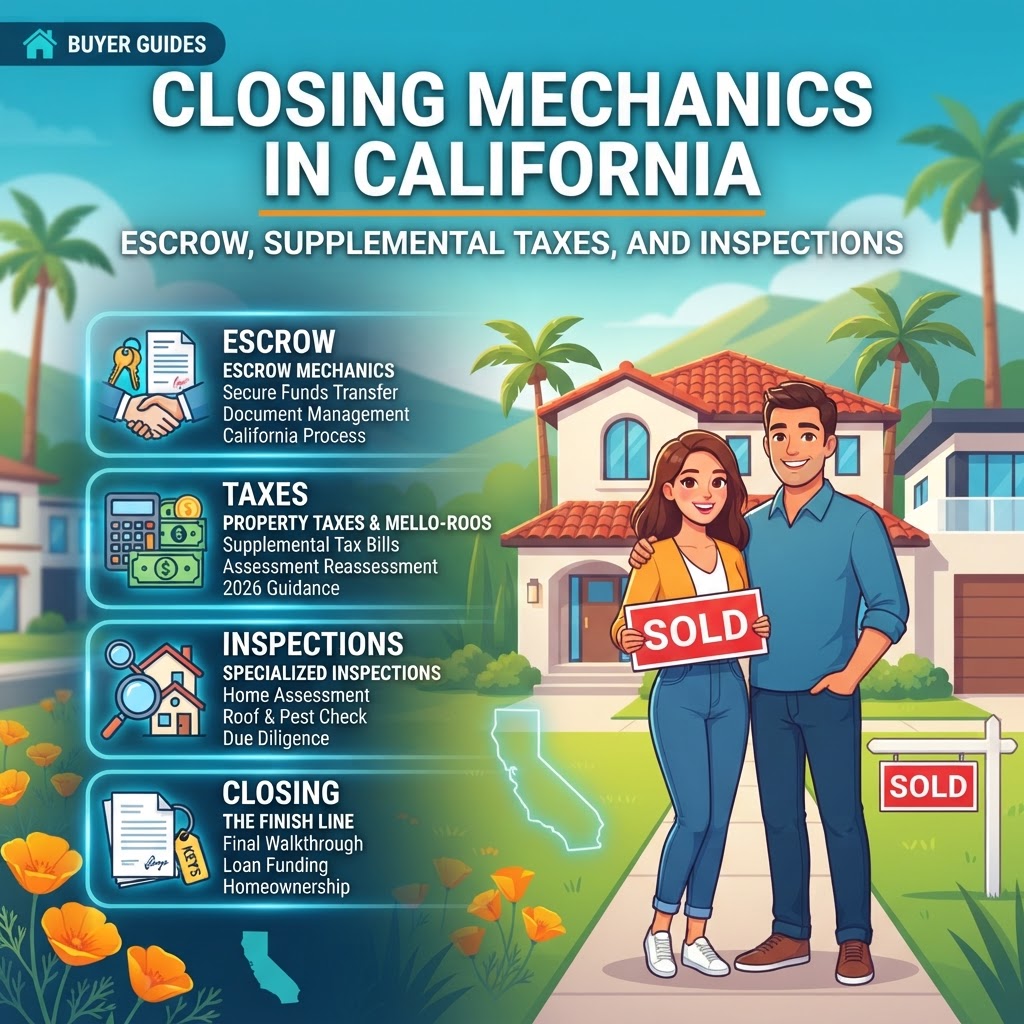
The State of the Market: August 2026
As of August 9, 2026, the California housing market is characterized by a "thawing" phase. After hitting a record median home price of $930,260 in May 2026, the market has seen a slight seasonal cooling, with the statewide median price settling at $904,640 as of June 2026, according to the California Association of Realtors. While this represents a 2.8% dip from the spring peak, prices remain 0.4% higher year-over-year, signaling a market that is stabilizing rather than retreating.
For buyers entering the market today, the landscape is defined by two primary constraints: a 30-year fixed mortgage rate hovering between 6.65% and 6.75% and a persistent inventory shortage. Active listings were down 5.6% year-over-year in mid-2026, with only 108,753 homes available statewide. With housing affordability currently at 18%, today’s buyers must be more surgical in their approach than at any time in the last decade.
Phase 1: The Financial Foundation
In the current 6.7% interest rate environment, the "pre-approval" is no longer a static document. Buyers should work with lenders to establish a "payment ceiling" rather than a "loan ceiling." Because California property taxes are significant, your monthly obligation is heavily influenced by the 1% base tax rate plus local voter-approved indebtedness.
- Data Point: Only 18% of California households can currently afford a median-priced home, down from a forecast of 23% earlier in the year.
- Practical Takeaway: Secure a "fully underwritten pre-approval" rather than a simple pre-qualification. In a market with 1.12 months of supply, sellers are prioritizing buyers who have already cleared the automated underwriting system (AUS).
Phase 2: The Search and Selection
Inventory remains tightest in the San Francisco Bay Area (median price $1.3M+) and the Central Coast ($1.11M). However, the Central Valley and Far North regions are seeing higher sales volume as buyers seek relative affordability. When evaluating properties in August 2026, look beyond the aesthetic to the structural realities of the region.
- Regional Insight: While the Bay Area remains the most expensive, the Central Valley is seeing the highest rate of price appreciation due to the migration of remote workers seeking lower cost-of-living zones.
- What to Look For: Prioritize homes with updated electrical and roofing systems. With the ongoing insurance crisis, homes that do not meet modern fire-hardening standards may be uninsurable or require the expensive California FAIR Plan.
Phase 3: The Contractual Gauntlet
The California Residential Purchase Agreement (RPA) provides specific protections that buyers must exercise. One of the most critical is the disclosure review period. Under California law, once a seller delivers the Transfer Disclosure Statement (TDS), the buyer has a statutory right to cancel the contract.
- Legal Timeline: Buyers have three days after delivery of disclosures in person (or five days if delivered by mail) to terminate the offer if the disclosures reveal unsatisfactory conditions.
- HOA Mandates: Per Civil Code section 4525, if you are buying in a common interest development, the seller must provide a comprehensive stack of HOA documents, including the last 12 months of board meeting minutes and the current reserve study, before you remove contingencies.
Phase 4: The Ownership Transition and Tax Reset
A common pitfall for California buyers is failing to account for the immediate property tax reassessment. Under Proposition 19 and existing BOE rules, 100% of the property is typically reassessed to its current market value upon a change in ownership.
- The "Supplemental Tax" Trap: Your initial tax bill will likely reflect the seller’s old assessed value. However, you will receive a "supplemental tax bill" months later that covers the difference between the old value and your new purchase price, retroactive to your closing date.
- Practical Takeaway: Set aside 1.2% to 1.5% of the purchase price in a liquid account to cover the first year’s supplemental tax bills, which are often not covered by standard mortgage impound accounts in the first 12 months.
Summary of 2026 Buyer Strategy
- Leverage the Summer Dip: Use the $25,000 drop from the May peak to negotiate seller concessions for rate buy-downs.
- Audit the HOA: In 2026, insurance premiums are the dominant budget pressure for associations; review the HOA’s insurance deck to ensure they aren't facing a massive special assessment.
- Verify Reassessment: Use the local County Assessor’s tools to estimate your new tax liability based on the purchase price, not the current tax roll.