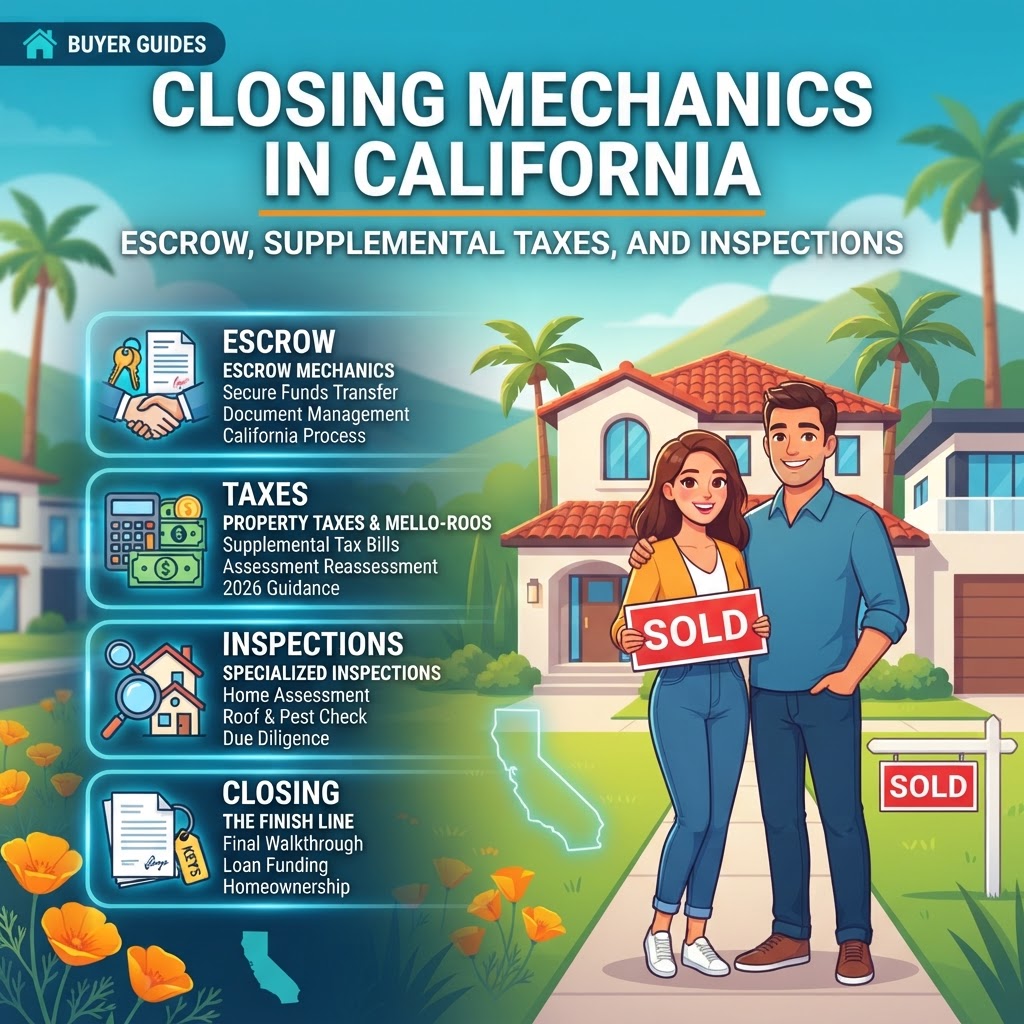
The 2026 California Compliance & Tax Shield: Protecting Your Post-Purchase Equity
As of August 2026, the California real estate market has transitioned into a period of resilient but slowing growth, with annual price gains for existing homes hovering at just 0.9% National Association of REALTORS®. While this "thawing" market offers more opportunities for buyers, the 2026 landscape is defined by a new layer of regulatory and tax complexity. With equity-rich buyers aged 61 to 79 currently dominating the market as its primary backbone NAR 2026 Home Buyers and Sellers Generational Trends, younger or first-time buyers must look beyond the purchase price to the "Compliance Shield"—the legal and tax protections required to prevent post-closing financial shocks.
1. The HOA Safety Mandate: SB 326 and Fire Resilience
For those purchasing condos or townhomes in 2026, the most immediate risk is the "Balcony Bill" (SB 326). As of January 1, 2026, all multi-unit associations with three or more units were required to complete structural inspections of exterior elevated elements New California HOA Laws in 2026. Buyers should demand the "SB 326 Inspection Report" during the contingency period. If an association has not complied, or if the report identifies significant structural failure, the buyer may face massive special assessments shortly after move-in. Additionally, new fire safety rules (AB 1455) now require ember-resistant zones in high-risk areas, which can impact HOA monthly dues if the association needs to retrofit common area landscaping New California HOA Laws in 2026.
2. The Prop 19 Reassessment Trap
California’s property tax system remains a primary concern for long-term affordability. Under Proposition 19, when a property changes ownership, it is typically reassessed at 100% of its current market value California Board of Equalization. Buyers must calculate their future tax bill based on the purchase price, not the seller’s current bill. For example, with the standard documentary transfer tax often levied at $1.10 per $1,000 of the purchase price Stoel Rives LLP, a $1 million home results in a $1,100 one-time tax, but the annual property tax will likely jump to approximately $12,500. Buyers planning to purchase from family members should be aware that Prop 19 significantly narrowed the "Parent-to-Child" exclusion, requiring the child to use the home as a primary residence to avoid a full reassessment California Joint Tenancy and Property Tax Reassessment.
3. The 2026 Federal Tax Sunset
High-net-worth buyers in California must account for the scheduled sunset of the federal estate and gift tax exemption on January 1, 2026. Absent Congressional action, the exemption is expected to revert to roughly half of its previous levels Estate Tax Planning Attorney Walnut Creek: 2026 Guide. For families purchasing luxury real estate, this makes the "titling" of the property critical. Whether holding title as Joint Tenants or within a Revocable Living Trust, the choice impacts both future estate tax exposure and the ability to avoid probate California Joint Tenancy and Property Tax Reassessment.
Practical Takeaways for 2026 Buyers
- Verify HOA Compliance: Request the SB 326 inspection certification and the most recent Reserve Study to ensure the association has funds for mandatory 2026 fire safety retrofits.
- Audit the Tax Basis: Use a property tax calculator based on the 2026 assessment rules, not the seller's historical tax rate, to ensure the "all-in" monthly payment is affordable.
- Leverage Assistance: First-time buyers should utilize the Mortgage Credit Certificate (MCC) program, which allows a tax credit of 10% to 50% of mortgage interest paid The California Tax Credit for First-Time Homebuyers.
- Title with Discipline: Consult a professional to ensure property titling aligns with the new 2026 federal estate tax thresholds to protect family wealth Estate Tax Planning Attorney Walnut Creek: 2026 Guide.