The Regulatory Perfect Storm
While much of the California real estate narrative in 2026 has focused on the 62% cost premium of owning versus renting, a quieter financial crisis is brewing within the state’s 50,000+ community associations. According to the Foundation for Community Association Research, California remains a top-three state for planned developments, but these associations are currently navigating a regulatory pincer move that is forcing a wave of record-high special assessments.
SB 326: The 'Balcony Law' Deadline Hits Home
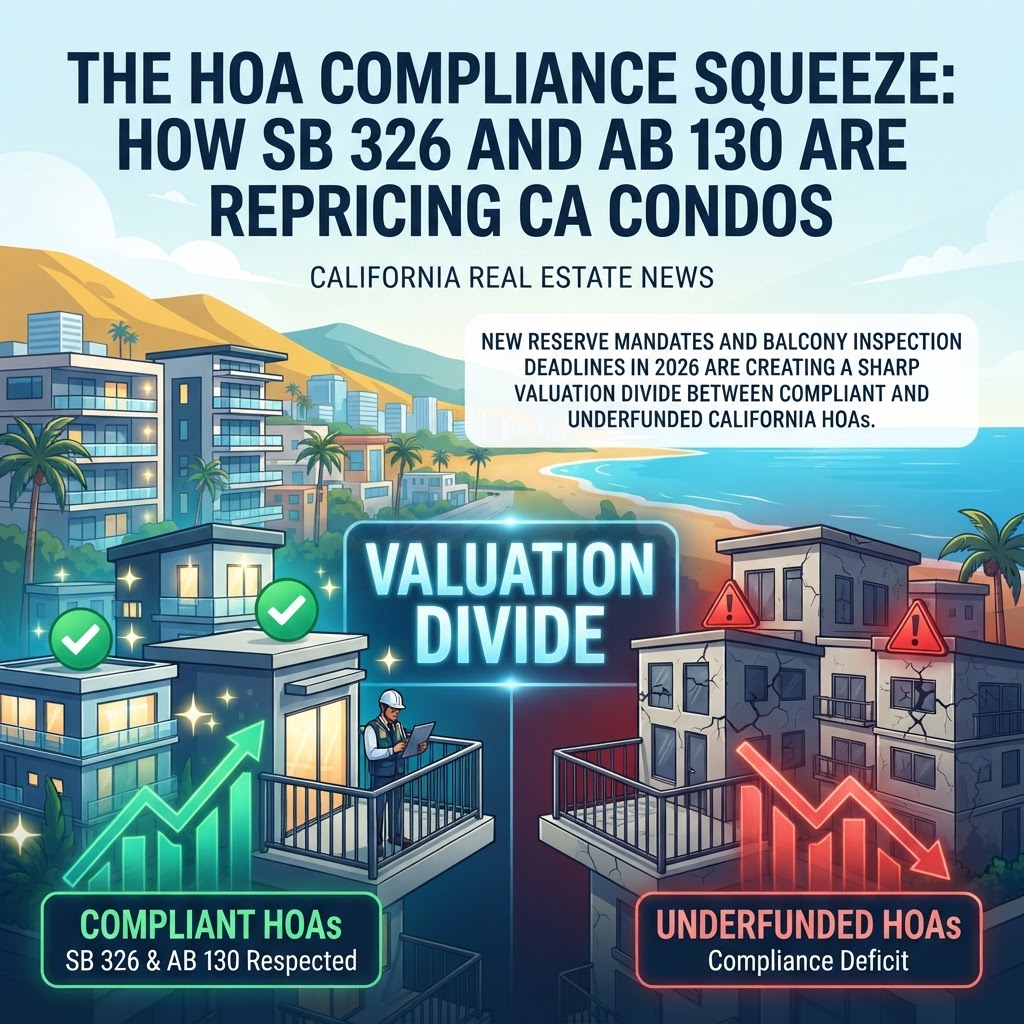
The primary driver of this volatility is the looming compliance deadline for SB 326. Often referred to as the 'Balcony Law,' this regulation requires associations with three or more multifamily units to complete structural inspections of 'exterior elevated elements'—balconies, decks, and walkways—supported by wood-based products. As we move into the latter half of 2026, the rush to meet these deadlines has created a bottleneck of certified inspectors and a subsequent spike in repair costs.
For many older complexes in the San Francisco Bay Area and Los Angeles, where median prices remain at $1.3M and $900K respectively, these inspections are uncovering decades of deferred maintenance. The result is a surge in special assessments ranging from $10,000 to $50,000 per unit, often required in lump sums to fund immediate structural remediation.
AB 130 and the Revenue Shift
Compounding the inspection costs is the implementation of AB 130, which has placed a strict cap on the fines associations can levy against homeowners. Historically, some boards used aggressive fining for CC&R violations as a secondary revenue stream to offset stagnant monthly dues. With this revenue source curtailed, boards are being forced to recalibrate their reserve studies. Data from ManageCasa indicates that associations are now pivoting toward more frequent, smaller dues increases and larger, one-time assessments to maintain solvency.
Market Impact: The Inventory Freeze
This 'assessment anxiety' is contributing to the state’s persistent inventory shortage. Redfin reports that as of mid-2026, active listings are down 5.6% year-over-year. Potential sellers in HOA-governed communities are hesitant to list their homes if a major assessment is pending, as these must be disclosed and often settled at the closing table, eating into the seller's equity. Conversely, buyers are becoming increasingly wary of 'low' monthly dues that mask underfunded reserves.
Practical Takeaways for the 2026 Market
- For Buyers: Do not rely solely on the monthly HOA fee. Request the 'Reserve Study' and the last 24 months of board meeting minutes. Look specifically for mentions of SB 326 inspection status and any 'unfunded' liabilities in the reserve fund.
- For Sellers: If your association has not yet completed its balcony inspections, consider having a pre-listing inspection done. Transparency regarding potential assessments can prevent a deal from falling through during the escrow period when the HOA disclosure package is delivered.
- For Investors: Focus on Class B and C properties in supply-constrained coastal markets like San Jose, where 'stale' inventory is at a record low of 19.8%. However, ensure your pro-forma accounts for a 15-20% buffer in HOA dues increases over the next three years to account for statewide compliance costs.
As the California Association of Realtors (C.A.R.) projects the state median home price to hit a record $905,000 by year-end, the true cost of ownership is increasingly being defined not just by mortgage rates, but by the structural integrity of the buildings themselves.