The 2026 Pivot Toward New Construction
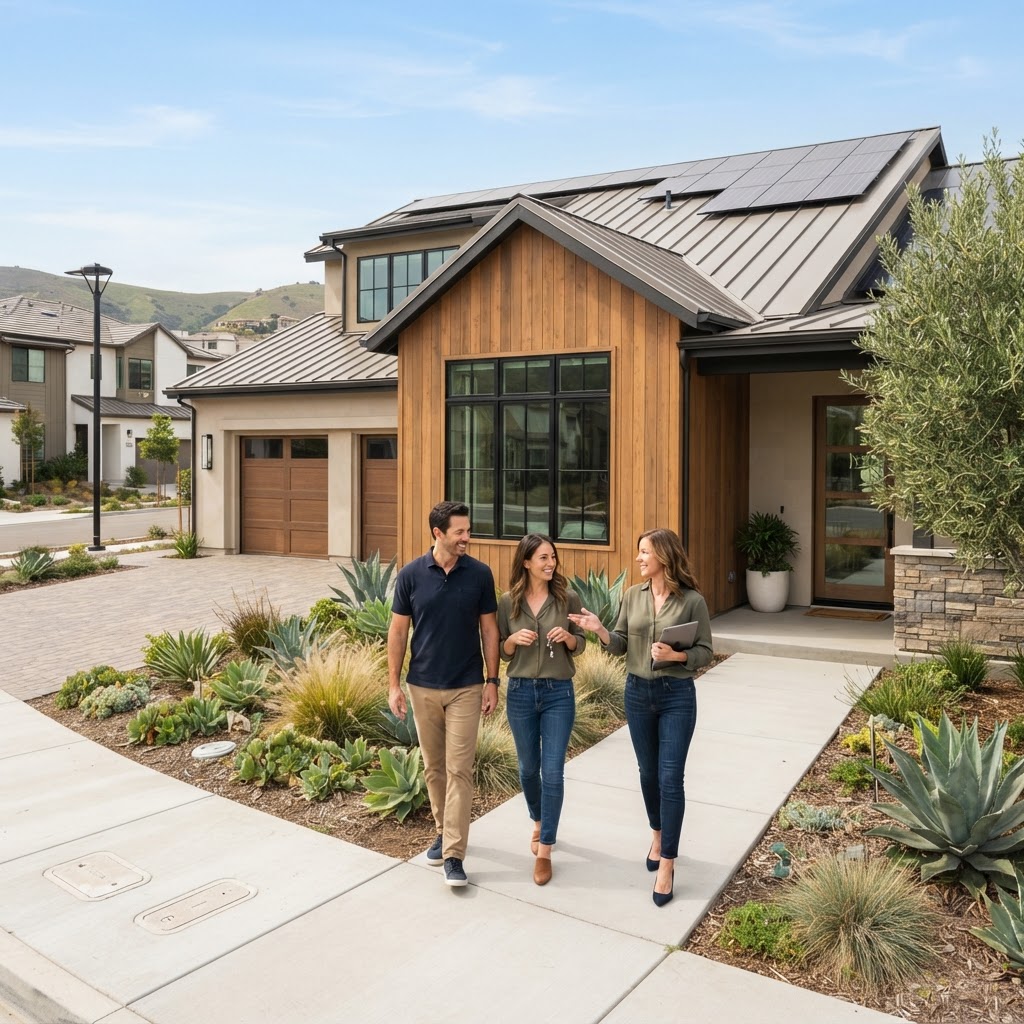
As of August 2026, the California housing market continues to face a persistent shortage of existing inventory. According to the California Association of Realtors (CAR), active listings for resale homes remain 18% below pre-pandemic norms. This scarcity has pushed savvy buyers toward the new construction sector, which now accounts for nearly 15% of the state's total residential transactions. However, buying a new home in California requires a specialized strategy, particularly regarding financing incentives and the state's rigorous environmental mandates.
Leveraging the Builder Incentive Gap
The primary driver of the 2026 new-build surge is the financial chasm between retail mortgage rates and builder-sponsored financing. Data from the California Building Industry Association (CBIA) indicates that major developers are currently subsidizing 30-year fixed rates as low as 4.75% through forward-commitment buy-downs, while national market rates hover near 6.8%. For a $750,000 mortgage, this 2% delta translates to approximately $950 in monthly savings. Buyers should prioritize projects offering 'permanent' rather than 'temporary' buy-downs to ensure long-term affordability in a volatile rate environment.
Title 24 and the SB 100 Energy Standard
California buyers must account for the 2026 updates to Title 24, Part 6 of the Building Standards Code. Every new home sold today must not only be solar-ready but must include integrated battery storage systems (SB 100 compliance) to mitigate the state's shifting 'Time of Use' (TOU) utility rates. While these systems add an average of $12,000 to $18,000 to the purchase price, they are eligible for the 30% Federal Investment Tax Credit (ITC). Practical takeaway: Request the 'HERS' (Home Energy Rating System) report during your walk-through to verify the projected net-zero performance of the property.
Decoding Mello-Roos and Community Facilities Districts
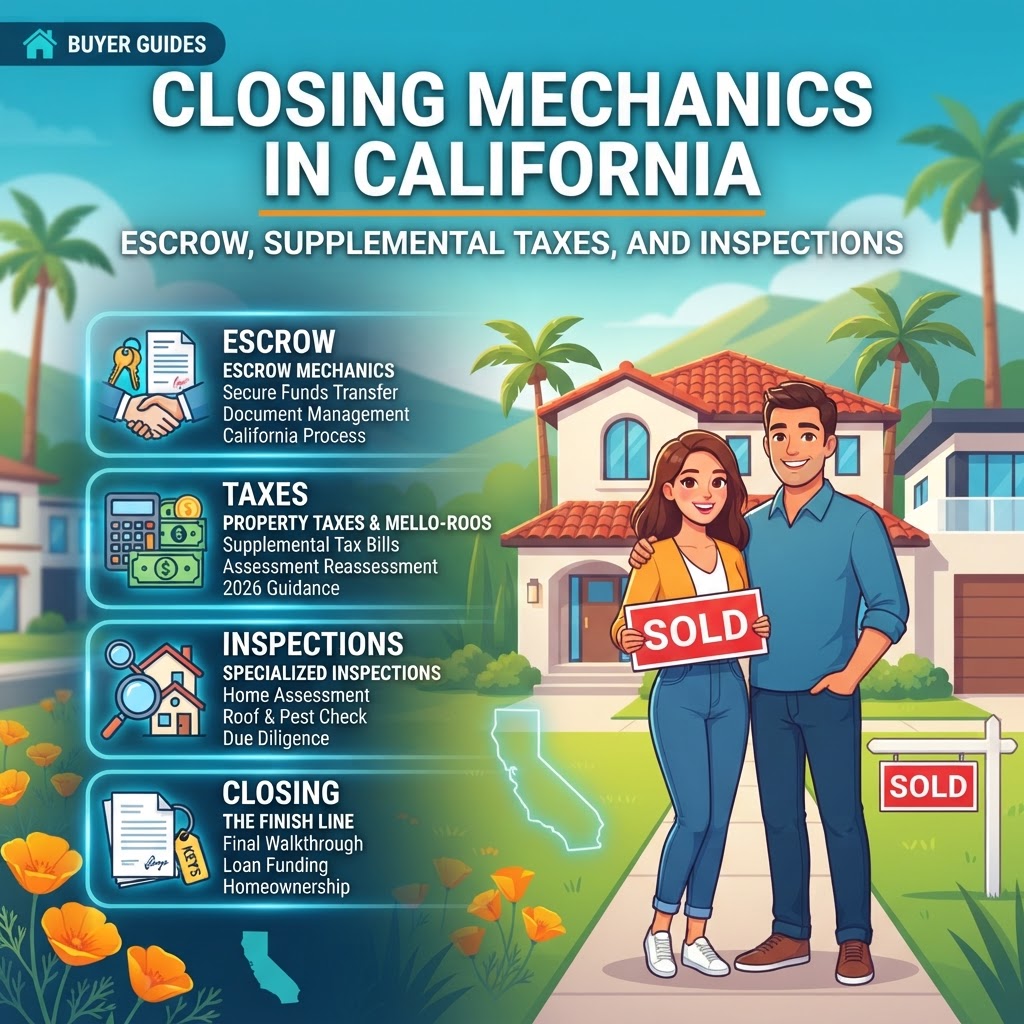
A unique feature of California's new developments is the Mello-Roos Community Facilities District (CFD) tax. These are special assessments used to fund infrastructure like schools and roads. In 2026, Mello-Roos assessments can add between $2,000 and $6,000 annually to a property tax bill, often lasting 20 to 40 years. Buyers must scrutinize the 'Notice of Special Tax' provided in the disclosure package. Use a 1.25% to 1.8% effective tax rate for your debt-to-income (DTI) calculations, rather than the standard 1.1% base rate, to avoid being disqualified during final underwriting.
The SB 800 'Right to Repair' Protection
California buyers enjoy some of the nation's strongest consumer protections under SB 800. This law provides a 10-year statute of limitations for structural defects and a 1-year warranty on 'fit and finish' items. In the 2026 market, where builders are accelerating production to meet demand, third-party inspections are critical. Do not rely solely on the municipal building inspector; hire an independent inspector to review the pre-drywall phase and the final delivery. This ensures that the builder’s 'Right to Repair' is triggered before you take possession.
Practical Takeaways for 2026 Buyers
- Compare Total Monthly Cost: A $900,000 new build with a 4.75% rate buy-down is often cheaper monthly than an $825,000 resale at 6.8%.
- Verify EV Readiness: Ensure the garage is pre-wired with a 240-volt Level 2 charger circuit, a mandatory standard for 2026 builds that significantly impacts future resale value.
- Negotiate Upgrades vs. Price: Builders are currently more likely to offer $30,000 in design center credit than a $30,000 price reduction to protect their neighborhood appraisal values.