The Insurance-First Search: Why Coverage is the New Mortgage
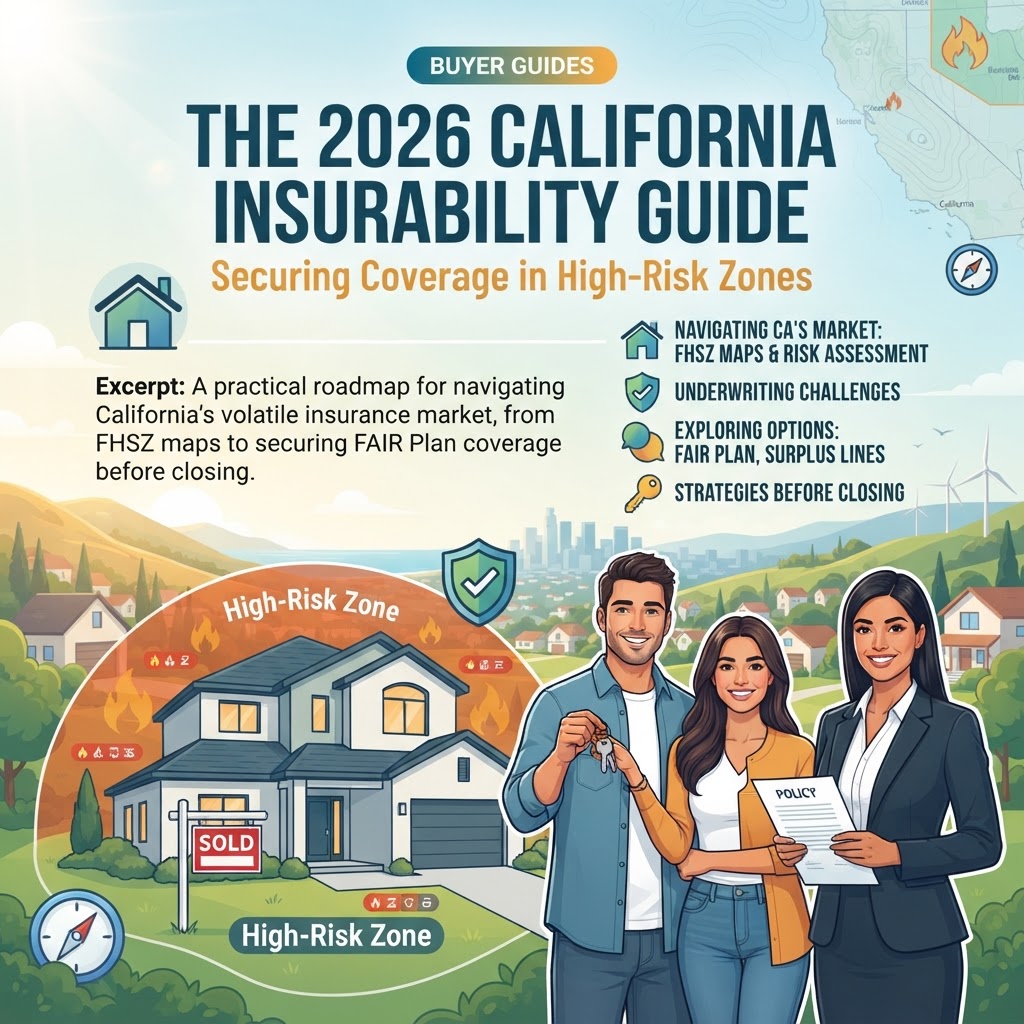
In 2026, the California home search no longer begins with a mortgage pre-approval—it begins with an insurability assessment. With major carriers like State Farm and Allstate having significantly curtailed new policies in the state, and the California FAIR Plan enrollment surpassing 420,000 policies as of mid-2026, buyers must treat insurance as a primary deal-breaker rather than a closing afterthought.
1. Identify the Fire Hazard Severity Zone (FHSZ) Early
Before touring a property, buyers should consult the California Department of Forestry and Fire Protection (CAL FIRE) FHSZ maps. Homes located in 'Very High' zones face the steepest hurdles. According to 2025 MLS data, homes in these zones now sit on the market 18% longer than those in 'Moderate' zones, primarily due to the difficulty of securing affordable premiums. Actionable Step: Use the CAL FIRE 'Fire Hazard Severity Zone Viewer' to input the address of any property you are considering before making an offer.
2. The 10-Day Insurance Discovery Period
The standard California Association of Realtors (CAR) contract includes a contingency period, but in the current market, the typical 17-day window is often too short for complex insurance underwriting. Buyers should aim to secure an insurance binder within the first 10 days of escrow. If a property requires the California FAIR Plan—the state's insurer of last resort—the application process can be lengthy and requires a separate 'difference in conditions' (DIC) policy to cover liability and water damage, which the FAIR Plan excludes.
3. Hardening the Asset: The Home Hardening Disclosure
California law (AB 38) requires sellers of homes in high-fire zones built before 2010 to provide documentation that the property is in compliance with local wildfire mitigation ordinances. A buyer's guide to these features includes checking for:
- Vents: Corrosion-resistant, ember-resistant mesh screens.
- Defensible Space: A 100-foot buffer of cleared vegetation around the structure.
- Roofing: Class A fire-rated materials (e.g., concrete tile or asphalt shingles).
4. Understanding the Cost-to-Value Ratio
Insurance premiums in high-risk areas can now exceed $5,000 to $10,000 annually for modest single-family homes. When calculating your debt-to-income (DTI) ratio, work with your lender to use actual insurance quotes rather than the standard 0.5% estimates. A $1,000 increase in annual insurance premiums can reduce a buyer's purchasing power by approximately $15,000 in mortgage principal at current interest rates.
Summary of Practical Takeaways
- Quote Before Contingency: Never waive an insurance contingency in a High or Very High FHSZ without a binding quote in hand.
- Consult a Broker: Use an independent insurance broker who specializes in 'surplus lines' or the FAIR Plan, as captive agents (like those from a single brand) may have their hands tied by corporate moratoria.
- Verify Compliance: Demand the 'Notice of Flammable Vegetation' and evidence of home hardening from the seller early in the disclosure process to avoid post-closing retrofit costs.