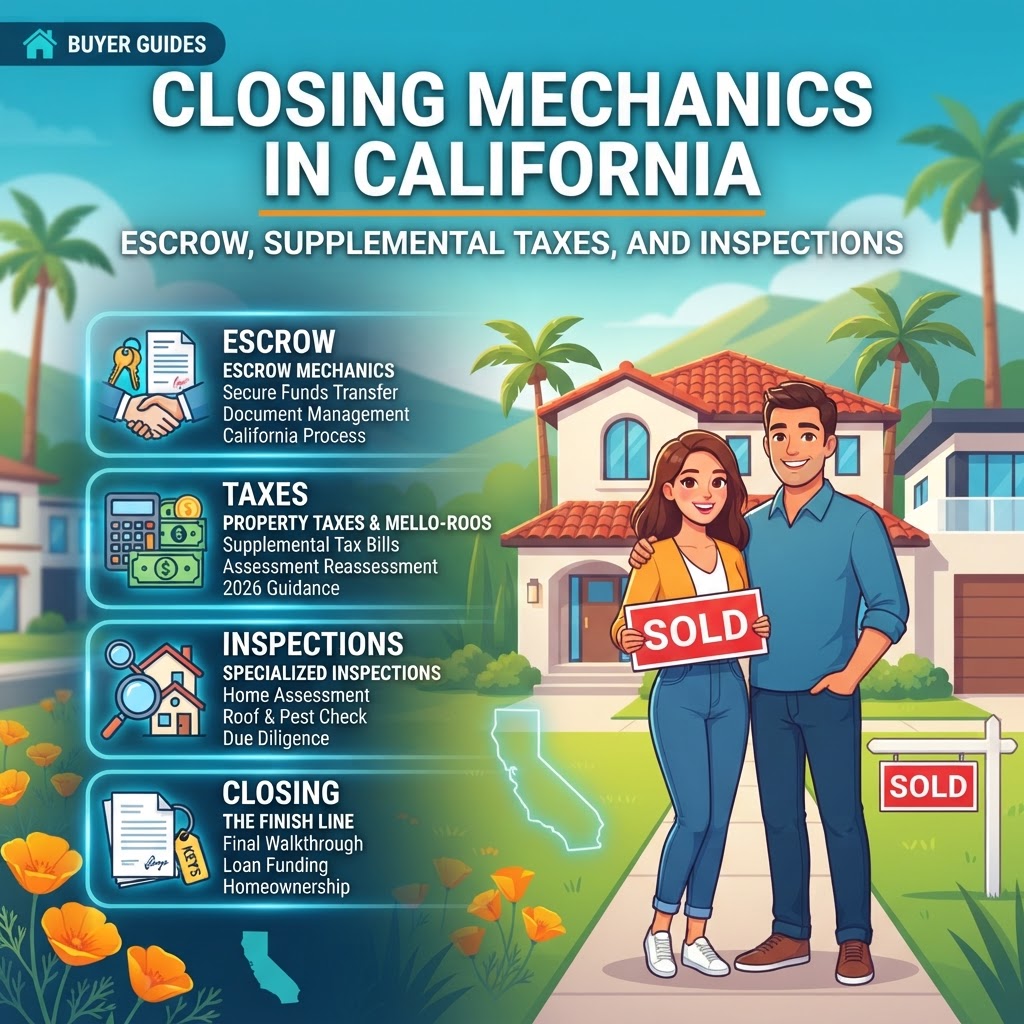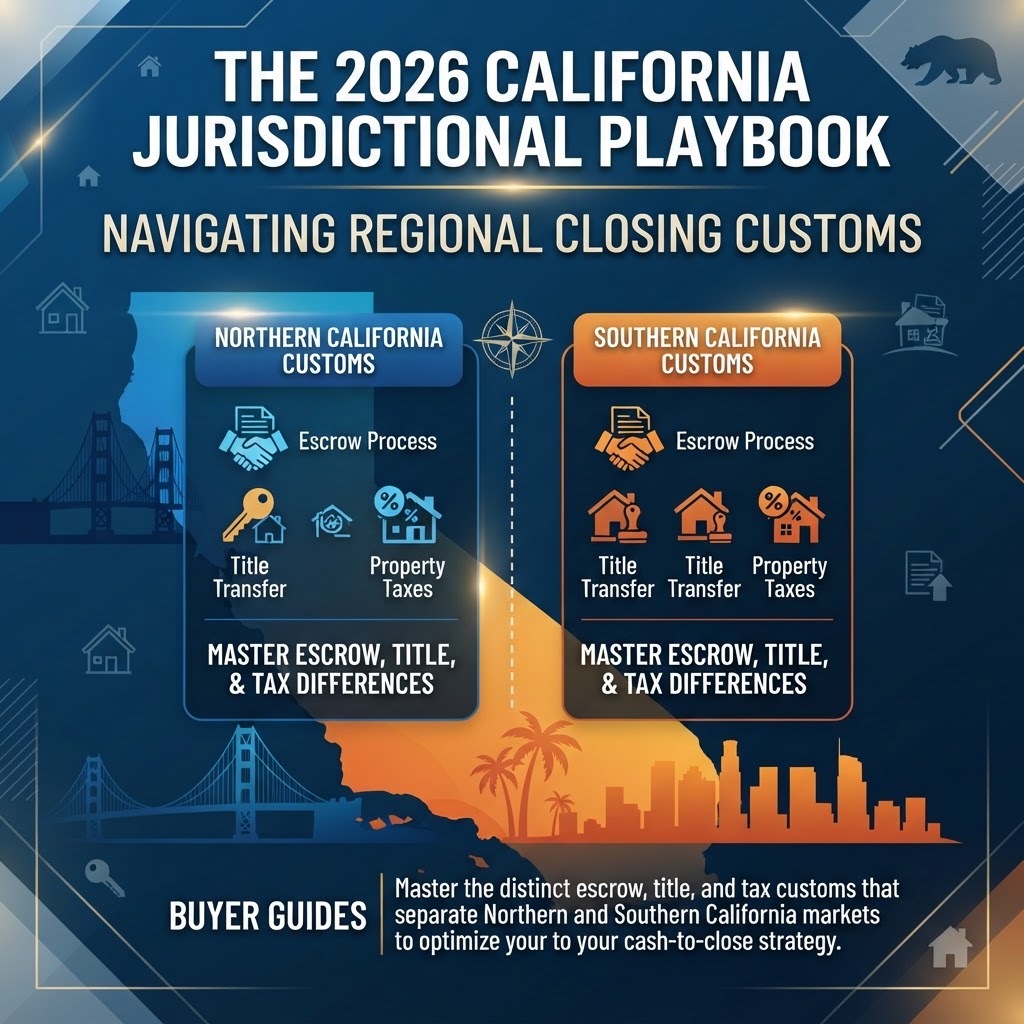
The Tale of Two Markets: Why Regional Knowledge is Power
In 2026, the California real estate market remains a complex patchwork of local traditions and municipal ordinances. While state law provides a framework, the actual mechanics of buying a home—specifically who pays for what—differ significantly as you cross the Tehachapi Mountains. For the modern buyer, failing to account for these regional 'soft costs' can result in a 1% to 2% discrepancy in cash-to-close requirements.
1. The Escrow and Title Insurance Divide
One of the most jarring realizations for cross-state or even cross-region buyers is the allocation of title and escrow fees. According to 2026 data from the California Association of Realtors (CAR), closing costs are currently averaging between 2% and 5% of the purchase price, but their distribution is dictated by local custom rather than statute.
- Southern California (Los Angeles, Orange County, San Diego): The custom generally favors the buyer. Sellers typically pay for the owner’s title insurance policy and the documentary transfer tax. Escrow fees are usually split 50/50.
- Northern California (San Francisco, Alameda, Santa Clara): The burden often shifts toward the buyer. In many Bay Area counties, it is customary for the buyer to pay for the title insurance policy. However, in certain counties like San Mateo, the seller historically takes on these costs.
Actionable Insight: Before making an offer, request a 'Net Sheet' from your lender specifically tailored to the county's customs. In a high-interest rate environment, an unexpected $5,000 title fee can jeopardize your ability to cover the appraisal gap.
2. Local Transfer Taxes: The 'Hidden' City Levies
While the standard County Transfer Tax is $1.10 per $1,000 of the sale price across California, 2026 has seen a rise in municipal-level 'mansion taxes' and tiered transfer fees. These are particularly prevalent in charter cities.
For example, while a buyer in a general-law city might only face the county tax, a buyer in cities like San Francisco, Oakland, or Culver City faces tiered rates that can reach significantly higher percentages for properties over specific price thresholds. As of mid-2026, these local ordinances are being used to fund affordable housing initiatives, making them a permanent fixture of the urban landscape.
3. The Compliance Gap: Point-of-Sale (POS) Requirements
California buyers must distinguish between state-mandated disclosures and city-mandated retrofitting. In 2026, Northern California remains stricter regarding Point-of-Sale compliance. Cities like Berkeley and San Francisco often require sewer lateral inspections or energy conservation measures to be completed before the title can transfer.
In contrast, Southern California transactions more frequently use the 'as-is' approach for municipal compliance, pushing the responsibility to the buyer to retrofit smoke detectors and water heater strapping after the close, provided the lender allows it. However, newer 2026 wildfire mitigation zones (WUI) have introduced mandatory vegetation management clearances that apply statewide but are enforced with varying intensity by local fire marshals.
4. Data-Backed Bidding: The 2026 'Days on Market' Reality
Current MLS data indicates that as of August 2026, the 'Hybrid Hubs'—regions like the Inland Empire and the Sacramento Valley—are seeing a 15% faster absorption rate than the ultra-luxury coastal cores. Buyers in these mid-market zones should expect to waive non-essential inspections to remain competitive, whereas coastal buyers currently hold more leverage to demand repairs or credits for local compliance issues.
Buyer’s Strategic Checklist
- Identify the 'Customary Payor': Ask your agent for the specific 'Closing Cost Split' chart for your target county. Do not assume the seller will cover the title policy.
- Verify City-Specific Taxes: Check if the property sits within a charter city with a supplemental transfer tax. These are often not included in initial online mortgage calculators.
- Audit POS Ordinances: Determine if the city requires a sewer lateral or energy audit. If these haven't been done, they represent a potential $5,000–$15,000 liability.
- Review the Preliminary Title Report Early: In 2026, solar liens and PACE assessments have become primary deal-killers. Ensure these are cleared or credit-accounted for during the contingency period.