The 171-Mile Shift: Infrastructure as a Value Driver
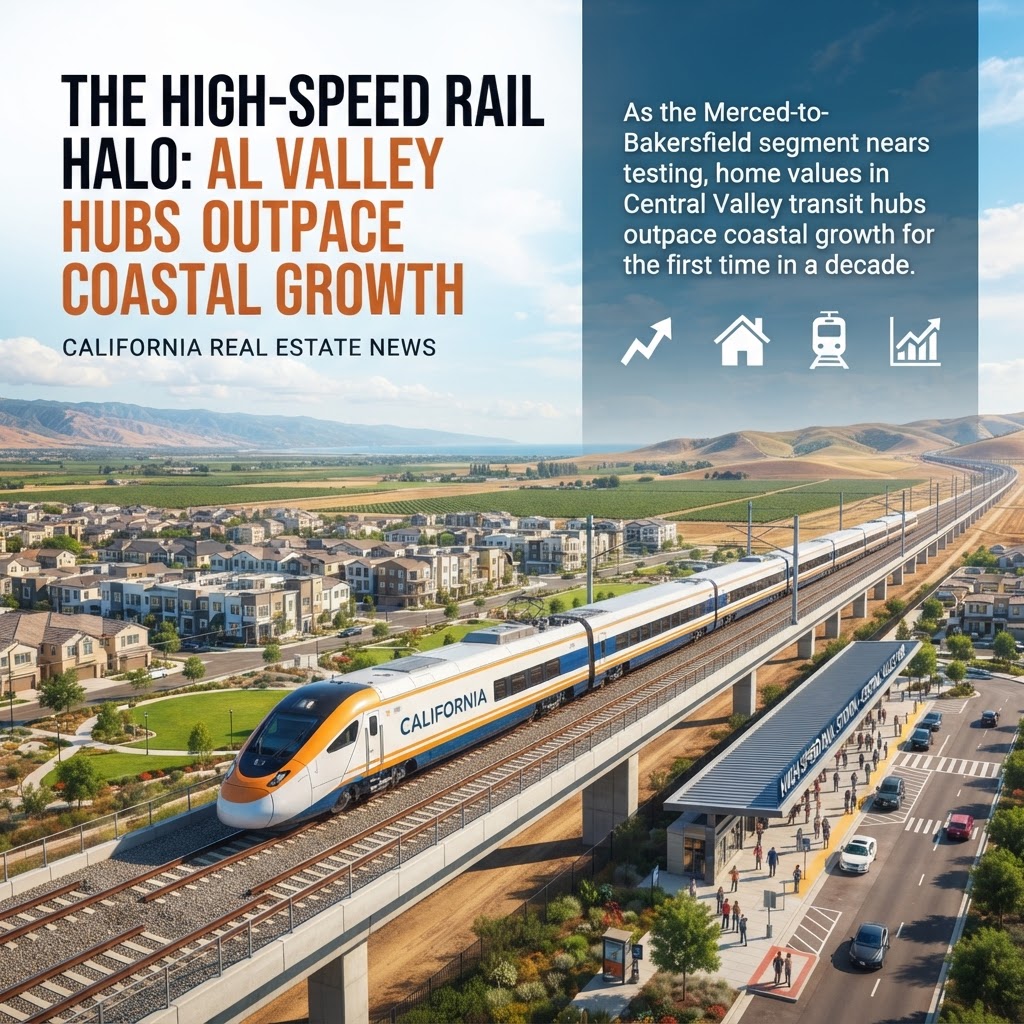
As of July 31, 2026, the California High-Speed Rail Authority (CHSRA) has officially entered the integrated systems testing phase for the initial 171-mile operating segment connecting Merced to Bakersfield. While the project has faced decades of budgetary and political scrutiny, the tangible proximity of operational service has triggered a massive capital influx into the San Joaquin Valley. For the first time in the state's modern history, infrastructure—rather than coastal proximity—is the primary driver of regional appreciation.
Data: The Central Valley Premium
According to Q2 2026 MLS data and reports from the California Association of Realtors (CAR), median home prices in Fresno and Madera counties have surged 14.2% year-over-year. This growth dramatically outpaces the cooling 3.1% appreciation seen in the Los Angeles Basin and the 2.8% growth in the San Francisco Bay Area. In Merced, which serves as the northern terminus for the initial segment, inventory levels have plummeted to a historic 1.1-month supply. Buyers are increasingly betting on the 'transit-link'—the ability to live in a lower-cost region while maintaining a feasible connection to northern and southern economic hubs.
The Rise of the 'Station-District' Investor
CBRE’s mid-year outlook highlights a 30% increase in mixed-use permit applications within a half-mile radius of the upcoming Fresno and Hanford stations. Institutional investors who previously participated in the 'Great Corporate Exit' of 2025 are now returning to the market, specifically targeting Transit-Oriented Developments (TODs). These investors are finding cap rates of 6.2% to 6.8% in the Valley, a significant premium over the 4% yields currently available in saturated coastal markets.
Practical Takeaways
- For Sellers: Property owners within a 10-mile radius of proposed stations should consider professional appraisals that specifically factor in 'transit-utility.' This is currently the most significant variable in regional valuation models.
- For Buyers: Focus on 'second-tier' cities like Visalia or Tulare. While not direct station stops, these areas are seeing significant spillover demand and offer a lower entry point before the full 'commuter effect' is priced in.
- For Investors: The demand for Class-A multifamily housing in downtown Fresno is at an all-time high. The target demographic is no longer just local labor, but the 'super-commuter' class—hybrid professionals who require high-speed connectivity both digitally and physically.