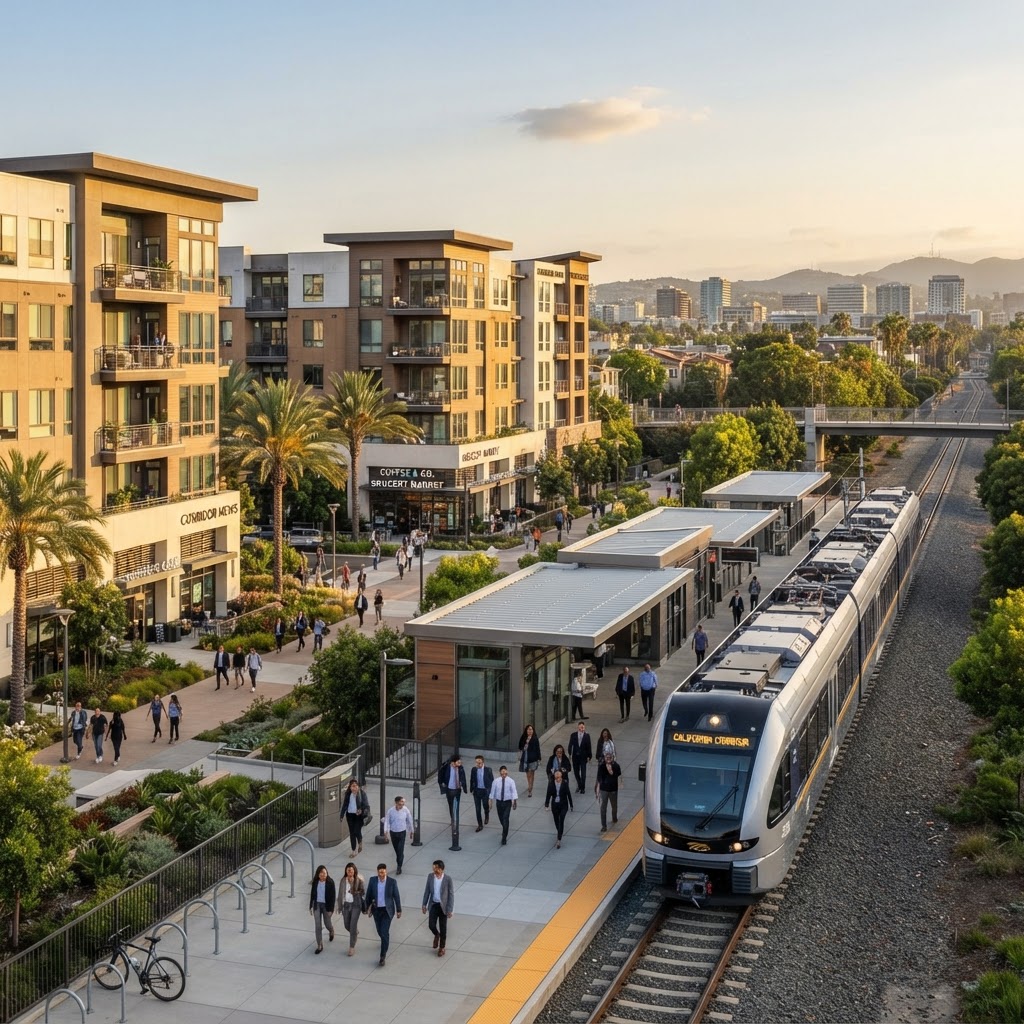
As of July 2026, the California real estate market has reached a new equilibrium. Following the stabilization of mortgage rates—hovering near 5.9% according to the California Association of Realtors (CAR) mid-year report—the focus for savvy buyers has shifted from 'when' to buy to 'where' to buy. Specifically, the implementation of state-mandated Transit-Oriented Development (TOD) zones has created a unique class of inventory that offers superior long-term appreciation potential compared to traditional suburban sprawl.
The 2026 Transit Advantage
Under the mature frameworks of SB 9 and SB 10, and the updated Housing Elements required by the Department of Housing and Community Development (HCD), California cities have been forced to rezone areas within one-half mile of major transit stops. For the 2026 buyer, this means high-density, mixed-use developments are finally hitting the market in volume. These properties often feature 'walk scores' above 85, a metric that CBRE Research indicates correlates with a 12% higher resale premium in the California market over a five-year hold.
Decoding California’s Unique Tax Landscape
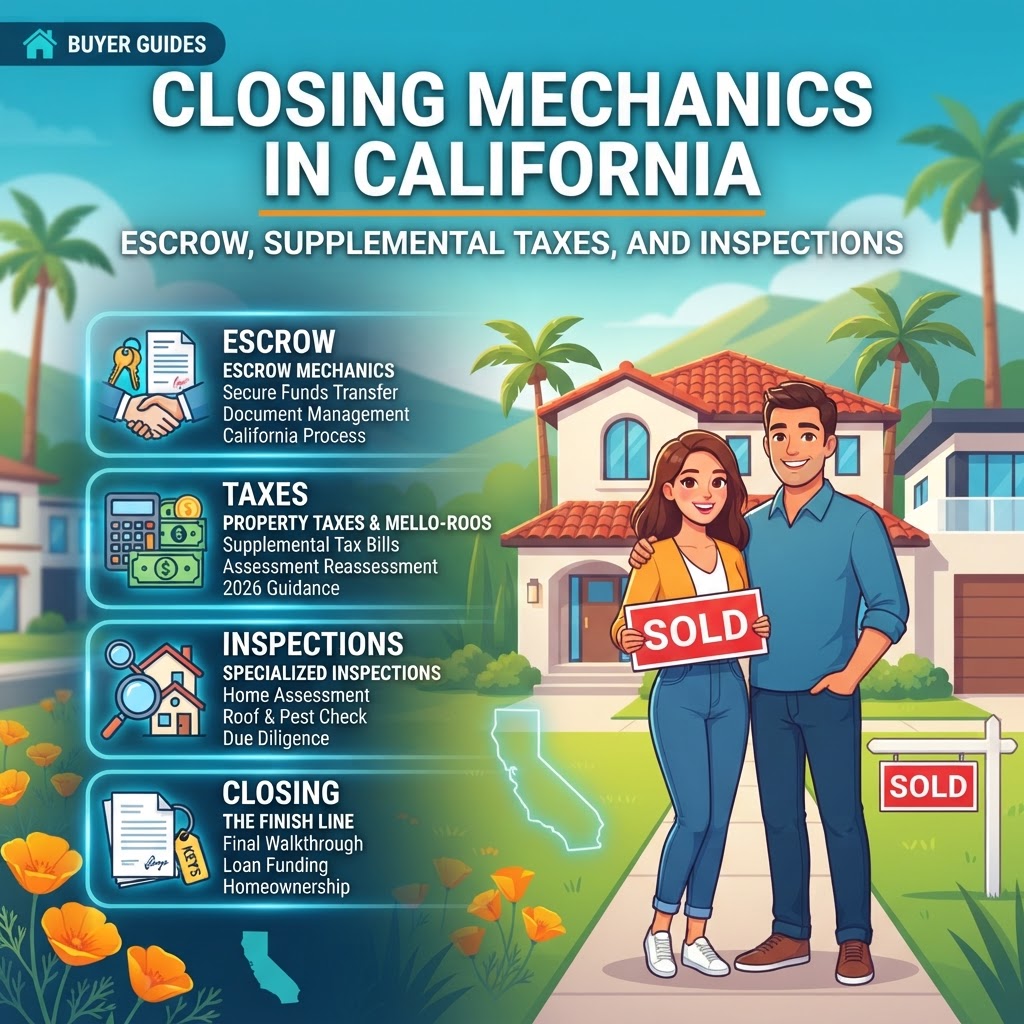
While national guides focus on the purchase price, California buyers must navigate two specific tax hurdles that often catch the uninitiated off guard: Supplemental Property Taxes and Mello-Roos assessments.
- The Supplemental Tax Trap: In California, property taxes are reassessed upon change of ownership. Because the tax bill often lags behind the sale, new owners receive a 'supplemental' bill for the difference between the previous owner's assessed value and the new purchase price. In 2026, with property values rising 4.2% year-over-year, this one-time bill can reach several thousand dollars.
- Mello-Roos Districts: Common in newer developments in the Inland Empire, Sacramento, and Orange County, these Community Facilities Districts (CFDs) add an extra layer of tax for infrastructure. Buyers should request a 'Natural Hazard Disclosure' (NHD) report early in the process to identify these specific liens.
Practical Takeaways for the July 2026 Buyer
To succeed in the current market, buyers should follow this localized checklist:
1. Verify the 'Housing Element' Compliance
Before offering on a property, check the city’s HCD compliance status. Cities in 'pro-housing' compliance are seeing faster infrastructure investment and smoother permitting processes, which protects your long-term equity.
2. Calculate the 'True' Monthly Carry
Do not rely on Zillow or Redfin tax estimates. Use the current 1.25% (average state base plus local bonds) applied to your purchase price, not the current tax bill. Add an additional $200-$400 per month if the home is in a Mello-Roos district.
3. Leverage 'Builder’s Remedy' Inventory
In regions like Santa Monica and the San Francisco Peninsula, several developments approved via the 'Builder’s Remedy' are completing construction this year. These units often offer modern amenities and higher energy efficiency standards at competitive price points due to the volume of units delivered simultaneously.
Market Outlook: Summer 2026
The U.S. Census Bureau recently noted a return to urban cores in California as remote work mandates have solidified into hybrid 3-day office weeks. This shift makes proximity to regional rail (BART, Metrolink, or the expanding Brightline West corridors) a primary driver of value. While inventory has increased by 18% compared to the record lows of 2024, competition remains fierce for turnkey homes in these high-connectivity zones.