The Rise of the 'Starter Quad': California's Suburban R-1 Transformation
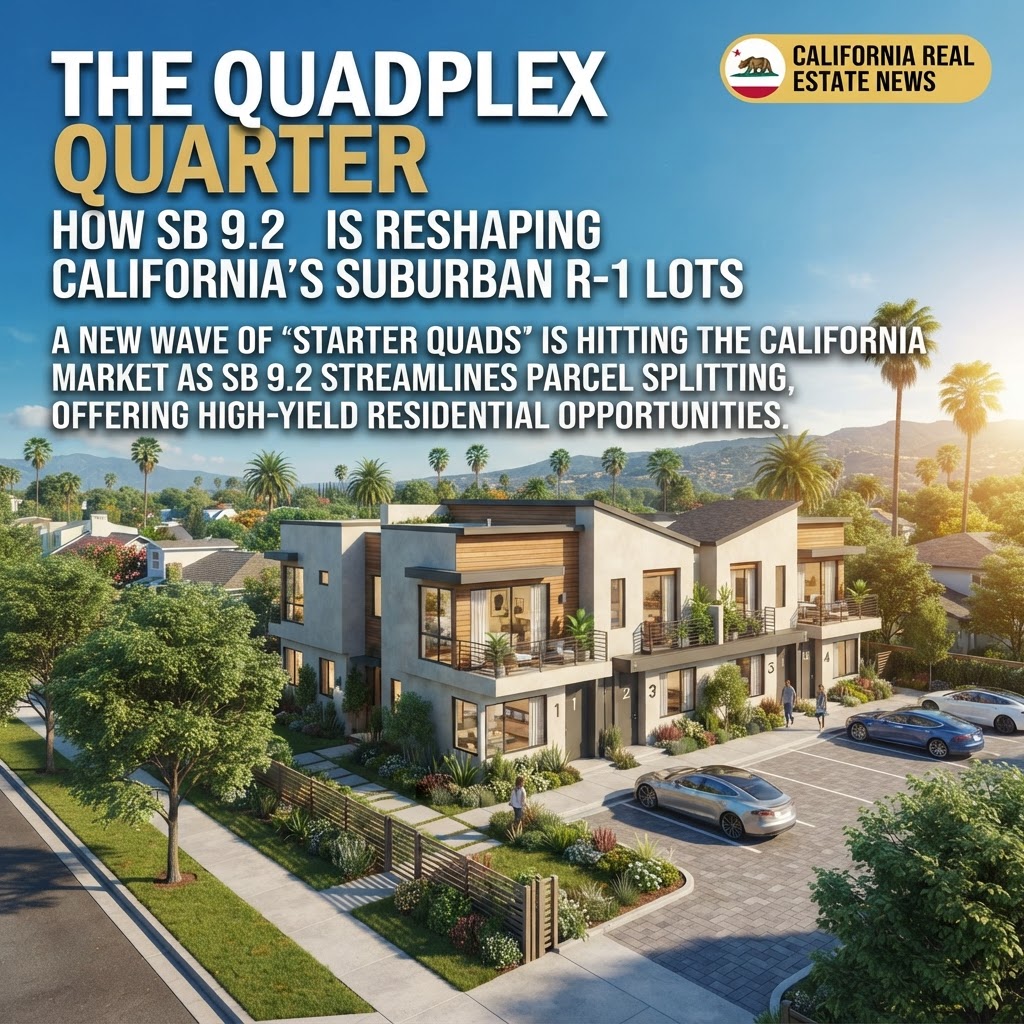
As of July 2026, the California real estate landscape is witnessing a structural shift that industry veterans are calling the 'Death of the R-1.' Following the implementation of SB 9.2 earlier this year—a refinement of the original 2022 housing legislation—the state has seen a 34% increase in residential parcel splits compared to the same period in 2025.
Streamlining the Suburban Split
SB 9.2 successfully closed the loopholes that allowed municipalities to block lot splits through excessive aesthetic requirements or prohibitive parking mandates. According to recent data from the California Department of Housing and Community Development (HCD), over 4,200 new quadplex permits were issued in the first half of 2026 alone, with the majority concentrated in the Inland Empire and Sacramento suburbs.
Unlike the institutional buy-ups seen in previous years, this trend is being driven by 'mom-and-pop' investors and local developers. The median price for a 'Starter Quad'—a newly constructed four-unit dwelling on a former single-family lot—now sits at $1.85 million in Los Angeles County, providing a high-yield entry point for mid-tier investors.
Data-Driven Market Shifts
- Inventory Growth: Suburban inventory has increased by 8.4% year-over-year, largely attributed to lot-split developments.
- Cap Rates: The average cap rate for SB 9.2 conversions in Orange County has stabilized at 6.1%, outperforming traditional single-family rentals.
- Financing: 2026 saw the introduction of 'Construction-to-Quad' loans from major lenders specifically tailored for SB 9.2 projects.
Practical Takeaways for Market Participants
For Sellers: Homeowners on lots larger than 7,500 square feet should evaluate their property not as a single residence, but as a development site. The 'split-potential' premium can now add up to 22% to the sale price in high-demand zones like Silicon Valley.
For Investors: Focus on 'edge' suburbs where land prices haven't caught up to the new quadplex density potential. The most profitable conversions in July 2026 involve modular construction techniques, which reduce build times by 40%.
For Buyers: New co-equity programs allow four separate buyers to own individual units on a single split parcel, effectively creating a new class of affordable suburban homeownership.